In downtowns across America, booming development has come at the expense of crucial homeless services that have traditionally located there.


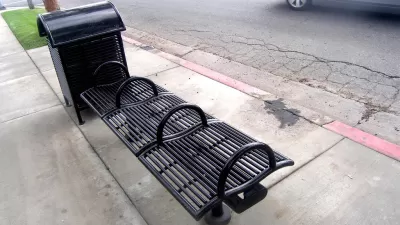
"Across the country, downtown homeless shelters are caught in a perfect storm," reports Kriston Capps for CityLab.
"Property values throughout America’s urban cores are rising, making the work of sheltering the disadvantaged less sustainable and desirable downtown, even as displacement adds to their ranks. Plus, scarce federal dollars for supporting the homeless are increasingly directed toward programs that provide housing for the chronically homeless—which is great, and a big success, but not so helpful for families who are struggling with a sudden crisis that has put them on the streets."
Capps explores the local and national factors that play into this trend, showcasing in particular a shelter in Downtown Atlanta. That desirable property was purchased for nearly $10 million after it was forced to close. Its owner commented, "The developers really cemented their control over Atlanta, to reenvision and redevelop Atlanta. Now the only housing policy in the city is gentrification."
Read the full story: The Disappearing Downtown Shelter

Affordable Housing Funding Reaches New Heights for Beltline Neighborhoods
The city of Atlanta has allocated $11.9 million of its $45 million budget for the Beltline for affordable housing.
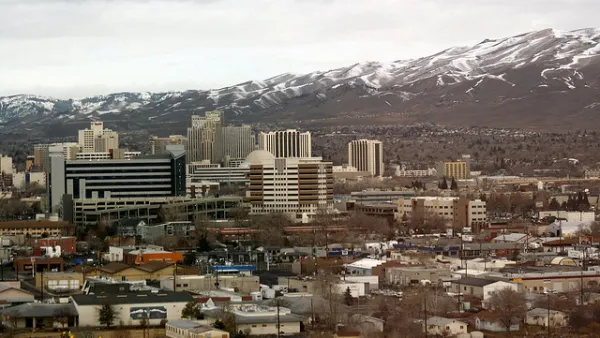
Homeless People Could Pay the Price of Reno's 'Revitalization'
Reno is considering a law that critics say is a textbook example of the criminalization of homelessness and everyday life.
Did Amazon Really Just Create a Pop-up Homeless Shelter?
As cities around the U.S. scramble to figure out how to address the housing affordability crisis, one of them has now leaned on the benevolence of what some consider the least benevolent of them all.

Washington state to charge fee to drivers with fuel-efficient cars
Revenue from the fee will go towards supporting the state’s highways.

Illinois considers spending $1 billion in taxpayer money on data center
A quantum computing campus and data center are currently under construction in Chicago.

Trump to blast ‘hydrocarbon highway’ through ‘world’s longest art gallery’
Environmental and historic preservation groups are suing to stop the project.

NYC, state sue feds over mixed-immigration-status housing assistance rule
The state’s lawsuit argues that the rule change violates the Administrative Procedure Act.

Michigan to turn neighborhood into virtual power plant
Residents will soon be able to divert their excess energy to the grid in exchange for compensation.

Data center, mining project swarm to long-awaited Alaska railroad line
The state-owned railroad approved final plans for the spur line this week; the project is expected to cost $311 million, mostly funded by the federal government

FREE Course: Walkable City 1: Why Walkability?
After describing his path towards focusing on walkability as the essence of good planning, Jeff Speck marches through his five principal reasons for making more walkable places.
Reinventing Malls: Planning Alchemy—Turning Gray Fields Into Gold
The course focuses on the opportunities and imperatives that shape reinvention of mall sites.

City of Charlotte
City of Rosemead
Rutgers University, Edward J. Bloustein School of Planning and Public Policy
University of Michigan School for Environment and Sustainability (SEAS)
Hunter College, City University of New York (CUNY)
The Architects Foundation
University District Partnership