Columbus has spent the first year since its selection as the $50 million Smart Cities Challenge grant recipient devoted to planning and research. The grant has also proven a very enticing fundraising tool.


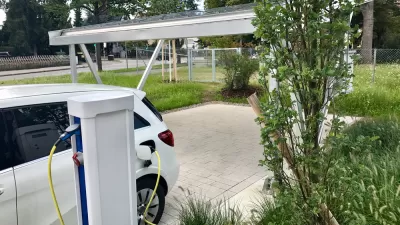
"Solar-powered electric vehicle and device charging stations – free to the public – fired up Wednesday at Ohio Dominican University in the first equipment installed under Smart Columbus," reports Carrie Ghose.
"DC Solar Freedom Inc. donated $3.6 million in solar equipment to the campus on the east side of Columbus, and is seeking sites for similar stations including the Columbus Zoo and Aquarium and other colleges," adds Ghose.
The donation by DC Solar Freedom is only one example of private investment and donations to arrive in Columbus since it was selected for the Smart Cities Challenge grant by the U.S. Department of Transportation—so far the city has raked in $500 million.
Read the full story: Smart City Columbus debuts first hardware for public use at Ohio Dominican

Five Years Later, 'Smart Cities Challenge' Promise Unfulfilled
The "Smart Cities Challenge" paid Columbus, Ohio $50 million to kick start a revolution of urban technology. The revolution never arrived, according to a recent assessment by Wired writer Aarian Marshall.

'Smart Columbus Operation System' Looking for Developers
"Smart City" plans for the city of Columbus are taking shape.
Critics Pushing Back on Columbus' Vision of a 'Smart City'
Not everyone is buying in to the city of Columbus' vision for the future of transportation.

Planetizen Federal Action Tracker
A weekly monitor of how Trump’s orders and actions are impacting planners and planning in America.

Amtrak, CN end decades-long dispute with eight-year agreement
The new operating agreement establishes an updated framework for the companies to work together, including processes to resolve disputes.

Judges permit Denver to divert 77,000 acre feet from the Colorado River for reservoir expansion
Overuse and climate change have caused the Colorado River’s water levels to plummet.

Maryland local governments examine if they should have more power to raise property taxes
Maryland’s housing market is out of reach for the majority of moderate-income residents.

Northwest rail fans eager for Sept. 30 debut of Amtrak’s Airo fleet
Get ready for that new train smell and more seats. But they won’t go faster or run more frequently on the Cascades route in Washington and Oregon.

NYC DOT wants faster, more permanent street upgrades
The city is examining ways to build more concrete infrastructure without getting entangled in 'decades-long' projects.

FREE Course: Walkable City 1: Why Walkability?
After describing his path towards focusing on walkability as the essence of good planning, Jeff Speck marches through his five principal reasons for making more walkable places.
Reinventing Malls: Planning Alchemy—Turning Gray Fields Into Gold
The course focuses on the opportunities and imperatives that shape reinvention of mall sites.

Harvard University Graduate School of Design
KFH Group Inc.
Greater Baltimore Committee
The Architects Foundation
University of Cincinnati Online
The Pocatello Development Authority
The Urban Renewal Agency of the City of Pocatello