Free rides will be a thing of the past on the QLine come September 5, but there will be more frequent headways.


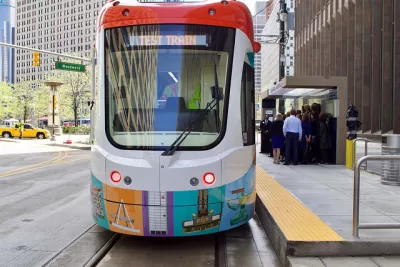
"The operator of the QLine said Tuesday that it has improved train frequency as it prepares to launch paid service beginning Sept. 5.," reports Tyler Clifford.
"M-1 Rail, the organization that runs the Detroit streetcar line, said Tuesday that streetcars are now arriving every 15 minutes during peak service, a 15 percent reduction in wait time," adds Clifford. Previously headways were in the ballpark of 20 to 25 minutes.
The QLine has had strong ridership throughout the summer, averaging 5,150 daily riders in June and July—an increase from previous months. Ridership is expected to decline when fares are enacted, however. "To combat the expected decline, the QLine plans more passenger education, additional ticketing locations aside from its on-platform kiosks and continued work on improving streetcar travel-time efficiency," according to Clifford.
Read the full story: QLine touts reduced waits as it prepares to charge for service

Lane Closure to Occasionally Make Space for Detroit's QLine Streetcar
Woodward Avenue will get a temporary road diet during special events in response to safety concerns connected to the QLine.
Detroit Streetcar: Dan Gilbert Dubs Thee 'QLINE'
After purchasing the naming rights of the streetcar line formerly known as M-1 for $5 million, Dan Gilbert made a big reveal Thursday in Detroit.

Fisticuffs: The argument AGAINST fare-free transit
If a terrible bus becomes free, will it truly free you?

Planetizen Federal Action Tracker
A weekly monitor of how Trump’s orders and actions are impacting planners and planning in America.

Amtrak, CN end decades-long dispute with eight-year agreement
The new operating agreement establishes an updated framework for the companies to work together, including processes to resolve disputes.

Northwest rail fans eager for Sept. 30 debut of Amtrak’s Airo fleet
Get ready for that new train smell and more seats. But they won’t go faster or run more frequently on the Cascades route in Washington and Oregon.

LAX SkyLink opening delayed again, contractor won’t commit to new deadline
The project was supposed to open its doors to the public in 2023.

Caltrain may slash over one-third of its stations
If Bay Area voters reject two transit tax measures, Caltrain, BART and AC Transit will see steep service cuts.

A 'dangerous' precedent: North Carolina successfully pressures communities into voting for toll roads
Two mayors resigned from the Charlotte Regional Transportation Planning Organization after it voted in favor of the toll roads.

FREE Course: Walkable City 1: Why Walkability?
After describing his path towards focusing on walkability as the essence of good planning, Jeff Speck marches through his five principal reasons for making more walkable places.
Reinventing Malls: Planning Alchemy—Turning Gray Fields Into Gold
The course focuses on the opportunities and imperatives that shape reinvention of mall sites.

City of Thousand Oaks
City of Wisconsin Rapids
Harvard University Graduate School of Design
The Architects Foundation
University of Cincinnati Online
The Pocatello Development Authority
The Urban Renewal Agency of the City of Pocatello