Philadelphia’s struggling transit system will be able to delay a 30 percent fare raise, but the temporary fix won't do nearly enough to close its budget gap.


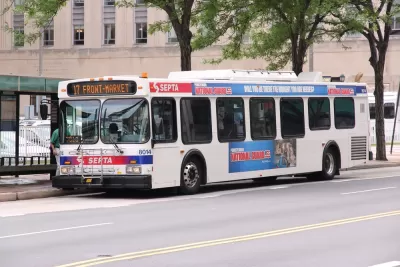
The Southeastern Pennsylvania Transportation Authority (SEPTA) will receive $153 million in federal highway funding to avoid service cuts and fare hikes, reports Stephen Caruso in Spotlight PA.
“Just like we prepare and maintain our roads and bridges in those rural and in those suburban communities, I think we owe it to the good people of Pennsylvania who take mass transit to be there for them and their families as well,” said Pennsylvania Governor Josh Shapiro when making the announcement.
The temporary solution will allow the agency to delay a proposed 30 percent fare hike, but falls short of SEPTA’s $240 million budget deficit. “Board Chair Ken Lawrence warned of more service cuts that would begin on July 1, 2025, unless SEPTA secures more funding.” The agency faces an existential crisis with no new long-term funding source and still plans to eliminate its Key card discount starting on December 1.
FULL STORY: Shapiro will give SEPTA $153M in federal funding to avoid cuts and fare hikes

The Wave of Transit ‘Fiscal Cliffs,’ Explained
Covid and inflation played a role. But for many agencies, the crisis goes much deeper.
SEPTA to Cut 1/5 of Service Starting Aug 24
The Philadelphia transit agency is eliminating 32 bus lines and slashing service on dozens of others after the state legislature failed to come to an agreement over funding.
Why Philly’s SEPTA Faces a ‘Death Spiral’
The state has not offered a sustainable source of funding to meet the transit agency’s $240 million budget gap.

Planetizen Federal Action Tracker
A weekly monitor of how Trump’s orders and actions are impacting planners and planning in America.

The state-sanctioned urbicide of Austin
People don’t kill cities. Freeways do.

US to reduce Colorado River water deliveries to Mexico
A new Colorado Treaty amendment reduces Mexico’s Colorado River water allocation by 250,000 acre feet.

Airbnb launches $250 million 'last-dollar financing' housing accelerator, makes first investment in Austin
The company will put $6.4 million towards affordable housing development in Texas’ capital.

Guerilla urbanists are building DIY bus stop benches in Chicago
A before-and-after of one of the bus stops with a new bench. The new benches are not officially sanctioned or permitted, but the residents who placed them hope they will be the start of a network of DIY benches across the city.

Mamdani overhauls NYC's Vision Zero plan with 100 new policy goals
The overhaul aims to reduce traffic deaths and make streets safer for pedestrians, cyclists and drivers through lower speed limits, new safety infrastructure and more.

FREE Course: Walkable City 1: Why Walkability?
After describing his path towards focusing on walkability as the essence of good planning, Jeff Speck marches through his five principal reasons for making more walkable places.
Reinventing Malls: Planning Alchemy—Turning Gray Fields Into Gold
The course focuses on the opportunities and imperatives that shape reinvention of mall sites.

Eagle County Government
Harvard University Graduate School of Design
Nashville Planning Department
The Architects Foundation
University of Cincinnati Online
The Pocatello Development Authority
The Urban Renewal Agency of the City of Pocatello
Journal of the American Planning Association