The design proposal for the Triboro Corridor is speculative, but meant to inspire the conversation on one of the "4c" ideas at the heart of the Regional Plan Association's Fourth Regional Plan.


Michelle Cohen reports on the results of a design competition announced by the Regional Plan Association in June, "asking for proposals that would transform various areas of the New York metropolitan region."
"One of the four ideas chosen to receive $45,000 was a transportation alternative that would serve the Bronx, Queens, and Brooklyn," according to Cohen. The Triboro Corridor proposal "developed by New York-based firm Only If along with Netherlands-based firm One Architecture, focuses on using a light rail to move passengers between the outer boroughs to alleviate some of the overcrowding that has plagued the current subway system with delays."
Diane Pham also covered the new Triboro idea in an earlier article from June.
The Triboro idea was only one of the design proposals featured in the ongoing 4C exhibit at For Tilden, running through September 17. 4C is a principal component of RPA’s Fourth Regional Plan, "A Region Transformed," according to the 4C website.
4C identifies four regional corridors of particular interest in the New York-New Jersey-Connecticut metropolitan area: Highlands, Coast, City, Suburbs. Together, these corridors represent the full range of policy and design challenges of the region addressed in the fourth plan.
Planetizen most recently picked up news about the grand plans for a Triboro Corridor transit line when the RPA released a policy brief in May 2016.
Read the full story: New renderings of proposed Triboro Corridor, 17-stop outer borough light rail and linear park

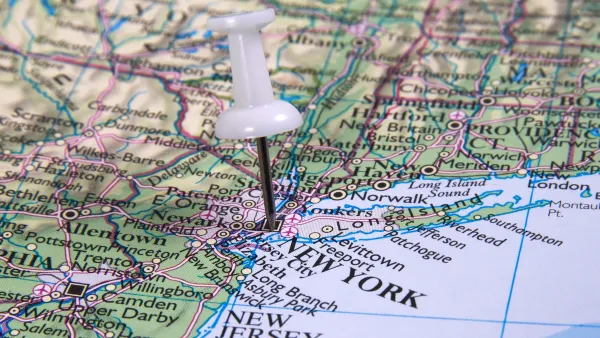
The Fourth Regional Plan Plots a Course for the New York Region
The Regional Plan Association released its eagerly anticipated Fourth Regional Plan on Thursday.
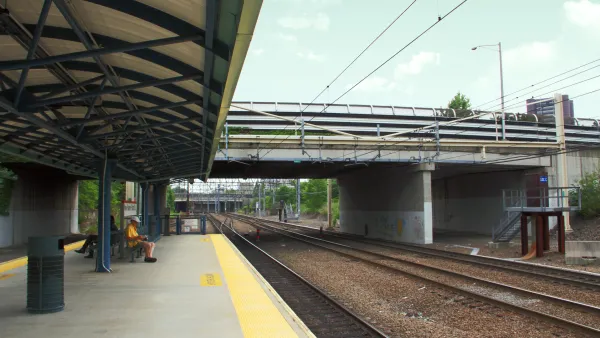
Study: New York Suburbs Need to Zone for Higher Density Transit Oriented Development
The Regional Plan Association released a new study that recommends steps toward higher density transit oriented development in transit adjacent communities around the New York region. The study also teases a big release coming later this month.
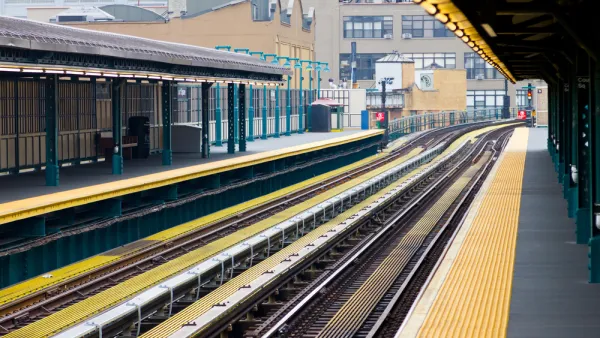
How the Triboro Line Could Improve Transit for Boroughs Not Named Manhattan
The Regional Plan Association presents the details of a plan to build a rail line connecting the Bronx, Queens, and Brooklyn: the Triboro Line.

Planetizen Federal Action Tracker
A weekly monitor of how Trump’s orders and actions are impacting planners and planning in America.

‘Going backwards:’ Baltimore mayor, students rally against state's transit funding plan
Maryland's proposed six-year plan provides no funding for Baltimore’s BMORE bus program and reduces its road maintenance funding.

Detroit to transform waterfront with $2.2 billion investment
Developers will convert about 18 acres of unused parking lot space into civic spaces.

Planned $2 billion courthouse in MA sparks tension with local government
Springfield owns an essential piece of the land developers intend to build on, and some city officials do not want to see the project come to fruition.

Californians can now transform balconies into power generators
Gov. Gavin Newsom has legalized plug-in solar technology, which allows residents to plug solar panels directly into their outlets

This 85-year-old ranch is Texas’ newest state park
The 650 acre ranch is one of the largest parcels of land along Lake Palestine.

FREE Course: Walkable City 1: Why Walkability?
After describing his path towards focusing on walkability as the essence of good planning, Jeff Speck marches through his five principal reasons for making more walkable places.
Reinventing Malls: Planning Alchemy—Turning Gray Fields Into Gold
The course focuses on the opportunities and imperatives that shape reinvention of mall sites.

City of Thousand Oaks
City of Wisconsin Rapids
Harvard University Graduate School of Design
The Architects Foundation
University of Cincinnati Online
Northern Illinois Transit Authority (NITA)
The Pocatello Development Authority
The Urban Renewal Agency of the City of Pocatello