Does environmental justice need its own office to help vulnerable populations impacted by pollution, or can all divisions within the EPA address the issue? The Office of Environmental Justice, established in 1993, may be shut down.


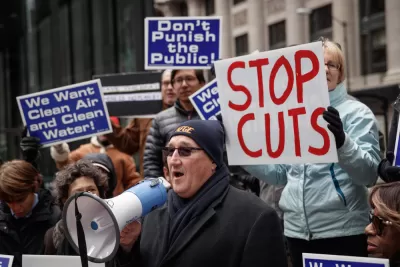
No agency will suffer a greater percentage drop in President Trump's proposed 2018 budget than the U.S. Environmental Protection Agency: a loss of $2.6 billion from current levels, or 31 percent, reported The New York Times on March 16 in an earlier post about how the budget cuts will affect two of American's greatest water resources: the Great Lakes and the Chesapeake Bay.
Costing far less money, about $2 million a year, but addressing a national problem is the Office of Environmental Justice which "works to protect human health and the environment in communities overburdened by environmental pollution by integrating environmental justice into all EPA programs, policies and activities."
"An EPA spokesperson suggested in a statement that the agency doesn’t need a special arm devoted to environmental justice to continue this work," reports Talia Buford, who covers disparities in environmental impacts for ProPublica.
"Environmental justice is an important role for all our program offices, in addition to being a requirement in all rules EPA issues,” the statement said. “We will work with Congress to help develop and implement programs and continue to work within the Agency to evaluate new ideas to properly address environmental justice issues on an agency-wide basis.“
To some extent, though, Democrats may share some blame for the jeopardy that the office "to advocate for minorities and the poor, populations most likely to face the consequences of pollution and least able to advocate for themselves," finds itself in today, adds Buford.
[I]t’s become achingly apparent that well before Trump, those who purported to champion environmental justice — primarily Democratic legislators and presidents — did little to codify the progress and programs related to it, even when they were best positioned politically to do so.
Sen. Cory Booker of New Jersey and other Democrats are racing to file bills that save the Office of Environmental Justice and similar initiatives on an emergency basis, though they know they have little chance of success.
Sadly, one can read about the the big plans the office had last October to recognize the profundity of the saying, "elections have consequences." Surprisingly, the EJ 2020 Action Agenda still exists on the EPA website.
Hat tip to Dino Grandoni, Energy and Environmental reporter at The Washington Post.
Read the full story: Has the Moment for Environmental Justice Been Lost?
The Trump Administration's Environmental Policies Have Consequences for Black Lives
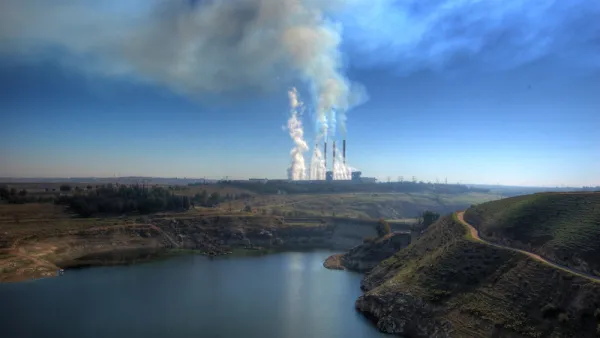
A Trump administration decision not to tighten Clean Air Act restrictions on soot pollution will have more consequences for Black Americans.

Undoing Biden's EV Rule
The partisan divide over how government should reduce greenhouse gas emissions was on full display after the Biden administration finalized its emissions standards rule for light and medium duty vehicles on March 20.
Complaint Blames Bay Delta Ecological Crisis on Racism
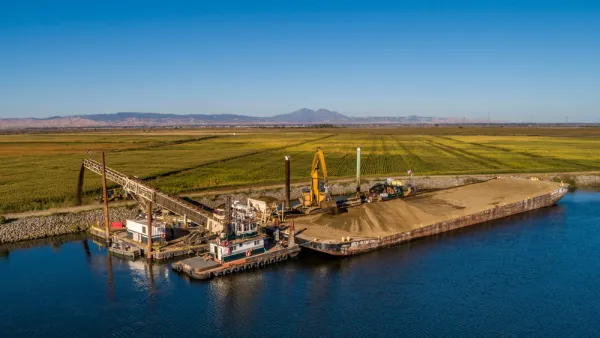
Advocates hope to enlist the federal government in forcing state regulators to set clean water standards for the San Francisco Bay Delta.

Planetizen Federal Action Tracker
A weekly monitor of how Trump’s orders and actions are impacting planners and planning in America.

California plans to bury El Niño’s downpour
If the state plays its cards right, it may be able to store a billion acre-feet of El Niño’s water in aquifers.

Desperate measures: Advocates weigh draining Lake Powell to fill Colorado River
Draining the reservoir could reduce evaporation losses by a couple hundred thousand acre-feet.

Chicago voters approve permanent festival grounds, penalty for vacant property owners
Currently, major summer and fall festivals take over public parks for weeks at a time, drawing criticism from nearby residents

NYC votes to cut outdoor dining red tape, speed up permitting
New York City also voted to allow the Department of Transportation to begin work on urgent projects before notifying elected officials.

California appears to reject Prop. 45
The proposition would have expanded the projects that qualify for a streamlined environmental review, effectively paring down the California Environmental Quality Act.

FREE Course: Walkable City 1: Why Walkability?
After describing his path towards focusing on walkability as the essence of good planning, Jeff Speck marches through his five principal reasons for making more walkable places.
Reinventing Malls: Planning Alchemy—Turning Gray Fields Into Gold
The course focuses on the opportunities and imperatives that shape reinvention of mall sites.

City of Rosemead
Rutgers University, Edward J. Bloustein School of Planning and Public Policy
One Hundred Miles
Hunter College, City University of New York (CUNY)
The Architects Foundation
University of Cincinnati Online
City of Cambridge
Montrose County
The Pocatello Development Authority