Transport for London has responded to customer requests for a new accessibility measure: a map to help riders avoid long tunnels.


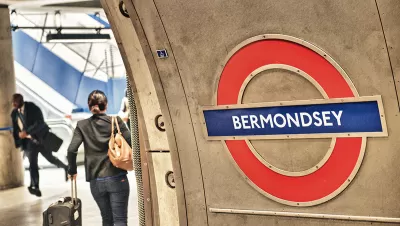
Fewer than half of the London Underground's 270 stations are actually underground, reports Metro Magazine. But sections that are can be uncomfortable, and make it especially difficult for claustrophobic or anxious transit riders to use the system (especially together with reported poor air quality in the subway cars).
To improve accessibility for all riders, Transport for London has published a new map highlighting parts of the transit network that are underground and suggesting routes that avoid long stretches of tunnels.
In the new design, parts of the lines have been given a grey overlay to illustrate which stations or sections of track are underground. The new map also shows which London Overground, DLR and TfL Rail services are in tunnels.
The tunnels map was initially suggested in customer feedback, and is part of TfL's broader campaign to improve user experience. Consultants in that effort are now working in California's Culver City, where a new Metro line is booming even as transit ridership in Los Angeles and throughout the nation continues to decline.
Read the full story: Map to help people with claustrophobia, anxiety navigate London Tube

How London's Leading on Transit Data
Transport for London is forging ahead on several projects to collect and use more rider data. One initiative draws on WiFi connections to map users' paths through the London Underground.
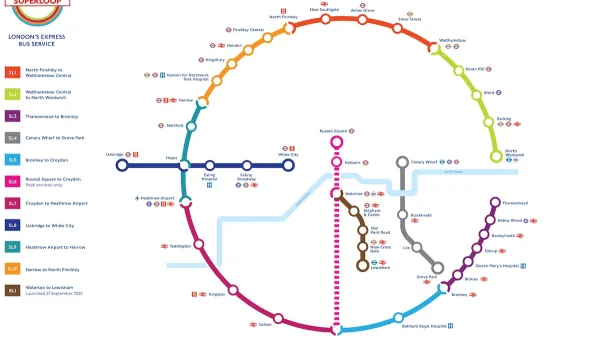
London’s Superloop BRT Ridership Grows by 20% While Other Bus Ridership Declines
The new rapid bus system launched its first suburban line, the first of 10 that will extend outside central London.

Biking in London Grew by 20 Percent Since 2019
Pandemic-induced changes and improved bike infrastructure have contributed to the impressive growth of cycling as a mode share.

Planetizen Federal Action Tracker
A weekly monitor of how Trump’s orders and actions are impacting planners and planning in America.

California plans to bury El Niño’s downpour
If the state plays its cards right, it may be able to store a billion acre-feet of El Niño’s water in aquifers.

Chicago breaks ground on $3 billion megadevelopment
The new neighborhood, titled Foundry Park, will one day host 3,700 residences.

California High-Speed Rail Authority CEO resigns after $600,000 scandal
Under Ian Choudri, the authority used taxpayer dollars to fund first class flights and trips to nightclubs.

Want to study the Missouri River? Soon, you may need unanimous approval from 10 states
Legislation would require 10 governors’ permission to study or build projects moving water outside the basin.

Desperate measures: Advocates weigh draining Lake Powell to fill Colorado River
Draining the reservoir could reduce evaporation losses by a couple hundred thousand acre-feet.

FREE Course: Walkable City 1: Why Walkability?
After describing his path towards focusing on walkability as the essence of good planning, Jeff Speck marches through his five principal reasons for making more walkable places.
Reinventing Malls: Planning Alchemy—Turning Gray Fields Into Gold
The course focuses on the opportunities and imperatives that shape reinvention of mall sites.

City of Rosemead
Rutgers University, Edward J. Bloustein School of Planning and Public Policy
One Hundred Miles
Hunter College, City University of New York (CUNY)
The Architects Foundation
University of Cincinnati Online
City of Cambridge
Montrose County
The Pocatello Development Authority