In the waning days of the Obama Administration, the U.S. Department of Transportation saw reason to investigate the civil rights implications of a decision to cancel funding for the Baltimore Red Line light rail project.


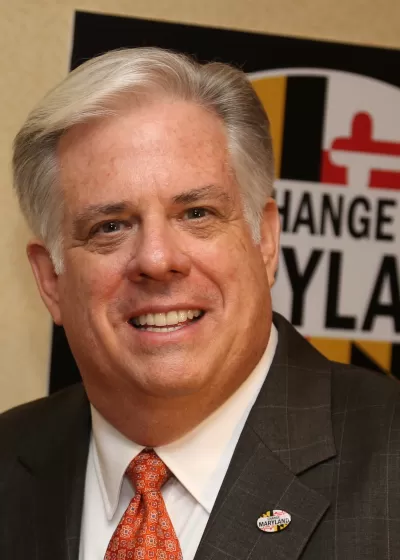
Angie Schmitt reports on the latest twist of the Baltimore Red Line saga: The Trump Administration has quietly ended an investigation into the question of whether Governor Larry Hogan's decision to kill the project violated Title VI of the Civil Rights Act.
"Now, six months into the Trump presidency, U.S. DOT has quietly terminated the civil rights investigation, without elaborating why," according to Schmitt. The article also includes a passage from a statement by NAACP Legal Defense Fund President Sherrilyn Ifill in response to the decision.
According to Schmitt, the Red Line investigation could have had groundbreaking scope and impact: "If investigators had ruled against Hogan, U.S. DOT could have frozen all federal transportation funds to Maryland until the problem had been remedied."
FULL STORY: Trump DOT Shuts Down Civil Rights Probe of Larry Hogan’s Decision to Kill the Red Line

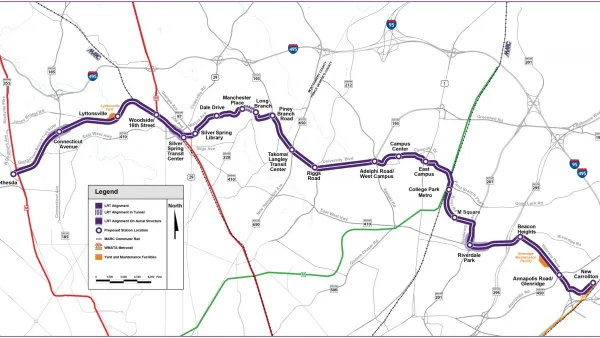
U.S. DOT Brings Maryland Purple Line Back From the Dead
The U.S. Department of Transportation and the state of Maryland are expected to sign a funding agreement next week for the Purple Line between Montgomery and Prince George's counties.
Maryland Transportation Planning Decisions Under Civil Rights Scrutiny
The infamous cancellation of the Red Line, a decision made by Gov. Larry Hogan shortly after he took office, is a high-profile example of how the state's transportation decisions are short-changing people of color.
Maryland Bills Push Back on Anti-Transit Governor
Maryland legislators are considering a rating system for transportation projects recently approved in Virginia. The bill would also check the power of the state's governor in killing project proposals.

The state-sanctioned urbicide of Austin
People don’t kill cities. Freeways do.

US to reduce Colorado River water deliveries to Mexico
A new Colorado Treaty amendment reduces Mexico’s Colorado River water allocation by 250,000 acre feet.

New Jersey’s second-largest city bans standalone data centers
Jersey City will continue to allow co-location facilities, such as those meant for research institutions that store their own data.

Amtrak not solely to blame for New Jersey commuter rail's unreliability, report finds
A new study from the Garden State Initiative found that NJ Transit’s budget grew 20% across a 4 year period, but reliability declined significantly over the same period.

EPA erases limits on planet-warming pollution from power plants
Under Monday’s plan, power plants would still have some limits on how much mercury, arsenic and other contaminants they can emit.

Phoenix announces new on-demand transit service, more frequent RAPID buses
Both new services will launch in October, and are part of Phoenix's Project Effective Access Solutions for Easing Congestion.

FREE Course: Walkable City 1: Why Walkability?
After describing his path towards focusing on walkability as the essence of good planning, Jeff Speck marches through his five principal reasons for making more walkable places.
Reinventing Malls: Planning Alchemy—Turning Gray Fields Into Gold
The course focuses on the opportunities and imperatives that shape reinvention of mall sites.


Eagle County Government
Harvard University Graduate School of Design
Nashville Planning Department
The Architects Foundation
University of Cincinnati Online
The Pocatello Development Authority
The Urban Renewal Agency of the City of Pocatello
Journal of the American Planning Association