Call it a reverse Chinatown.


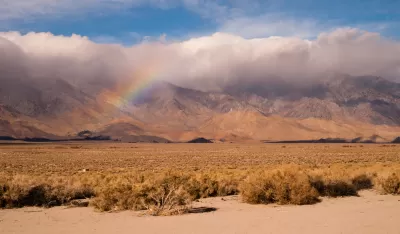
Owens Valley officials "have launched eminent domain proceedings in an effort to take property acquired by Los Angeles in the early 1900s," reports Louis Sahagun.
Yes, we are talking about that Owens Valley. What Sahaguan calls "An essential piece of California history and the subject of the classic 1974 film 'Chinatown.'" The moment Los Angeles bought the water rights in the Owens Valley "is still known as the original sin that sparked decades of hatred for Los Angeles as the valley dried up and ranchers and farmers struggled to make a living."
This will be the first time "Inyo County has used eminent domain rules against the Los Angeles Department of Water and Power, which owns 25% of the Owens Valley floor," according to Sahagun. "Unlike previous battles with the DWP that focused on the environmental and economic damage caused by L.A.'s pumping of local water supplies, the county seeks to pay fair market value for property and water rights needed for landfills, parks, commerce and ranchlands along a 112-mile stretch of Highway 395 east of the Sierra Nevada."
FULL STORY: L.A. took their water and land a century ago. Now the Owens Valley is fighting back


L.A.’s Water Diversions Threaten Critical Habitat Far to the North
Water levels at Mono Lake, nestled in a stunningly beautiful location on the eastern slope of the Sierra Nevadas that provides the eastern gateway to Yosemite, have fallen to a critical level of a local population of nesting gulls.
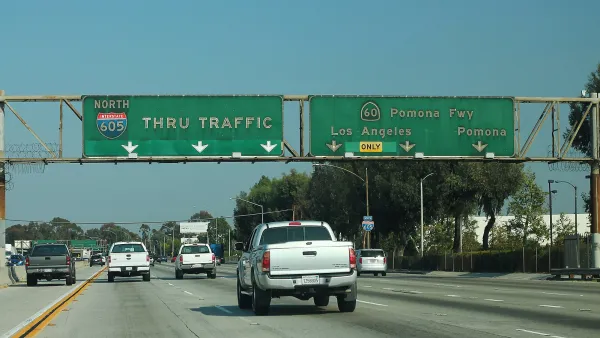
L.A. Freeway Expansion to Move Ahead, Sans Displacement
The 605 freeway expansion project was expected to demolish hundreds of homes and multifamily buildings.
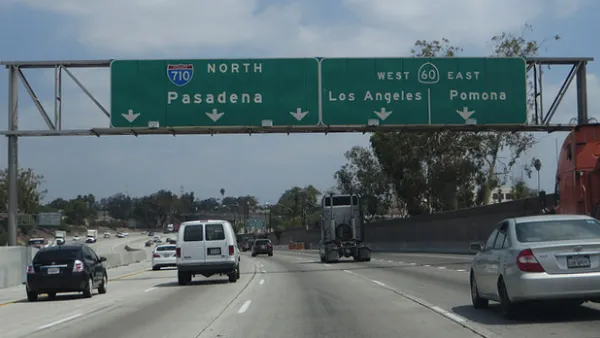
L.A. Metro Denounces—but Doesn't Scrap—710 Freeway Expansion Plan
The agency's board members spoke out forcefully against air pollution and displacement, but stopped short of completely rejecting the project, looking instead to cleaner vehicles and regulations that mitigate community concerns.

Planetizen Federal Action Tracker
A weekly monitor of how Trump’s orders and actions are impacting planners and planning in America.

The state-sanctioned urbicide of Austin
People don’t kill cities. Freeways do.

US to reduce Colorado River water deliveries to Mexico
A new Colorado Treaty amendment reduces Mexico’s Colorado River water allocation by 250,000 acre feet.

Amtrak not solely to blame for New Jersey commuter rail's unreliability, report finds
A new study from the Garden State Initiative found that NJ Transit’s budget grew 20% across a 4 year period, but reliability declined significantly over the same period.

EPA erases limits on planet-warming pollution from power plants
Under Monday’s plan, power plants would still have some limits on how much mercury, arsenic and other contaminants they can emit.

Phoenix announces new on-demand transit service, more frequent RAPID buses
Both new services will launch in October, and are part of Phoenix's Project Effective Access Solutions for Easing Congestion.

FREE Course: Walkable City 1: Why Walkability?
After describing his path towards focusing on walkability as the essence of good planning, Jeff Speck marches through his five principal reasons for making more walkable places.
Reinventing Malls: Planning Alchemy—Turning Gray Fields Into Gold
The course focuses on the opportunities and imperatives that shape reinvention of mall sites.

Eagle County Government
Harvard University Graduate School of Design
Nashville Planning Department
The Architects Foundation
University of Cincinnati Online
The Pocatello Development Authority
The Urban Renewal Agency of the City of Pocatello
Journal of the American Planning Association