The implications of autonomous vehicles for social interactions are potentially vast.


In the 1960s, countercultural icon Timothy Leary popularized the phrase, "turn on, tune in, drop out," to describe the idea of using LSD and other psychedelic drugs to detach from society and achieve a higher level of thinking. Later in his life, he argued that the personal computer was the "LSD of the 1990s"—at that time having no inkling how much automation and augmented reality would play in our society, or how autonomous vehicles might change the way we connect with others. Might automated vehicles (AVs) be one of the ways that humans "tune in, turn on" and disconnect for the next few decades?
As we have written in the past, AVs have vast potential to improve safety and mobility, but they also come with many uncertainties that policymakers can proactively address through a variety of planning and policy mechanisms. Left unchecked by policy or pricing schemes, AVs have the potential to impart negative impacts. We have explored some of these potential ills in previous articles, but the notion of social health and connectedness requires more attention—just how will AVs influence how people connect with each other and how they engage as members of a community. Will we drop out? Research suggests that we need social connectivity, and policy might be needed to reinforce that in the face of new pressure to disengage.
Suburban Growth and the Need for Social Connectivity
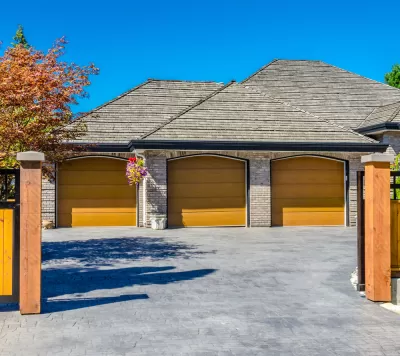
In the classic text Bowling Alone, Robert Putman portrayed a typical latchkey family with a suburban home where they live shut in and isolated—a visual in which residents drive out from their garage to work and then arrive home to close the garage and turn on the TV—never interacting socially at any point in the process. Putnam relates these challenges to the development of suburbs and decline of civil society, church attendance, bowling leagues, etc.
Subsequent work has revealed more of the degrading effects of land use and transport decisions on social cohesion. For example, auto-dominated and unsafe neighborhoods with scant resources for socializing are strong predictors of loneliness, especially among older adults. Conversely, socially cohesive neighborhoods tend to protect adult residents from the chronic, psychological distress typically associated with unemployment and other financial difficulties. Further, positive social interactions in park settings can increase children's sense of neighborhood social health, and children that frequently venture outside to walk and play perceive a greater sense of social capital than their counterparts in other neighborhoods. In sum, it is clear that socially healthy neighborhoods enhance social capital and overall health of communities.
Yet, research now shows that these challenges may be confounded by the pervasiveness of the Internet and social media. These modern accouterments pose new challenges to social health. Research shows that humans are social animals, and connecting with others is a vital component to socio-emotional well-being. Along with psychological needs for autonomy and competence, humans need relationships [pdf]. This allows humans to feel empathy—to care for and be cared for by significant others [pdf]. We satisfy our needs for relatedness through positive, meaningful, and ongoing interactions with others.
Autonomous Vehicles and Potential Decreases in Connectedness
But what happens when there are additional forces that obstruct the ability to connect socially and create community. Will AVs become another obstructing force in the social interactions of our lives? Will AVs have a negative impact on social health and the social cohesion of communities?
While we have argued in a past post that AVs might not affect sprawl (something consistent with the current three revolution (3R) strategy of electrification, automation, and sharing being discussed by some academics), there is the chance that driving and sprawl increase, particularly if car ownership models do not change dramatically. This could advance sprawling development patterns, resulting in exacerbated congestion that takes road capacity away from walking, cycling, and transit.
This trend also might also push people deeper into increased use of electronic devices and engagement with virtual and "augmented" realities. Immersion in alternative experiences while driving might induce greater tolerance for congestion and dampen appreciations of nature, public art, and landscapes.
Practical Community Design in an Autonomous Future
Thus, in the brave new AV world, how can planners and policymakers foster the conditions under which people regularly and positively interact with one another? How can policy-makers, planners, and others arrange environments to afford and facilitate positive and meaningful social engagements in communities? The following ideas offer suggestions for proactive planning policies that would nimbly respond the uncertainties present by AVs.
- Plan for the diffusion of AVs by designing, financing, and instituting vibrant social spaces that are equitably distributed in terms of residents' socio-economic status, race, ethnicity, gender, and age.
- Facilitate and promote social interactions and encounters with plazas, parks, playgrounds, pedestrian zones, consistent with the large body of literature that shows a mix of older and younger residents, medium population density, and well-designed walkable public spaces enhance the social cohesion of communities.
- Design nature-rich spaces, with high tree densities to facilitate feelings of safety and security.
- Integrate AVs with reliable, affordable, comfortable, convenient, and safe transit systems, because access to such systems predicts higher quality of life and improved mental health.
- Limit AV access in certain community, social space, and high pedestrian and cyclist densities.
- Establish clear AV (as well as transportation network company) drop-off and pick-up zones, and implement access limitations to create auto-free zones. These might include time-of-day pricing schemes or other options.
- Site schools and other civic institutions (e.g., community centers, libraries, etc.) for optimal accessibility on foot and by bicycle.
- Implement outreach programs that explain transportation choices and clearly articulate the benefits of walking and cycling to enhance and sustain active transportation. These programs might include walking and bicycling lunch programs, promotion of after-dinner strolls at restaurants, or ridesharing, particularly for people who have yet to establish work trip habits.
Will AVs turn on and will we drop out? Clearly, AVs have great potential to enhance safety and mobility, yet, as with any new technology, they may have associated challenges—one of which is the potential deterioration of social cohesion at a time in society when public dialogue and open engagement is needed most. Planners and policy makers have a role in facilitating civic dialogue and community engagement, and the steps we take now will help limit the negative consequences of AVs. Now is the time to start shaping policies that not only improve safety and efficiency, but also increase the livability and the social vibrancy of our communities. Onward.
William (Billy) Riggs, PhD is an Assistant Professor in the School of Management at University of San Francisco and leads communications at OppSites. He is a leader in the areas of urban policy, economics, transportation planning and technology, having worked as a practicing planner and published widely in these areas. He is also the principal author of Planetizen's Planning Web Technology Benchmarking Project. He can be found on Twitter @williamwriggs.
Seth LaJeunesse is Associate Director of the National Center for Safe Routes to School and a Research Associate with the UNC Highway Safety Research Center. He studies trends related to walking and cycling, as well as social and political dynamics of road safety initiatives. Seth is a member of the American Evaluation Association, the American Public Health Association, and the Pedestrians Committee of the Transportation Research Board. He previously worked as a school psychologist and holds master's degrees in child psychology and city and regional planning. He is on Twitter @SethLaJ307.
Michael R. Boswell, PhD is Department Head & Professor of City & Regional Planning at Cal Poly, San Luis Obispo and is an expert on strategies to reduce greenhouse emissions and increase community resilience to climate change. He is lead author of the book Local Climate Action Planning and most recently advised UN-Habitat on climate planning as a part of COP 21. His Twitter handle is @mboswell.

All I Want for Christmas Is a New Transportation Planning Process
I put my Christmas wish in a little early this year—wanted to give Santa time to deliver, and it's not an easy wish to grant. No data, no graphs, no citations, just some thoughts to share.
Autonomous Vehicles and Urban Contexts: It's Time to Engage All Stakeholders
At the 2017 Autonomous Vehicle Symposium, a group of experts were asked to predict the effects of autonomous vehicles in two case study communities, and to generate a list of proposed policy actions to prepare for a future of autonomous vehicles.
Still No Flying Cars: The Underwhelming Progress of Autonomous Vehicles
While we're still far from a Jetsons-style reality, understated autonomous features could be the key to safer transportation.

Planetizen Federal Action Tracker
A weekly monitor of how Trump’s orders and actions are impacting planners and planning in America.

Amtrak, CN end decades-long dispute with eight-year agreement
The new operating agreement establishes an updated framework for the companies to work together, including processes to resolve disputes.

Northwest rail fans eager for Sept. 30 debut of Amtrak’s Airo fleet
Get ready for that new train smell and more seats. But they won’t go faster or run more frequently on the Cascades route in Washington and Oregon.

Brightline Florida files for bankruptcy
The transit company is over $5 billion in debt.

St. Louis Metro to test if single-car trains can reduce operating costs, maintain rider satisfaction
The pilot program will run from October to spring 2027, and begin with one single-car train operating on Metrolink’s Red and Blue lines.

Pennsylvania is building data centers in abandoned mines
Housing data centers in mines provides an alternative to destroying local forests and may spare residents from data centers’ noise and air pollution.

FREE Course: Walkable City 1: Why Walkability?
After describing his path towards focusing on walkability as the essence of good planning, Jeff Speck marches through his five principal reasons for making more walkable places.
Reinventing Malls: Planning Alchemy—Turning Gray Fields Into Gold
The course focuses on the opportunities and imperatives that shape reinvention of mall sites.

City of Thousand Oaks
City of Wisconsin Rapids
Harvard University Graduate School of Design
The Architects Foundation
University of Cincinnati Online
The Pocatello Development Authority
The Urban Renewal Agency of the City of Pocatello

