The Maryland Transit Authority said the project will create over 60,000 jobs and add $23 billion to the local economy.



The Maryland Transit Authority has gained environmental approval for its multi-billion dollar Chesapeake Bay Crossing project, which will see two new four-lane bridges span the bay. Officials expect the project to cost between $15 and $17 billion dollars; construction is slated to begin in 2032.
The state will remove the old bridges as part of the project, and said the new bridges will have double the capacity of the current infrastructure. The MTA also said the project will create over 60,000 jobs and add $23 billion to the local economy.
“The project also includes the widening of U.S. 50/301 to eight lanes from west of Oceanic Drive to east of Cox Creek to support traffic transitions to the new crossing. The transportation authority said it will also consider adding a bike and pedestrian path along the bridge,” Thomas Robertson writes for WTOP News.
Read the full story: Maryland takes key step toward constructing new Chesapeake Bay Bridge

After years of opposition to light rail, this L.A. city wants a $200 million station
Cerritos officials want the Southeast Gateway Line, a planned 14.5-mile light rail route through Los Angeles County, to stop in their city.
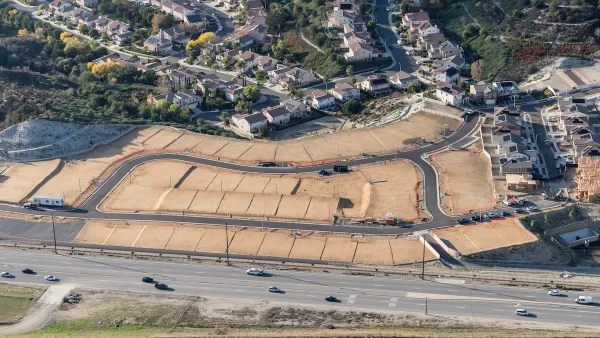
In California Battle of Housing vs. Environment, Housing Just Won
A new state law significantly limits the power of CEQA, an environmental review law that served as a powerful tool for blocking new development.
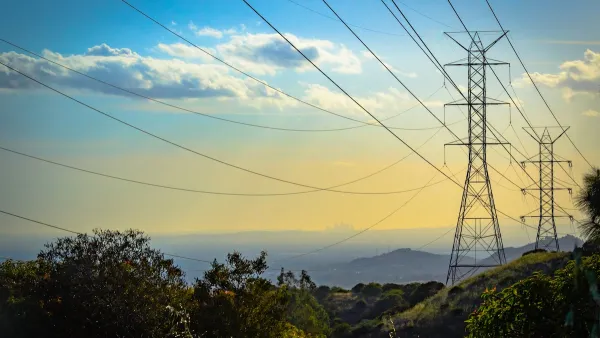
California Governor Suspends CEQA Reviews for Utilities in Fire Areas
Utility restoration efforts in areas affected by the January wildfires in Los Angeles will be exempt from environmental regulations to speed up the rebuilding of essential infrastructure.

Desperate measures: Advocates weigh draining Lake Powell to fill Colorado River
Draining the reservoir could reduce evaporation losses by a couple hundred thousand acre-feet.

Eastern Nebraska is running out of electricity
Data centers and electrification are straining eastern Nebraska’s grid, throttling economic development.

Move over, LA: St. Louis gears up for Olympics, invests millions in downtown redevelopment
The Missouri city will host the 2028 Olympic soccer group stage and knockout matches.

Maryland’s $15 billion bridge project gains key approval
The Maryland Transit Authority said the project will create over 60,000 jobs and add $23 billion to the local economy.

‘No clear next steps’ for Chicago's permanent festival grounds
Eleventh Ward Ald. Nicole Lee has suggested Soldier Field as a possible location for the permanent event space.

California, Hawaii, Rhode Island approve housing propositions
Hawaii and Rhode Island each approved their sole proposition, while California approved two of its three.

FREE Course: Walkable City 1: Why Walkability?
After describing his path towards focusing on walkability as the essence of good planning, Jeff Speck marches through his five principal reasons for making more walkable places.
Reinventing Malls: Planning Alchemy—Turning Gray Fields Into Gold
The course focuses on the opportunities and imperatives that shape reinvention of mall sites.

City of Rosemead
Rutgers University, Edward J. Bloustein School of Planning and Public Policy
One Hundred Miles
University of Michigan School for Environment and Sustainability (SEAS)
Hunter College, City University of New York (CUNY)
The Architects Foundation
City of Cambridge
Montrose County
The Pocatello Development Authority