Los Altos, California has erected a new roadblock in its ongoing effort to keep drivers from cutting through residential neighborhoods, beckoned by the popular navigation app Waze.



Henry Grabar revisits the continuing story of residential neighborhoods looking for ways to prevent cut-through traffic directed by the popular Waze app. This time the controversy has visited Los Altos, California, where congestion has spilled off of Interstate 280 onto local access roads.
First, Los Altos Hills asked Waze to remove three roads from its map. Waze does not entertain such requests. So Los Alto Hills came up with a Plan B: Close the streets to people who don’t live there. In May, the city erected “No Thru Traffic” signs on three roads where they crossed the city limit. Waze complied, according to a report from the Los Altos Hills manager, which means it will no longer direct users to drive on those streets.
City officials in Georgia, Alabama, and Maryland have nixed the idea in the past, according to Grabar—some citing the questionable legal and enforcement status of such signs. Even in Los Altos, the signs are in a trial period and the city isn't pursuing violators.
Read the full story: Suburbs Finally Figured Out a Way to Get Rid of Pesky Drivers on Waze Shortcuts


Waze vs. Residential Neighborhoods
Accounts of disgruntled residents responding by any means necessary to the flood of cars beckoned by the whims of navigation apps like Waze are spreading across the country.
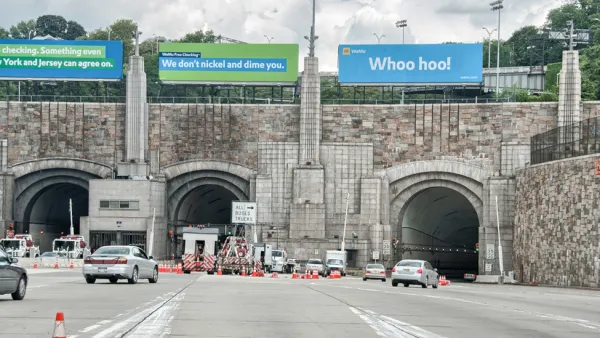
Waze Outfits NYC Tunnels with Beacons for Underground Navigation
The tech is part of a public-private partnership meant to improve connectivity to Waze and other navigation apps from underground.
Flooded With Navigation App Users, a Town Closes Its Streets
Navigation apps like Waze often reroute drivers onto residential streets that would be quiet otherwise. With some residents unable to leave their driveways, the New Jersey borough of Leonia has taken an extreme measure against the problem.

Planetizen Federal Action Tracker
A weekly monitor of how Trump’s orders and actions are impacting planners and planning in America.

‘Going backwards:’ Baltimore mayor, students rally against state's transit funding plan
Maryland's proposed six-year plan provides no funding for Baltimore’s BMORE bus program and reduces its road maintenance funding.

Detroit to transform waterfront with $2.2 billion investment
Developers will convert about 18 acres of unused parking lot space into civic spaces.

HUD modernizes 50-year-old manufactured housing framework
The Next Generation Manufactured Housing Action Plan establishes new energy-efficiency standards for manufactured homes, and new guidelines for anchoring them.

New CA housing laws tear down development red tape
Recently-signed legislation makes building starter homes and ADUs cheaper and faster in California.

Metrolink finishes first expansion in 20 years
The transit agency is now one of very few in the United States to connect two major airports.

FREE Course: Walkable City 1: Why Walkability?
After describing his path towards focusing on walkability as the essence of good planning, Jeff Speck marches through his five principal reasons for making more walkable places.
Reinventing Malls: Planning Alchemy—Turning Gray Fields Into Gold
The course focuses on the opportunities and imperatives that shape reinvention of mall sites.

planning NEXT
City of Thousand Oaks
City of Wisconsin Rapids
The Architects Foundation
University of Cincinnati Online
Montrose County
Northern Illinois Transit Authority (NITA)
The Pocatello Development Authority