The massive project known as the California WaterFix has nearly come to its day of reckoning.


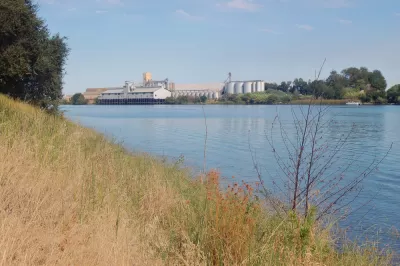
"The state’s most powerful water agencies have set a September goal to decide whether they’re going pay for the biggest and most controversial water project California has undertaken since the 1960s," according to an article by Ryan Sabalow and Dale Kasler.
That is, "overhauling the plumbing system that pumps billions of gallons of water through the Sacramento-San Joaquin Delta to the Bay Area, Southern California and one of the nation’s most productive farm belts."
Water agencies like Metropolitan Water District of Southern California, along with agencies from Silicon Valley, Fresno, Bakersfield, and beyond, will decide in September whether or not "to pay for Gov. Jerry Brown’s $15.5 billion plan for re-engineering the fragile estuary on Sacramento’s doorstep."
Opponents to the project include farmers, environmentalists, and some politicians. Recent studies from the U.S. Fish and Wildlife Service and the National Marine Fisheries Service provided new ammunition for opposing arguments, predicting that the project would have an adverse effect on endangered species of salmon and smelt.
Read the full story: Why years of waiting may be over on Delta tunnels
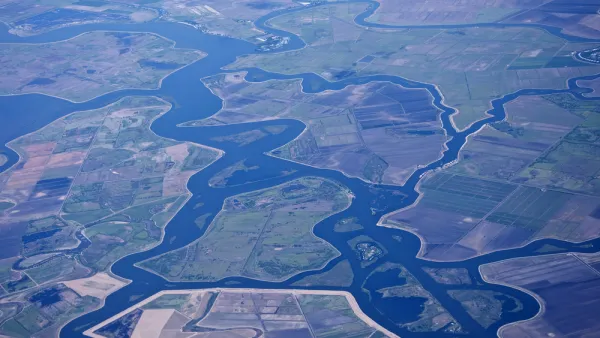
California Delta Tunnels Don't Stand Up to Federal Analysis
Federal agencies think the proposed Bay Delta tunnels are still too dangerous for endangered species.
Southern California's Largest Water District Approves $4.3 Billion for Delta Project
Two steps back, one step forward so far for the $17.7 billion California WaterFix tunneling project.
Lawsuits Slow Progress of California's $17 Billion WaterFix Project
Environmentalists and the fishing industry filed lawsuits just a few days after a massive plan to build tunnels to move water under the San Joaquin-Sacramento River Delta in California received a green light from the federal government.

Planetizen Federal Action Tracker
A weekly monitor of how Trump’s orders and actions are impacting planners and planning in America.

Washington state to charge fee to drivers with fuel-efficient cars
Revenue from the fee will go towards supporting the state’s highways.

Illinois considers spending $1 billion in taxpayer money on data center
A quantum computing campus and data center are currently under construction in Chicago.

Did data centers change how voters cast their ballots?
Texas, Ohio, and Georgia all flipped party control. But in rural counties, the effect of local data centers was mixed.

Amtrak invests in eight new Airo trainsets
The new trainsets will begin serving passengers in 2031.

HUD to end aid for mixed-immigration-status households
The new rule is projected to impact 80,000 people, nearly half of whom are children.

FREE Course: Walkable City 1: Why Walkability?
After describing his path towards focusing on walkability as the essence of good planning, Jeff Speck marches through his five principal reasons for making more walkable places.
Reinventing Malls: Planning Alchemy—Turning Gray Fields Into Gold
The course focuses on the opportunities and imperatives that shape reinvention of mall sites.

City of Charlotte
City of Rosemead
Rutgers University, Edward J. Bloustein School of Planning and Public Policy
University of Michigan School for Environment and Sustainability (SEAS)
Hunter College, City University of New York (CUNY)
The Architects Foundation
University District Partnership