Two steps back, one step forward so far for the $17.7 billion California WaterFix tunneling project.


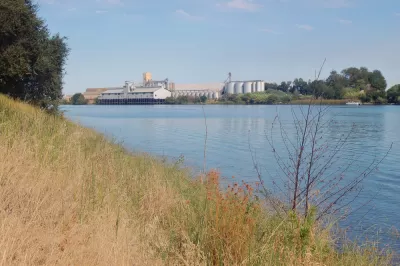
Southern California's largest water district, the Metropolitan Water District of Southern California, has agreed to spend $4.3 billion toward a $17.7 billion water project known as the California WaterFix.
Steve Scauzillo reports from Southern California on the big vote, writing that the MWD's vote could put the controversial project back on track after a couple of high profile setbacks. Though the vote by MWD amounts to approval from Southern California for the project, the project is not guaranteed to move forward.
For more on the MWD's vote, this time from a Northern California-based news outlet, see also a story by Ryan Sabalow and Dale Kasler. Their article notes that the MWD board did include dissenting opinions on the project: "Much of the opposition came from the board’s Los Angeles and San Diego delegates, who said the region should reduce its dependence on the Delta. Los Angeles Mayor Eric Garcetti came out against the project just as the Metropolitan board meeting got under way."
FULL STORY: WD says yes to tunnels to help bring water to Southern California; this is how much it’s going to cost

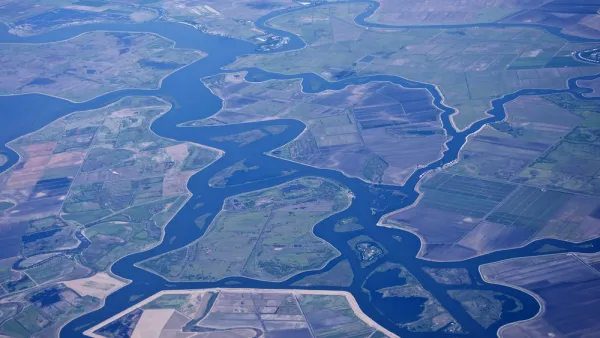
Lawsuits Slow Progress of California's $17 Billion WaterFix Project
Environmentalists and the fishing industry filed lawsuits just a few days after a massive plan to build tunnels to move water under the San Joaquin-Sacramento River Delta in California received a green light from the federal government.
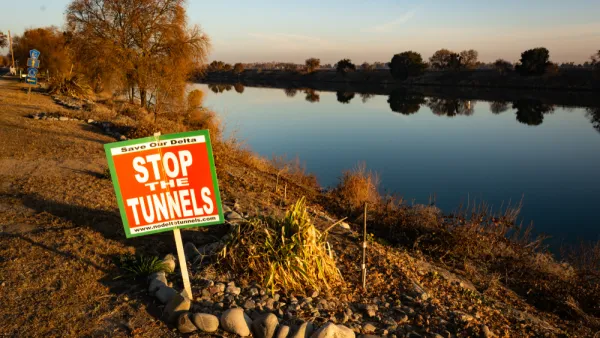
High-Speed Rail Not the Only Massive Public Works Project on the Chopping Block
California Governor Gavin Newsom wants to reduce the size of the $17 billion WaterFix project that plans for two tunnels under the San Joaquin-Sacramento River Delta.
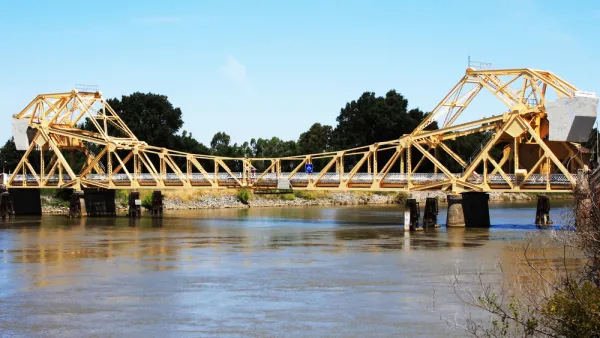
Feds Change Course, Approve $15.5 Billion California Water Project
The U.S. Fish & Wildlife Service and the National Marine Fisheries Service gave a crucial green light for the intensely controversial and ambitious California WaterFix project, which would pump water around the Sacramento-San Joaquin Delta.

The state-sanctioned urbicide of Austin
People don’t kill cities. Freeways do.

US to reduce Colorado River water deliveries to Mexico
A new Colorado Treaty amendment reduces Mexico’s Colorado River water allocation by 250,000 acre feet.

New Jersey’s second-largest city bans standalone data centers
Jersey City will continue to allow co-location facilities, such as those meant for research institutions that store their own data.

Amtrak not solely to blame for New Jersey commuter rail's unreliability, report finds
A new study from the Garden State Initiative found that NJ Transit’s budget grew 20% across a 4 year period, but reliability declined significantly over the same period.

EPA erases limits on planet-warming pollution from power plants
Under Monday’s plan, power plants would still have some limits on how much mercury, arsenic and other contaminants they can emit.

Phoenix announces new on-demand transit service, more frequent RAPID buses
Both new services will launch in October, and are part of Phoenix's Project Effective Access Solutions for Easing Congestion.

FREE Course: Walkable City 1: Why Walkability?
After describing his path towards focusing on walkability as the essence of good planning, Jeff Speck marches through his five principal reasons for making more walkable places.
Reinventing Malls: Planning Alchemy—Turning Gray Fields Into Gold
The course focuses on the opportunities and imperatives that shape reinvention of mall sites.

Eagle County Government
Harvard University Graduate School of Design
Nashville Planning Department
The Architects Foundation
University of Cincinnati Online
The Pocatello Development Authority
The Urban Renewal Agency of the City of Pocatello
Journal of the American Planning Association