In arguments about how to construct transit and infrastructure, the voice of the poverty-stricken cyclist is rarely heard.


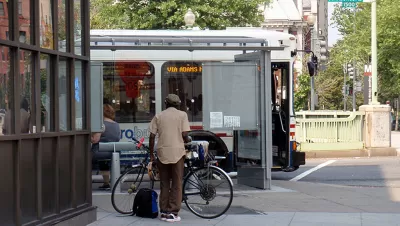
Cycling enthusiasts and those who favor building for cars only aren't the only two groups affected by infrastructure and policies. Disadvantaged cyclists are less likely to be included in these decisions. "The voices speaking for bicyclist rights and needs, and publicly representing the bicycling community in America are likely only representative of a small segment of the population that bikes," Rachel Quedau writes in Strong Towns. And, while the concerns of more privileged residents might be legitimate, they're not necessarily the same as poor cyclists. On a related note, police in Chicago's richest neighborhoods rarely cite cyclist for infractions, while less affluent neighborhoods, particularly black neighborhoods, get a disproportionate number of tickets.
"It's odd that biking is such a politically charged and polarizing topic when so many people across the country are just using bikes as a simple, cheap way to get to work," argues Quedau.
Read the full story: The Invisible Bike Riders
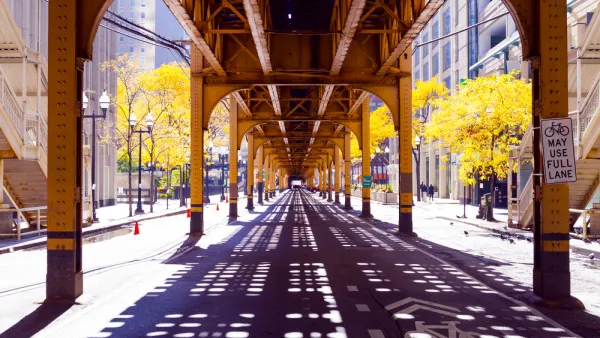
Chicago Police Still Targeting Black Cyclists
A year after a report showed a giant discrepancy in enforcement of bike regulation between white and black riders, data the Chicago Police Department continues to target black bikers.
A Rap Song About Bike Safety? Yes Please.
Activist politician and rapper, Rhymefest, partners with Blackstone Bicycle Works and Donda's House to attempt the impossible: a compelling song about bike safety.
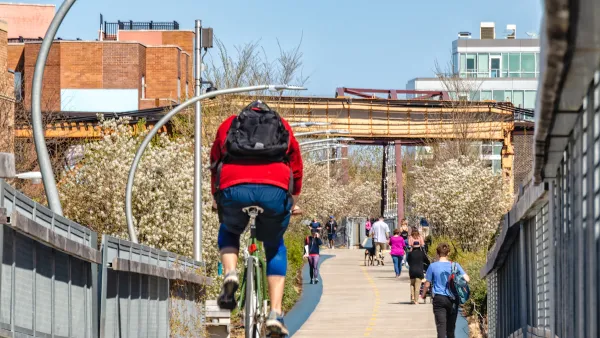
Chicago Leads Nation in Biking Growth
Cycling as a mode share grew faster in the Windy City over the last five years than in any other major U.S. metropolis.

Planetizen Federal Action Tracker
A weekly monitor of how Trump’s orders and actions are impacting planners and planning in America.

California plans to bury El Niño’s downpour
If the state plays its cards right, it may be able to store a billion acre-feet of El Niño’s water in aquifers.

Desperate measures: Advocates weigh draining Lake Powell to fill Colorado River
Draining the reservoir could reduce evaporation losses by a couple hundred thousand acre-feet.

Chicago voters approve permanent festival grounds, penalty for vacant property owners
Currently, major summer and fall festivals take over public parks for weeks at a time, drawing criticism from nearby residents

NYC votes to cut outdoor dining red tape, speed up permitting
New York City also voted to allow the Department of Transportation to begin work on urgent projects before notifying elected officials.

California appears to reject Prop. 45
The proposition would have expanded the projects that qualify for a streamlined environmental review, effectively paring down the California Environmental Quality Act.

FREE Course: Walkable City 1: Why Walkability?
After describing his path towards focusing on walkability as the essence of good planning, Jeff Speck marches through his five principal reasons for making more walkable places.
Reinventing Malls: Planning Alchemy—Turning Gray Fields Into Gold
The course focuses on the opportunities and imperatives that shape reinvention of mall sites.

City of Rosemead
Rutgers University, Edward J. Bloustein School of Planning and Public Policy
One Hundred Miles
Hunter College, City University of New York (CUNY)
The Architects Foundation
University of Cincinnati Online
City of Cambridge
Montrose County
The Pocatello Development Authority