Cycling as a mode share grew faster in the Windy City over the last five years than in any other major U.S. metropolis.


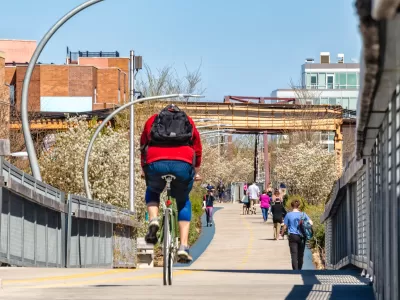
Over the last five years, bicycling grew faster in Chicago than in any other U.S. city, writes Ron Johnson in Momentum. The data comes from the Chicago Department of Transportation (CDOT) and its partnership with Replica, which quantifies biking in the city to understand the impact of its bike infrastructure efforts. According to Johnson, “The study showed a 119% increase in biking between fall 2019 and spring 2023, marking the largest jump among the country’s 10 largest cities.”
The city says the study’s results validate its Chicago Cycling Strategy, which targets low-stress cycling routes, active community engagement, and filling in critical gaps in the city’s bike infrastructure. In 2023, it added 27 miles of protected bike lanes and 18 miles of new greenways, while neighborhood trips increased by 113 percent.
Still, there is room for improvement. “Enhancing safety measures and infrastructure remains a critical area for development. Advocates emphasize the need for more protected bike lanes, improved intersection designs, and comprehensive safety campaigns to ensure that the increasing number of cyclists can ride safely and confidently.”
Read the full story: Bicycling grew more in Chicago than in any other major American city in the last five years


Cycling Rates Remain High Across the Country
The bike boom that began during the pandemic shows no signs of abating, according to a new report.
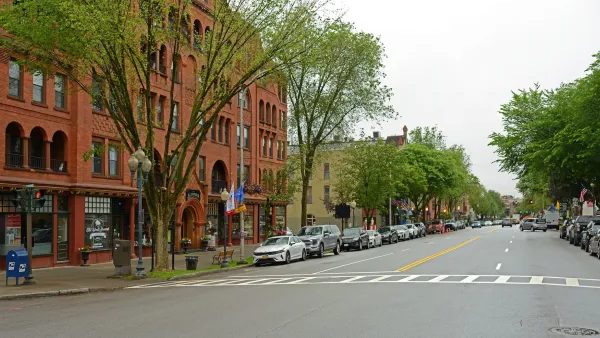
Saratoga Springs bike advocates say city is ignoring its Complete Streets plan
Despite a commitment to improving its multimodal infrastructure, the city has no plans to install bike lanes or curb cuts as part of repaving projects on two streets.
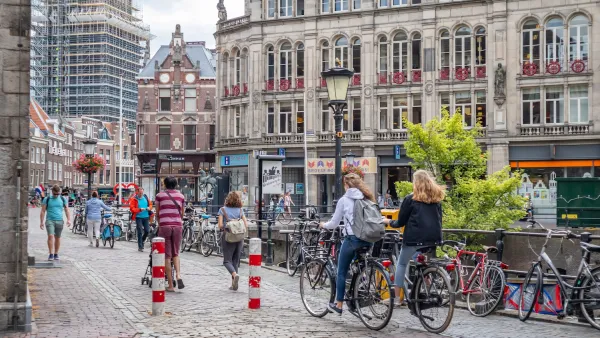
2025's 30 Most Bike-friendly Cities
Copenhagenize has released its list of top cities for cyclists. Spoiler alert: the United States doesn’t make the list.

Planetizen Federal Action Tracker
A weekly monitor of how Trump’s orders and actions are impacting planners and planning in America.

California plans to bury El Niño’s downpour
If the state plays its cards right, it may be able to store a billion acre-feet of El Niño’s water in aquifers.

Chicago breaks ground on $3 billion megadevelopment
The new neighborhood, titled Foundry Park, will one day host 3,700 residences.

California High-Speed Rail Authority CEO resigns after $600,000 scandal
Under Ian Choudri, the authority used taxpayer dollars to fund first class flights and trips to nightclubs.

Want to study the Missouri River? Soon, you may need unanimous approval from 10 states
Legislation would require 10 governors’ permission to study or build projects moving water outside the basin.

Desperate measures: Advocates weigh draining Lake Powell to fill Colorado River
Draining the reservoir could reduce evaporation losses by a couple hundred thousand acre-feet.

FREE Course: Walkable City 1: Why Walkability?
After describing his path towards focusing on walkability as the essence of good planning, Jeff Speck marches through his five principal reasons for making more walkable places.
Reinventing Malls: Planning Alchemy—Turning Gray Fields Into Gold
The course focuses on the opportunities and imperatives that shape reinvention of mall sites.

City of Rosemead
Rutgers University, Edward J. Bloustein School of Planning and Public Policy
One Hundred Miles
Hunter College, City University of New York (CUNY)
The Architects Foundation
University of Cincinnati Online
City of Cambridge
Montrose County
The Pocatello Development Authority