Lyft's shuttle service runs along a pre-determined route during peak commuting times and you can pay for it with your Lyft app.


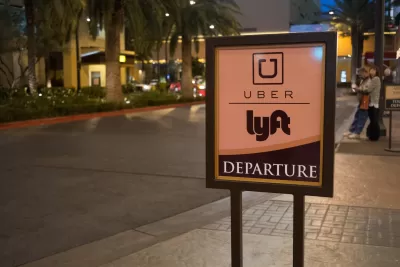
Silicon Valley companies seem to love the word innovate, but the new shuttle service from Lyft feels like bus service. "Lyft riders now have the opportunity to walk to a predetermined location, climb aboard a vehicle that will travel a set route to a predesignated drop-off point, and pay a flat rate for the service. If it walks like a bus, talks like a bus, and quacks like a bus … it’s probably a billion-dollar, venture-backed startup," Victor Luckerson writes in The Ringer.
Luckerson points out that ride sharing apps like Uber and Lyft have been trying to augment or replace public transit for some time: with programs where city governments subsidize Uber rides and Lyft product designed to get people to the nearest Metro stations. "Both Uber and Lyft want to evolve from being indulgences for people who can afford them to vital elements of urban (and suburban) infrastructure," Luckerson argues.
Read the full story: Lyft’s New Feature Looks Suspiciously Like a Bus Route
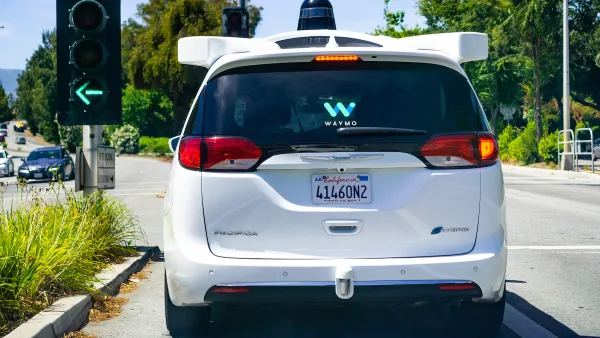
Advice for Autonomous Cars
Drivers for Uber and Lyft in San Francisco express their concerns and advice for self-driving taxi services.
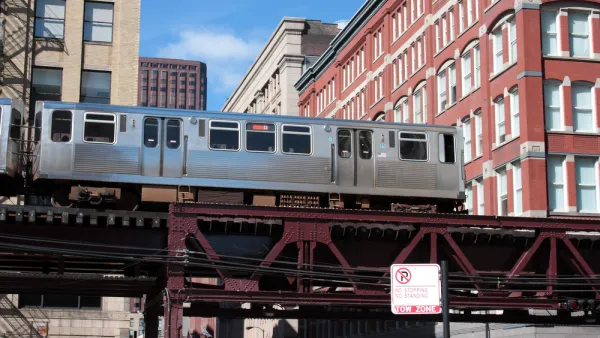
New Research Connects Land Use to Ride-Hailing Trips
Many of the places in Chicago generating the most ride-hailing trips with services like Uber and Lyft are accessible by transit, according to new research.
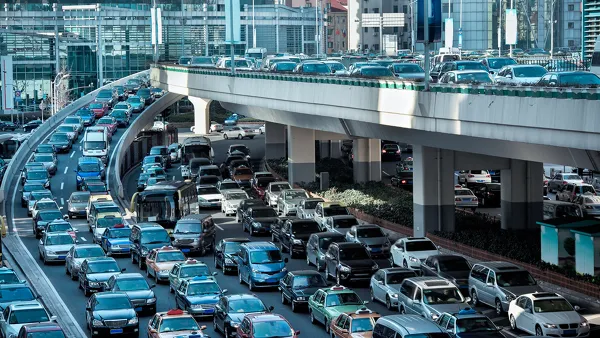
How Much of Traffic is Created by Uber and Lyft?
New data from Fehr & Peers shows services like Uber and Lyft account for a larger share of the total traffic than previously thought, especially in city centers.

Planetizen Federal Action Tracker
A weekly monitor of how Trump’s orders and actions are impacting planners and planning in America.

California plans to bury El Niño’s downpour
If the state plays its cards right, it may be able to store a billion acre-feet of El Niño’s water in aquifers.

Desperate measures: Advocates weigh draining Lake Powell to fill Colorado River
Draining the reservoir could reduce evaporation losses by a couple hundred thousand acre-feet.

Chicago voters approve permanent festival grounds, penalty for vacant property owners
Currently, major summer and fall festivals take over public parks for weeks at a time, drawing criticism from nearby residents

NYC votes to cut outdoor dining red tape, speed up permitting
New York City also voted to allow the Department of Transportation to begin work on urgent projects before notifying elected officials.

California appears to reject Prop. 45
The proposition would have expanded the projects that qualify for a streamlined environmental review, effectively paring down the California Environmental Quality Act.

FREE Course: Walkable City 1: Why Walkability?
After describing his path towards focusing on walkability as the essence of good planning, Jeff Speck marches through his five principal reasons for making more walkable places.
Reinventing Malls: Planning Alchemy—Turning Gray Fields Into Gold
The course focuses on the opportunities and imperatives that shape reinvention of mall sites.

City of Rosemead
Rutgers University, Edward J. Bloustein School of Planning and Public Policy
One Hundred Miles
Hunter College, City University of New York (CUNY)
The Architects Foundation
University of Cincinnati Online
City of Cambridge
Montrose County
The Pocatello Development Authority