Henry Grabar argues that the United States has already too many roads, and the burden of maintenance costs and the sprawl encouraged by road-building should make new roads and bridges the country's last priority.


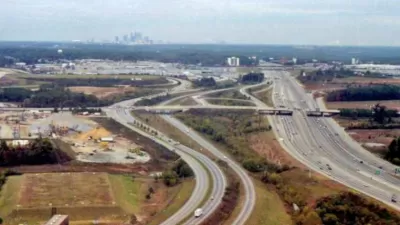
National politicians on both sides of the political spectrum have come out in favor of an infrastructure bill to build more roads and bridges. Meanwhile, some worry that more roads mean more cars, more sprawl and more maintenance. "Gravel is good. It’s cheaper than concrete and often has lower maintenance costs," Henry Grabar argues in Slate.
Garbar argues that the president's proposed infrastructure legislation, if it ever gets written, might sound like a bit of bi-partisan relief from a the contentious times the country is experiencing, but that new roads would not put the country in a better place. He says the United States is in, "…an unprecedented maintenance crisis, in addition to facilitating sprawl, harming the environment, undermining Main Street commerce, and draining local budgets." Not only because politicians are not adequately taking care of the roads they already have, but also because, "In and around cities, road mileage has grown at exactly twice the rate of population," Garbar writes.
Read the full story: No More Roads
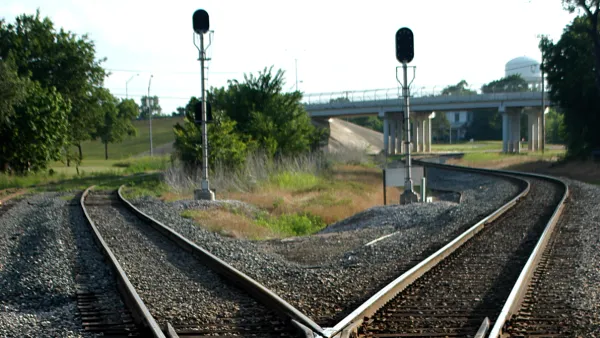
Trump's Infrastructure Plan a Boon for Private Interests
President Trump's proposed infrastructure plans intends to shift ownership of much of America's infrastructure into private hands. Rebecca Burns argues that this approach will benefit the country's richest at the expense of the rest of the country.
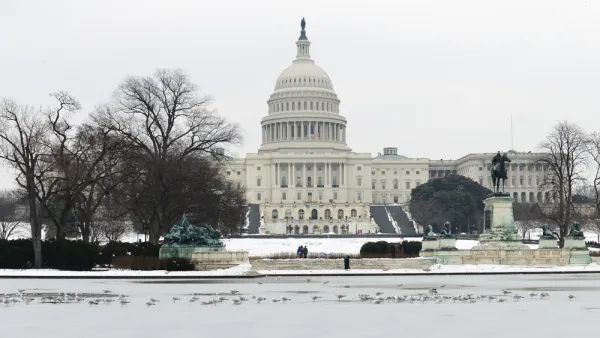
Road to Infrastructure Bill May Run Through Freedom Caucus
Much talked about Trump infrastructure bill has yet to be written, but the president's failure to pass a health care bill in the House has drawn Congress watchers' attention to the Freedom Caucus and the impact they may have an infrastructure bill.
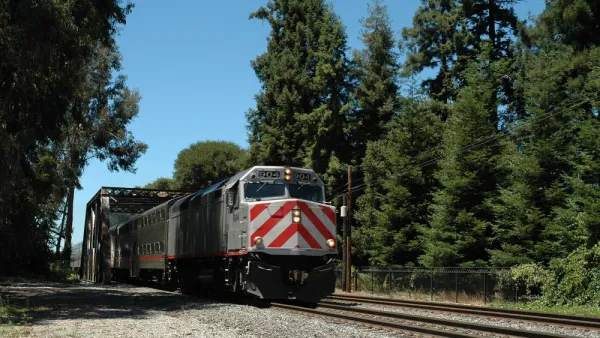
Trumps Infrastructure Promises Might Not Include California
Electrifying Caltrain is low-hanging fruit for Infrastructure spending. Unfortunately, the fruit may spoil on the vine because the California GOP and Donald Trump have put the project on hold.

Planetizen Federal Action Tracker
A weekly monitor of how Trump’s orders and actions are impacting planners and planning in America.

California plans to bury El Niño’s downpour
If the state plays its cards right, it may be able to store a billion acre-feet of El Niño’s water in aquifers.

Desperate measures: Advocates weigh draining Lake Powell to fill Colorado River
Draining the reservoir could reduce evaporation losses by a couple hundred thousand acre-feet.

US buildings threatened, destroyed by fires set to triple by 2060
Researchers found a high fire risk for socioeconomically vulnerable neighborhoods in the American West.

LA residents may be allowed to paint their own crosswalks
Councilwoman Katy Yaroslavsky put out a motion instructing the Los Angeles Department of Public Transportation to study the feasibility of allowing volunteers to paint crosswalks.

Dallas moves to overhaul its zoning code
The city's zoning reform will allow more multi-family and mixed-use developments.

FREE Course: Walkable City 1: Why Walkability?
After describing his path towards focusing on walkability as the essence of good planning, Jeff Speck marches through his five principal reasons for making more walkable places.
Reinventing Malls: Planning Alchemy—Turning Gray Fields Into Gold
The course focuses on the opportunities and imperatives that shape reinvention of mall sites.

City of Rosemead
Rutgers University, Edward J. Bloustein School of Planning and Public Policy
One Hundred Miles
Hunter College, City University of New York (CUNY)
The Architects Foundation
University of Cincinnati Online
City of Cambridge
Montrose County
The Pocatello Development Authority