Not only are suburbs growing, many of the larger, older cities that had reversed decades of population decline, are now losing population, again. The biggest losers: counties with the greatest population densities.


The U.S. Census Bureau released population estimates on March 23. The "data confirmed that suburban areas lead growth." To understand the relationship between county population density and population change based on residents leaving and arriving in counties, Mike Maciag, Governing's data editor, "compared the Census Bureau's updated domestic migration estimates for all counties within metro areas, which were then grouped by population density."
The 146 most densely populated counties lost a total of 539,000 residents to other parts of the country over the 12-month period ending in July, representing the largest decline in recent years.
Maciag details the population loss in St. Louis and Baltimore which have seen their more affluent suburbs grow.
Over the 12-month period ending in July, the city of St. Louis lost 1.1 percent of its population -- the largest decline of any large Census-designated county nationally. The steady stream of residents leaving has led to thousands of vacant homes and lots, particularly on the north side. The city's Land Reutilization Authority currently holds approximately 12,000 vacant properties, far more than comparable cities.
Central cities' losses are their suburbs' gains. Case in point, Baltimore.
A somewhat similar scenario is playing out in the city of Baltimore, where the population declined at the same rate. A net total of 11,000 residents moved out of the city -- many to surrounding suburban neighborhoods -- nearly doubling the domestic migration loss of the prior 12-month period.
“The suburbs in Baltimore are no more just middle-class professionals, they’re much more diverse,” says Andrew Cherlin, a Johns Hopkins University professor.
See the Census Bureau's press release for tables showing showing population growth and loss from July 1, 2015 to July 1, 2016
- Top 10 Largest-Gaining Counties (Numeric Change), led by Maricopa County, Arizona.
- Top 10 Fastest-Growing Counties (Percent Change, Counties With a Population of 10,000 or More), led by San Juan County, Utah.
- Top 10 Largest-Declining Counties or County Equivalents (Numeric Change), led by Cook County, Illinois.
- Top 25 Fastest-Growing Metro Areas (Percent Change), led by The Villages, Florida.
Read the full story: Population Declines Accelerate in Many Large Urban Areas
Population Growth Trends Return to Pre-Recession Norms
It's almost like the Great Recession and the Great Urban Renaissance never happened, as Americans are moving to the suburbs and the Sunbelt than to the nation's urban areas.
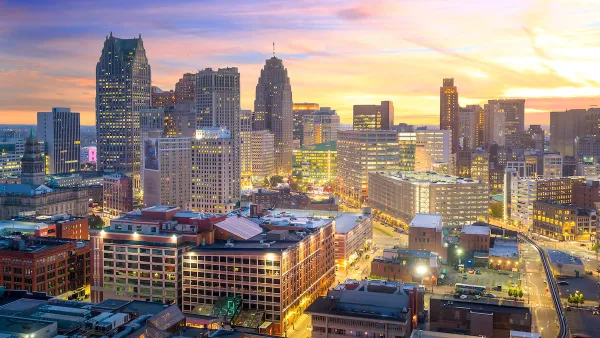
Detroit and Michigan on the Upswing
It's been 66 years since the Motor City last grew its population. Census data released last month revealed an increase of nearly 2,000 people last year, nearly half the state's population growth.
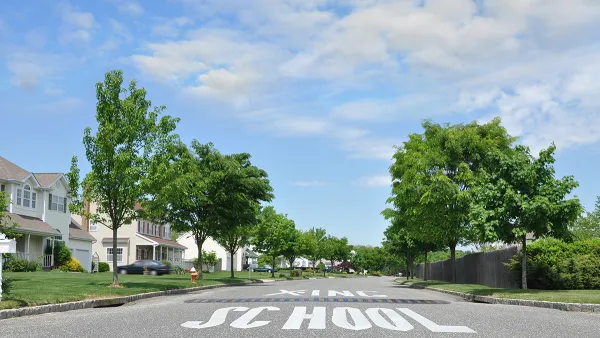
New Census Data Confirms: Suburban Areas Lead U.S. Growth
Post-recession population growth in the United States looks a lot like pre-recession growth in the United States. As some have predicted or already noticed: the story of U.S. growth is still suburban.

Planetizen Federal Action Tracker
A weekly monitor of how Trump’s orders and actions are impacting planners and planning in America.

California plans to bury El Niño’s downpour
If the state plays its cards right, it may be able to store a billion acre-feet of El Niño’s water in aquifers.

Desperate measures: Advocates weigh draining Lake Powell to fill Colorado River
Draining the reservoir could reduce evaporation losses by a couple hundred thousand acre-feet.

Mamdani’s pied-à-terre tax survives legal challenge
A panel of judges found that the plaintiffs failed to demonstrate injury as a result of New York City's implementation of the tax.

Eastern Nebraska is running out of electricity
Data centers and electrification are straining eastern Nebraska’s grid, throttling economic development.

Seattle passes record-breaking transit services expansion
Proposition 1 will double the city’s transit tax to add 95,000 more bus trips and preserve 180,000 bus trips annually.

FREE Course: Walkable City 1: Why Walkability?
After describing his path towards focusing on walkability as the essence of good planning, Jeff Speck marches through his five principal reasons for making more walkable places.
Reinventing Malls: Planning Alchemy—Turning Gray Fields Into Gold
The course focuses on the opportunities and imperatives that shape reinvention of mall sites.

City of Rosemead
Rutgers University, Edward J. Bloustein School of Planning and Public Policy
One Hundred Miles
University of Michigan School for Environment and Sustainability (SEAS)
Hunter College, City University of New York (CUNY)
The Architects Foundation
City of Cambridge
Montrose County
The Pocatello Development Authority