From London to Los Angeles, the punk movement was always an urban phenomenon. But punks needed to fight hard for a place in the cities they called home.


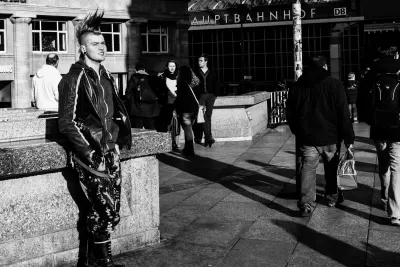
Punk's not dead, but these days it may have more to fear from gentrifiers than the police. Jamie Thomson writes, "As a host of cultural historians will attest, punk never died, it just went underground. Mutating into hardcore, it retreated to the basements, the garages and the backstreet dives – but like a weed pushing through the cracks, it has fought to find its place in the hostile environment of the modern city."
As punk came up, police crackdowns weren't the only issue. "For the scene to survive, hardcore bands needed places to play – and in venues free from intervention by authority figures or age restrictions (in the US, the drinking age of 21 would exclude a good 80% of the audience)."
While London was always a punk capital, a dedicated art space took along time to coalesce. "It's somewhat surprising, then, that London has taken so long to establish its own autonomous space – and it was only due to the efforts of a small group that, in 2015, DIY Space for London was established."
These days, the punk ethos thrives online, while it's more muted on gentrifying urban streets. But it has also spread to new places like Japan and Indonesia.
Read the full story: How punk changed cities – and vice versa
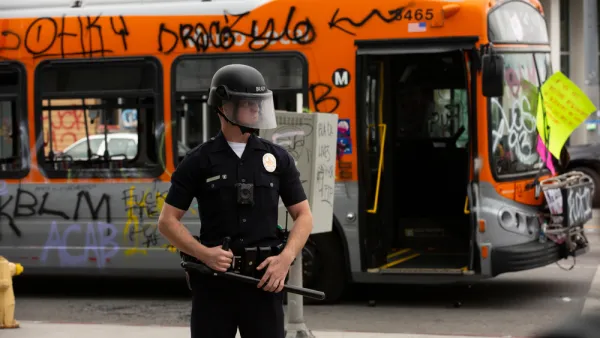
Commandeered Buses, System Shutdowns—Transit on the Frontlines of Protests
The optics of public transit suffered over the weekend, as a few transit agencies have been commandeered by police and even shut down entirely with little or no notice, stranding protesters and essential workers alike.
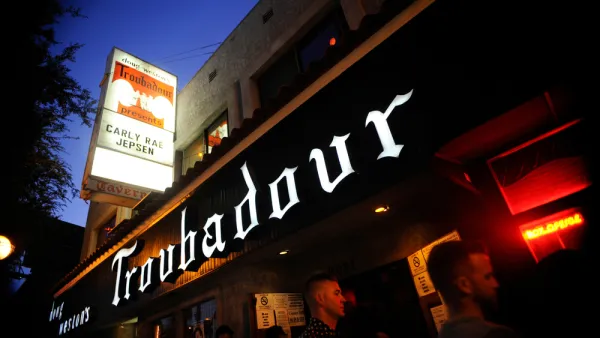
Independent Music Venues Face a Tough Road Ahead
Where have all the venues gone?
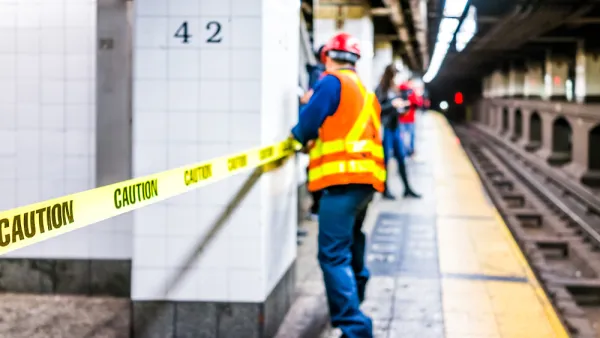
Why New York's Transportation Infrastructure Costs So Much
It's been remarked upon before. Infrastructure in New York City is a cost nightmare compared to other global cities. Accountability is lacking, Josh Barro writes, but MTA also suffers from an "institutional lack of power."

Planetizen Federal Action Tracker
A weekly monitor of how Trump’s orders and actions are impacting planners and planning in America.

California plans to bury El Niño’s downpour
If the state plays its cards right, it may be able to store a billion acre-feet of El Niño’s water in aquifers.

Desperate measures: Advocates weigh draining Lake Powell to fill Colorado River
Draining the reservoir could reduce evaporation losses by a couple hundred thousand acre-feet.

Los Angeles just elected an urban planner as its mayor
Transportation analysts are optimistic that Raman will be more aggressive in addressing transit issues than Bass.

Mamdani’s pied-à-terre tax survives legal challenge
A panel of judges found that the plaintiffs failed to demonstrate injury as a result of New York City's implementation of the tax.

Eastern Nebraska is running out of electricity
Data centers and electrification are straining eastern Nebraska’s grid, throttling economic development.

FREE Course: Walkable City 1: Why Walkability?
After describing his path towards focusing on walkability as the essence of good planning, Jeff Speck marches through his five principal reasons for making more walkable places.
Reinventing Malls: Planning Alchemy—Turning Gray Fields Into Gold
The course focuses on the opportunities and imperatives that shape reinvention of mall sites.

City of Rosemead
Rutgers University, Edward J. Bloustein School of Planning and Public Policy
One Hundred Miles
University of Michigan School for Environment and Sustainability (SEAS)
Hunter College, City University of New York (CUNY)
The Architects Foundation
City of Cambridge
Montrose County
The Pocatello Development Authority