Supporters of the Cincinnati Bell Connector are confronting mounting concerns about the operation of the city's new streetcar system. Meanwhile, ridership is declining, quickly.


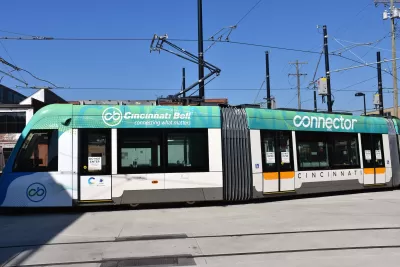
"The Cincinnati Bell Connector's ridership is plummeting," reports Sharon Coolidge. "Overall, ridership is 53 percent above expectations. But a closer look at the numbers day-by-day shows declining ridership since it opened Sept. 9 and troublesome weekday numbers that need attention."
Paul Grether, rail manager for the Southwest Ohio Regional Transit Authority, revealed the ridership numbers during a presentation to the Cincinnati City Council's Major Transportation Committee. The article identifies some of the challenges hampering ridership on the line, including the biggest problem facing the streetcar: "timing is off and that means nobody knows when it will arrive at a station."
Another problem affecting the streetcar's performance, according to the article, is the city's lack of traffic studies in downtown at any point in the last 20 years. "The traffic pattern runs east/west, for ease of getting to the interstates. But traffic signals don't take into account how the city has grown to the north, where the streetcar runs," writes Coolidge.
Read the full story: Streetcar ridership numbers way short of projections

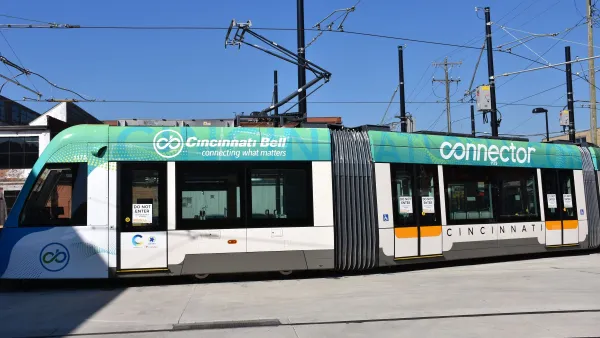
Streetcars Out of Service in Cincinnati
It's been a rough week for the Cincinnati Bell Connector.
Cost of Blocking Streetcar Tracks in Cincinnati: $50
That's a small price to pay to bring a $150 million system to a standstill.
Cincinnati Leadership Trades Barbs Over Streetcar Frequencies
The popularity of the new Cincinnati Streetcar—known officially as the Bell Connector—has been tempered by poor performance on contractually mandated 15-minute headways.

Planetizen Federal Action Tracker
A weekly monitor of how Trump’s orders and actions are impacting planners and planning in America.

Amtrak, CN end decades-long dispute with eight-year agreement
The new operating agreement establishes an updated framework for the companies to work together, including processes to resolve disputes.

Judges permit Denver to divert 77,000 acre feet from the Colorado River for reservoir expansion
Overuse and climate change have caused the Colorado River’s water levels to plummet.

NYC DOT wants faster, more permanent street upgrades
The city is examining ways to build more concrete infrastructure without getting entangled in 'decades-long' projects.

'Something we’ve never seen before:' rising utility rates could strain city finances nationwide
Data centers, climate change and other factors have caused utility rates in the United States to increase by 38% since 2020.

Trump to overrule local leaders, lease millions of acres of America’s Pacific Island territories’ seafloors to mining companies
International law says that the Indigenous people of America’s territories have a right to prior and informed consent regarding projects that impact their countries.

FREE Course: Walkable City 1: Why Walkability?
After describing his path towards focusing on walkability as the essence of good planning, Jeff Speck marches through his five principal reasons for making more walkable places.
Reinventing Malls: Planning Alchemy—Turning Gray Fields Into Gold
The course focuses on the opportunities and imperatives that shape reinvention of mall sites.

Harvard University Graduate School of Design
KFH Group Inc.
Greater Baltimore Committee
The Architects Foundation
University of Cincinnati Online
The Pocatello Development Authority
The Urban Renewal Agency of the City of Pocatello