From the smallest scale to the largest, climate change has left no stoned unturned in its initial impacts on the planet and its species. Stay tuned.



Shreya Dasgupta writes: "Climate change has affected species across ecosystems, changing their genes, physiology, morphology, and phenology, and affected their distributions, food webs, and overall interactions, researchers report in the new study published in the journal Science."
Lead author Brett Scheffers provides a distressing soundbite to accentuate the big finding of the story: "We not only found ecological responses to climate change across freshwater, marine, and terrestrial ecosystems, but these responses scaled from the smallest level of a gene to the largest level of an ecosystem."
The scale of the change surprised the researchers, given the small temperature change of 1°C compared to pre-industrial levels so far. That average temperature could rise a lot more if carbon emissions continue unabated.
Read the full story: Climate Change Is Affecting All Aspects of Life on Earth


Is the Urban Form Sustainable?
One author offers a framework for resilience that rethinks common assumptions about the inevitability of cities as we know them.

'Something we’ve never seen before:' rising utility rates could strain city finances nationwide
Data centers, climate change and other factors have caused utility rates in the United States to increase by 38% since 2020.
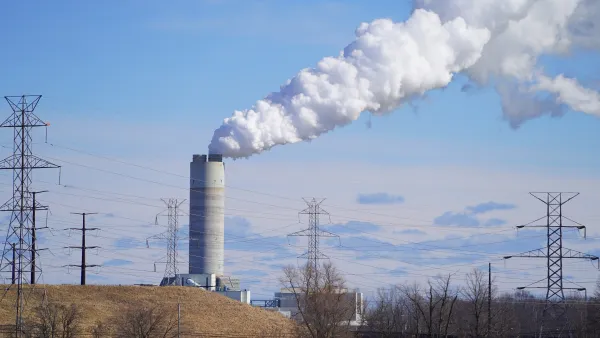
EPA erases limits on planet-warming pollution from power plants
Under Monday’s plan, power plants would still have some limits on how much mercury, arsenic and other contaminants they can emit.

Planetizen Federal Action Tracker
A weekly monitor of how Trump’s orders and actions are impacting planners and planning in America.

‘Going backwards:’ Baltimore mayor, students rally against state's transit funding plan
Maryland's proposed six-year plan provides no funding for Baltimore’s BMORE bus program and reduces its road maintenance funding.

Detroit to transform waterfront with $2.2 billion investment
Developers will convert about 18 acres of unused parking lot space into civic spaces.

HUD modernizes 50-year-old manufactured housing framework
The Next Generation Manufactured Housing Action Plan establishes new energy-efficiency standards for manufactured homes, and new guidelines for anchoring them.

New CA housing laws tear down development red tape
Recently-signed legislation makes building starter homes and ADUs cheaper and faster in California.

Metrolink finishes first expansion in 20 years
The transit agency is now one of very few in the United States to connect two major airports.

FREE Course: Walkable City 1: Why Walkability?
After describing his path towards focusing on walkability as the essence of good planning, Jeff Speck marches through his five principal reasons for making more walkable places.
Reinventing Malls: Planning Alchemy—Turning Gray Fields Into Gold
The course focuses on the opportunities and imperatives that shape reinvention of mall sites.

One Hundred Miles
County of Mendocino
planning NEXT
The Architects Foundation
University of Cincinnati Online
Montrose County
Northern Illinois Transit Authority (NITA)
The Pocatello Development Authority