Gasoline consumption continued to increase for the first six months of the year, as it has for the last years, reports the Federal Highway Administration. What's different this year is that it was by the largest amount, ever.


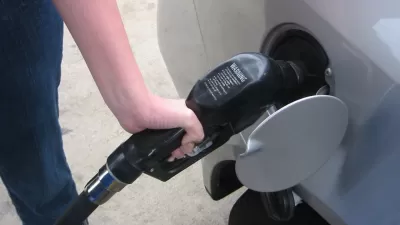
"It is the highest amount on record and the sixth consecutive increase in national gasoline consumption for the first six months of any year on record.," reports Doug Hecox, spokesman for the Federal Highway Administration, on Oct. 28.

| REGION | Percent Change |
|---|---|
| Total | 3.0 |
| North-East | 2.6 |
| North-Central | 2.5 |
| South-Atlantic | 2.7 |
| South-Gulf |
4.1 |
|
Western
|
3.0 |
Credit: Federal Highway Administration
As the above map shows, the area with the greatest increase, at 4.1 percent, was the South Gulf. The states with the largest increases were the most populous states, respectively:
- California at 7.65 billion gallons
- Texas at 7.1 billion gallons
- Florida at 4.57 billion gallons.
Oklahoma led the nation with the greatest percentage increase of 8.2 percent, followed closely by "Delaware and Utah with 7.9 percent and 7.2 percent increases, respectively," notes Hecox.
North Dakota’s fuel consumption decreased by 5.9 percent, the largest decrease among the states in that period.
The primary purpose of keeping track of fuel consumption doesn't relate to President Obama's Climate Action Plan but providing revenue to the Highway Trust Fund.
The data is also indicative of the level of resource consumption and pollution emissions by the transportation sector which, in recent reviews, has been the leading source of greenhouse gasses among all sectors in the United States.
The consumption increase correlates with increase in vehicle miles traveled and confirms earlier reports that the 2016 is on track to break the 2007 record of gasoline consumption.
For precise data, see FHWA's Motor Fuel & Highway Trust Fund.
Related:
- Wall Street Journal, Americans Drive to a New Record in Gasoline Consumption, Sep 7, 2016
- NPR: U.S. Gasoline Use Hits A Record, But That May Not Last, September 2, 2016
Also in Planetizen:
- Americans Continue to Drive More, Reports Federal Highway Administration, August 24, 2016
- Transportation Catching Industry as the Leading Cause of Greenhouse Gas Emissions, July 22, 2016
- A New Era in the U.S.: More Carbon Emissions from Transportation Than Utilities, June 14, 2016
Hat tip to AASHTO Daily Transportation Update
Read the full story: U.S. Drivers Consumed 71.8 Billion Gallons of Gasoline in First Half of 2016

Over $14 Million Awarded to Eight Projects to Find Alternatives to Gas Taxes
The U.S. Department of Transportation is funding ways to transition from the gas tax to other user-based revenue mechanisms to fund transportation infrastructure. The federal gas tax hasn't keep pace with transportation expenditures since 2008.
House’s stopgap bill would reduce passenger rail investment by 83%
The bill would also lessen surface level public transit investment by 20% and eliminate the advance appropriations provided by the Infrastructure Investment and Jobs Act.
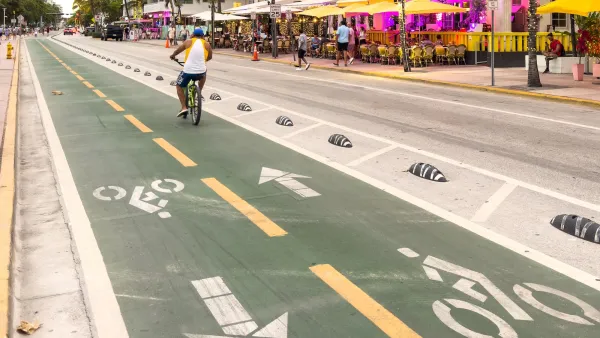
FHWA removes bike lanes and speed cameras from list of traffic safety measures
The agency did not announce its intention to eliminate five proven safety measures from its list of suggested interventions.

Planetizen Federal Action Tracker
A weekly monitor of how Trump’s orders and actions are impacting planners and planning in America.

California plans to bury El Niño’s downpour
If the state plays its cards right, it may be able to store a billion acre-feet of El Niño’s water in aquifers.

Chicago breaks ground on $3 billion megadevelopment
The new neighborhood, titled Foundry Park, will one day host 3,700 residences.

This road in NYC is infamously dangerous — and Mamdani can't fix it
New York City's Ocean Parkway is known for reckless driving, but the power to implement safety measures lies with the state rather than the city.

One of Denver’s busiest corridors to gain BRT
The project will span 18 miles and contain 74 bus rapid transit stations.

275,000 bus trips are at stake on Seattle's ballot
If passed, the Seattle Transit Measure would trigger a 0.3% sales tax and raise an average of $138 million per year to maintain and expand Seattle’s bus services.

FREE Course: Walkable City 1: Why Walkability?
After describing his path towards focusing on walkability as the essence of good planning, Jeff Speck marches through his five principal reasons for making more walkable places.
Reinventing Malls: Planning Alchemy—Turning Gray Fields Into Gold
The course focuses on the opportunities and imperatives that shape reinvention of mall sites.

City of Rosemead
Rutgers University, Edward J. Bloustein School of Planning and Public Policy
One Hundred Miles
Hunter College, City University of New York (CUNY)
The Architects Foundation
University of Cincinnati Online
City of Cambridge
Montrose County
The Pocatello Development Authority