The plan to replace the Interstate 81 elevated highway through Syracuse, NY is now down to two options after the New York DOT nixed the tunnel plan.


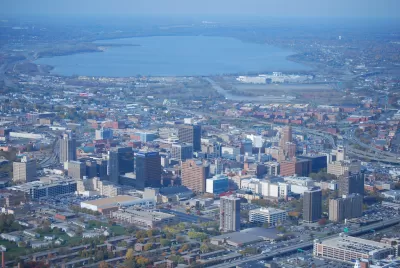
The elevated portion of Interstate 81 running through Syracuse, New York may stay up, may go down, but it will not go below. Charley Hannagan of Syracuse.com/The Post Standard reports that the New York Department of Transportation has narrowed down the options for the elevated highway down to two: one would see the elevated highway modernized and widened and the other would see the highway removed with traffic funneled onto the existing street grid. Hannagan reports that at a cost of $3.1 billion to build, the tunnel option was deemed too expensive and would take too long to construct.
The process for replacing the aging highway, deemed a "classic planning blunder" by Governor Andrew Cuomo, started two years ago with four options, including leaving the existing structure in place. Over the next few weeks the state DOT will begin holding community outreach meetings to get public feedback on the two options.
Read the full story: New York DOT drops tunnel idea for new I-81 through Syracuse; it's down to 2 options
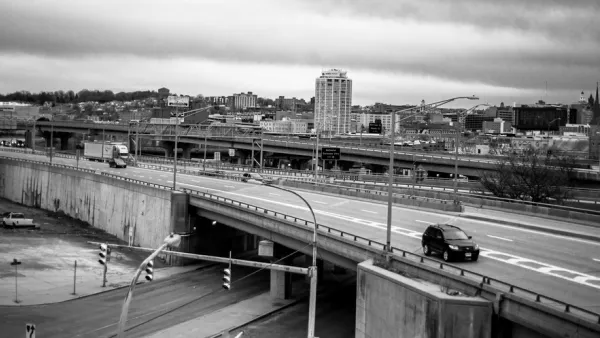
Can Reparations Right the Wrongs Caused by a Highway?
An elevated highway destroyed an African American community in Syracuse, New York. Is just removing it enough?
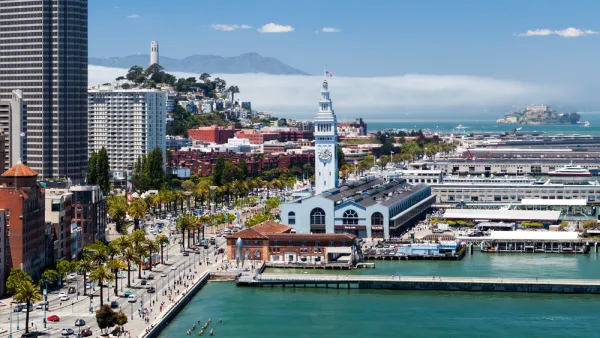
Urban Revitalization Through Highway Teardowns
Alana Semuels, staff writer for The Atlantic, examines highway teardowns beginning with the San Francisco Embarcadero in 1989 to see how they have worked in terms of revitalizing poorer areas or restoring the urban fabric that they destroyed.
Syracuse Confronts 'Most Important Civic Decision in 60 Years'
To demolish, or not to demolish? As Syracuse considers what to do with its aged elevated highway, special interests are mobilizing to prevent tearing down the crumbling I-81 viaduct and replacing it with an urban boulevard, says David M. Rubin.

Planetizen Federal Action Tracker
A weekly monitor of how Trump’s orders and actions are impacting planners and planning in America.

California plans to bury El Niño’s downpour
If the state plays its cards right, it may be able to store a billion acre-feet of El Niño’s water in aquifers.

Desperate measures: Advocates weigh draining Lake Powell to fill Colorado River
Draining the reservoir could reduce evaporation losses by a couple hundred thousand acre-feet.

Los Angeles just elected an urban planner as its mayor
Transportation analysts are optimistic that Raman will be more aggressive in addressing transit issues than Bass.

Mamdani’s pied-à-terre tax survives legal challenge
A panel of judges found that the plaintiffs failed to demonstrate injury as a result of New York City's implementation of the tax.

Eastern Nebraska is running out of electricity
Data centers and electrification are straining eastern Nebraska’s grid, throttling economic development.

FREE Course: Walkable City 1: Why Walkability?
After describing his path towards focusing on walkability as the essence of good planning, Jeff Speck marches through his five principal reasons for making more walkable places.
Reinventing Malls: Planning Alchemy—Turning Gray Fields Into Gold
The course focuses on the opportunities and imperatives that shape reinvention of mall sites.

City of Rosemead
Rutgers University, Edward J. Bloustein School of Planning and Public Policy
One Hundred Miles
University of Michigan School for Environment and Sustainability (SEAS)
Hunter College, City University of New York (CUNY)
The Architects Foundation
City of Cambridge
Montrose County
The Pocatello Development Authority