An elevated highway destroyed an African American community in Syracuse, New York. Is just removing it enough?


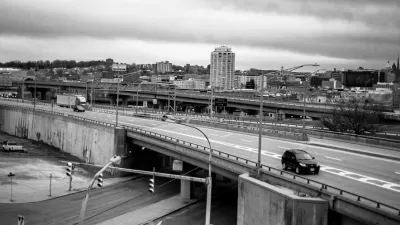
Robert Samuels reports on possible plans to bring down a section of Interstate 81, an elevated highway in Syracuse, New York. African Americans started moving to the city’s south side in the 1900s, and the area was a thriving community. However, redlining eventually led to disinvestment and blight.
In the late 1950s, large swaths of the south side were razed to clear land for construction of the interstate highway system. "Homes and wealth were lost. Ninety percent of the structures in the 15th Ward were torn down, according to documents for the county’s historic society. Between 400 and 500 businesses were gone. Around 1,200 families were displaced," writes Samuels.
In the past, discussions about reparations have not focused on the impacts of infrastructure like Interstate 81. Residents say that taking down the highway is not sufficient, and community reinvestment should also be part of undoing the damage of urban renewal and other large-scale projects. "If the reparations debate in this country continues to move beyond handing out checks, the ensuing debate over Interstate 81 presages a bevy of challenges that await," notes Samuels.
FULL STORY: In Syracuse, a road and reparations

Santa Monica Offers Affordable Housing to Residents Displaced by Freeway Construction
A new program seeks to make restitution for the damage inflicted on Black communities by highway construction and urban renewal.
How Federal Funds Can Benefit Freeway Removal Projects
The recently passed infrastructure bill dedicates $1 billion to freeway removal and capping, but the sum is only a 'first step' toward redressing the injustices perpetuated by urban highway projects.
The Foundational Myth of America's Interstate Highway System
The erroneous belief that the negative impacts of interstate highways are simply "unintended consequences" fails to demand accountability for the project's failures.

The state-sanctioned urbicide of Austin
People don’t kill cities. Freeways do.

US to reduce Colorado River water deliveries to Mexico
A new Colorado Treaty amendment reduces Mexico’s Colorado River water allocation by 250,000 acre feet.

New Jersey’s second-largest city bans standalone data centers
Jersey City will continue to allow co-location facilities, such as those meant for research institutions that store their own data.

Amtrak not solely to blame for New Jersey commuter rail's unreliability, report finds
A new study from the Garden State Initiative found that NJ Transit’s budget grew 20% across a 4 year period, but reliability declined significantly over the same period.

EPA erases limits on planet-warming pollution from power plants
Under Monday’s plan, power plants would still have some limits on how much mercury, arsenic and other contaminants they can emit.

Phoenix announces new on-demand transit service, more frequent RAPID buses
Both new services will launch in October, and are part of Phoenix's Project Effective Access Solutions for Easing Congestion.

FREE Course: Walkable City 1: Why Walkability?
After describing his path towards focusing on walkability as the essence of good planning, Jeff Speck marches through his five principal reasons for making more walkable places.
Reinventing Malls: Planning Alchemy—Turning Gray Fields Into Gold
The course focuses on the opportunities and imperatives that shape reinvention of mall sites.

Eagle County Government
Harvard University Graduate School of Design
Nashville Planning Department
The Architects Foundation
University of Cincinnati Online
The Pocatello Development Authority
The Urban Renewal Agency of the City of Pocatello
Journal of the American Planning Association