The Urbanist is publishing a series of articles focusing on the leadership of women is shaping the past, present, and future of Seattle.


The latest entry in the 'Women Shaping Seattle' series is an interview with Barbara Swift, FASLA, who founded Swift Company in 1982 and has gone on to contribute landscape architecture and urban design work for "powerful places for civic life and discourse around the city and the world.
The interview surveys the work of Swift Company and touches on themes like innovation and the influence of design practice on recent changes in the city. When asked to describe one part of Seattle ripe for change, Swift offers a pro-density argument on one of the hot topics of Seattle land use and urban development politics:
An area ripe for change is the amount of land occupied by single-family detached bungalow housing. This land use is dominant in Seattle and needs to move quickly to higher density–and create community. Without adapting this, Seattle won’t be able to absorb increased population, provide for low-income housing, or combat sprawl.
Previous articles in the series includes an interview with Lisa Picard, the Executive Vice President and Regional Manager of Skanska Commercial Development USA, and an article detailing the long history of women working to shape the city of Seattle.
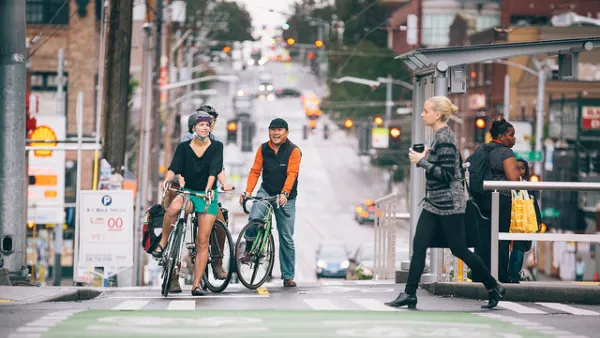
Op-Ed: Change the Bike Planning Calculus to Include Women's Safety
The gender gap in walking and biking is deep and wide in Seattle. Here's a call to action.
New Heights for Seattle's Public Art
Going beyond traditional approaches to public art, Washington's transit authority has launched a program that provides the city with art that expresses Seattle's "core identity."
Housing is the top priority of Seattle’s sole new councilmember
Jenks campaigned on building 1,000 new units of affordable housing.

Planetizen Federal Action Tracker
A weekly monitor of how Trump’s orders and actions are impacting planners and planning in America.

Washington state to charge fee to drivers with fuel-efficient cars
Revenue from the fee will go towards supporting the state’s highways.

Illinois considers spending $1 billion in taxpayer money on data center
A quantum computing campus and data center are currently under construction in Chicago.

Did data centers change how voters cast their ballots?
Texas, Ohio, and Georgia all flipped party control. But in rural counties, the effect of local data centers was mixed.

Amtrak invests in eight new Airo trainsets
The new trainsets will begin serving passengers in 2031.

HUD to end aid for mixed-immigration-status households
The new rule is projected to impact 80,000 people, nearly half of whom are children.

FREE Course: Walkable City 1: Why Walkability?
After describing his path towards focusing on walkability as the essence of good planning, Jeff Speck marches through his five principal reasons for making more walkable places.
Reinventing Malls: Planning Alchemy—Turning Gray Fields Into Gold
The course focuses on the opportunities and imperatives that shape reinvention of mall sites.

City of Charlotte
City of Rosemead
Rutgers University, Edward J. Bloustein School of Planning and Public Policy
University of Michigan School for Environment and Sustainability (SEAS)
Hunter College, City University of New York (CUNY)
The Architects Foundation
University District Partnership