Regional and county agencies figured out a way to move forward with the Southwest light rail plan without the help of the politically divided state. That could mean the state has time to climb on board by next year's legislative session.


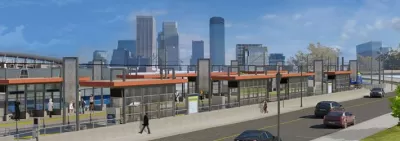
"Metro Transit can move into the final phases of planning for Southwest light rail, the 14.5 mile extension of the Green Line," reports Peter Callaghan.
Thanks to votes Wednesday by the Counties Transit Improvement Board and the Met Council, and another by the Hennepin County Board the day before, the region now has legal commitments to pay half the cost of the $1.858 billion project. That will allow Metro Transit staff to submit an application to the Federal Transit Administration for final agreement on federal funding.
Those moves came in response to the failure of the state Legislature to approve a state funding package, as detailed in an article by Briana Bierschbach in August. Callaghan's article includes more details about the approved funding plan and the political debate that produced its adoption.
Read the full story: Met Council secures final $145M for Southwest light rail — but the political cost may be much higher
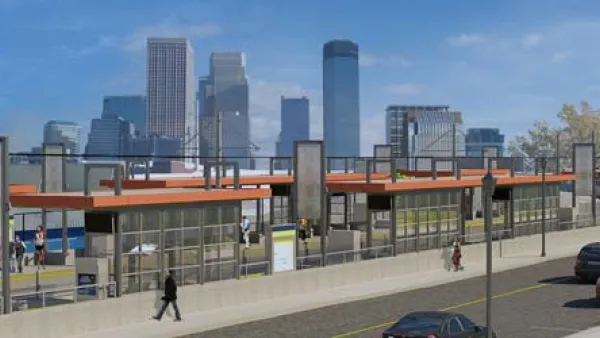
Minnesota's Southwest Light Rail on its Last Legs
Republicans in Minnesota are ready to put the final nail in the coffin of the proposed Southwest light rail project, which would connect downtown Minneapolis to Eden Prairie.
Powerful Political Forces Aligning Against Southwest Light Rail in Minneapolis
One of the most heavily-contested transit projects in the United States, the Southwest light rail line in the metropolitan Twin Cities area, is encountering increased levels of political opposition.
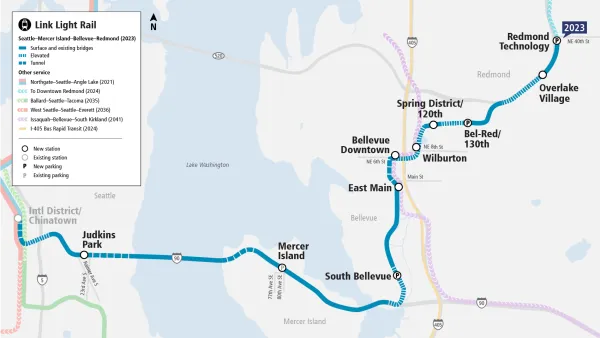
East Link Light Rail Plans Provoke Controversy in Seattle Suburb
A proposal to link local and regional buses with the East Link light rail expansion in Mercer Island, already under construction, threatens to boil over into the courtroom.

Planetizen Federal Action Tracker
A weekly monitor of how Trump’s orders and actions are impacting planners and planning in America.

Washington state to charge fee to drivers with fuel-efficient cars
Revenue from the fee will go towards supporting the state’s highways.

Illinois considers spending $1 billion in taxpayer money on data center
A quantum computing campus and data center are currently under construction in Chicago.

Did data centers change how voters cast their ballots?
Texas, Ohio, and Georgia all flipped party control. But in rural counties, the effect of local data centers was mixed.

Amtrak invests in eight new Airo trainsets
The new trainsets will begin serving passengers in 2031.

HUD to end aid for mixed-immigration-status households
The new rule is projected to impact 80,000 people, nearly half of whom are children.

FREE Course: Walkable City 1: Why Walkability?
After describing his path towards focusing on walkability as the essence of good planning, Jeff Speck marches through his five principal reasons for making more walkable places.
Reinventing Malls: Planning Alchemy—Turning Gray Fields Into Gold
The course focuses on the opportunities and imperatives that shape reinvention of mall sites.

City of Charlotte
City of Rosemead
Rutgers University, Edward J. Bloustein School of Planning and Public Policy
University of Michigan School for Environment and Sustainability (SEAS)
Hunter College, City University of New York (CUNY)
The Architects Foundation
University District Partnership