Along with climate conditions, urban sprawl is intensifying wildfires and increasing the damage they do.


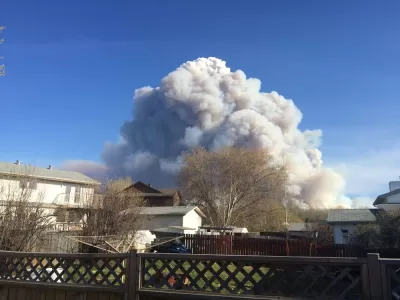
In light of the recent evacuations in Alberta and the seemingly never-ending fire season in California, worsening fires throughout North America have been attributed to the impacts of climate change. But Undark notes that patterns of human development can also make fires more dangerous.
For one, "the population in an area, where people live, and how many roads there are, all affect the behavior of fires and their risk to people."
More development at the edge of urban areas and wildlands could make the consequences of fires there much greater.
“For some of the problems like, home losses, or fatalities, or evacuability of our fire prone communities, or budgets — how many hundreds of millions of dollars are spent each year on fire suppression — a lot of that comes back to something that is not a fuels problem, it’s an issue of where and how we built our human developments,” [researcher Max Moritz] said.
The more of these problems the U.S. Forest Service and local fire departments have to deal with, the more resources they have to expend on each fire.
And one theory argues that the long-standing strategy of suppression—which can ultimately lead to bigger, wilder fires—also grew from the shift to fossil fuels and a new power infrastructure during the industrial revolution.
Read the full story: The Push and Pull of Forest Fire Management


Nearly a third of US housing is in the wildland-urban interface — and at growing risk of wildfire
As suburbs increasingly mingle with undeveloped land, homes face a higher risk from destructive fires.
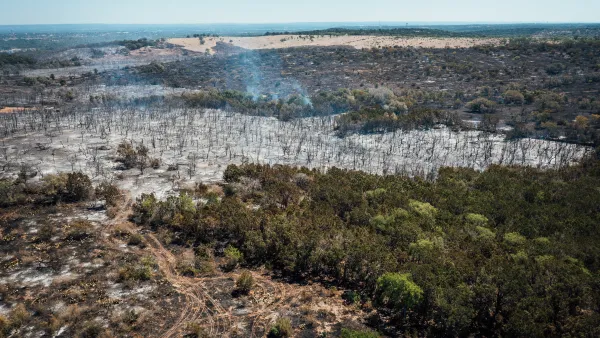
As Central Texas Population Grows, So Does Fire Risk
Sprawl in and around Austin is contributing to growing wildfire risks, and local officials worry about a lack of public awareness of the issue.
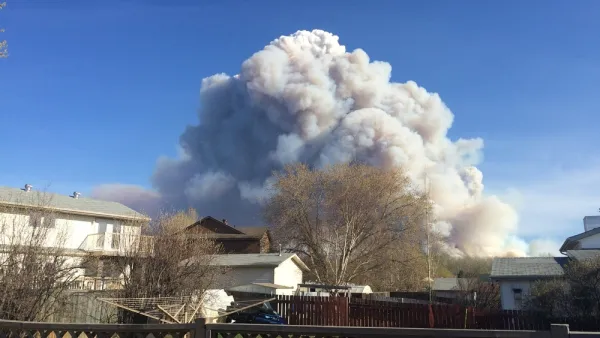
What Goes Together? Sprawl and Destructive Wildfires
Wildfires tend to start at the Wildland-Urban Interface: those border zones between cities and the open land surrounding them. Keeping the lid on sprawl, it can be argued, would tame the inferno.

Planetizen Federal Action Tracker
A weekly monitor of how Trump’s orders and actions are impacting planners and planning in America.

‘Going backwards:’ Baltimore mayor, students rally against state's transit funding plan
Maryland's proposed six-year plan provides no funding for Baltimore’s BMORE bus program and reduces its road maintenance funding.

Detroit to transform waterfront with $2.2 billion investment
Developers will convert about 18 acres of unused parking lot space into civic spaces.

A 3D concrete printer may solve Virginia’s housing crisis
The printer is able to build concrete walls much faster than humans, and can do so directly at job sites.

Newsom vetoes high-speed rail supervision bill after agency receives condemnatory audit
The audit found the CHSRA approved almost $600,000 in unallowable travel expenses.

Nation sees first electric plane-boat hybrid take off in public demo
The Viceroy Seaglider can fly at speeds of 180mph for up to 180 miles.

FREE Course: Walkable City 1: Why Walkability?
After describing his path towards focusing on walkability as the essence of good planning, Jeff Speck marches through his five principal reasons for making more walkable places.
Reinventing Malls: Planning Alchemy—Turning Gray Fields Into Gold
The course focuses on the opportunities and imperatives that shape reinvention of mall sites.

City of Thousand Oaks
City of Wisconsin Rapids
Harvard University Graduate School of Design
The Architects Foundation
University of Cincinnati Online
Northern Illinois Transit Authority (NITA)
The Pocatello Development Authority
The Urban Renewal Agency of the City of Pocatello