Crain's New York Business surveys the development investments that have followed the Domino Sugar Refinery redevelopment to the Williamsburg waterfront.


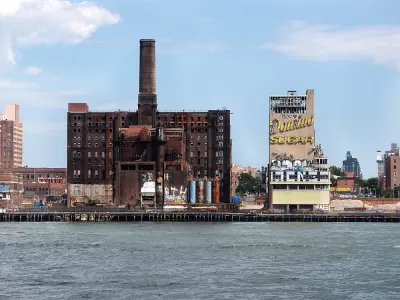
"The planned $3 billion conversion of the 11-acre Domino Sugar Refinery on the Williamsburg waterfront by Jed Walentas’ Two Trees Management has raised the hopes—and in some cases the fortunes—of other developers in the area," according to an article by Tom Acitelli.
Acitelli explains more of the details of the redevelopment project: "Two Trees calls its Williamsburg project an 'urban campus.' It is slated to have 2,800 apartments, 600,000 square feet of offices centered on the refinery, a six-acre park and 200,000 square feet of community space and retail."
The article also includes an interactive map that shows the other developments in the area. The map lists seven additional projects in the immediate vicinity of the Domino Sugar redevelopment.
The Domino Sugar project has evolved over the years. The Architect's Newspaper reported in March 2013 that the project would spend $1.5 billion to redevelop the site.
Read the full story: Domino Sugar Refinery conversion sweetens real estate fortunes on the Williamsburg waterfront
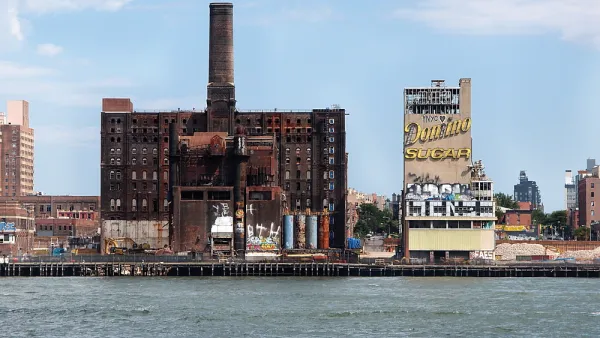
A New Riverfront Park in New York City
A new park on the East River in Williamsburg adds "one hell of an amenity" to Brooklyn.
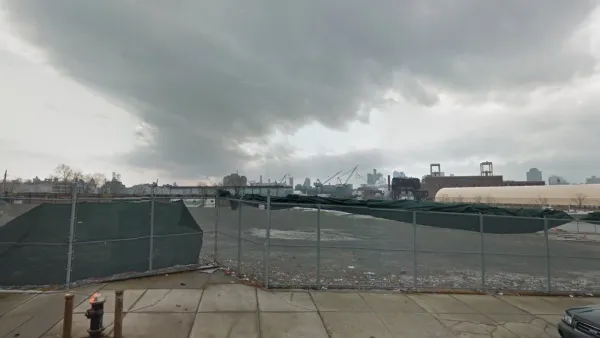
The de Blasio Administration Stays Firm on Waterfront Rezonings
Despite its ambitious housing targets, the de Blasio Administration isn't willing to sacrifice more of its prime industrial spaces, and the jobs they bring, in the name of residential development.
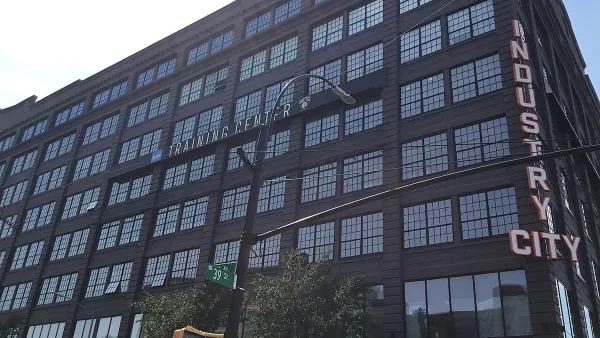
‘Emergent City’ Documentary Highlights Rare Anti-Gentrification Victory
The film charts the saga of a Brooklyn site called Industry City.

Planetizen Federal Action Tracker
A weekly monitor of how Trump’s orders and actions are impacting planners and planning in America.

California plans to bury El Niño’s downpour
If the state plays its cards right, it may be able to store a billion acre-feet of El Niño’s water in aquifers.

Desperate measures: Advocates weigh draining Lake Powell to fill Colorado River
Draining the reservoir could reduce evaporation losses by a couple hundred thousand acre-feet.

Los Angeles just elected an urban planner as its mayor
Transportation analysts are optimistic that Raman will be more aggressive in addressing transit issues than Bass.

Mamdani’s pied-à-terre tax survives legal challenge
A panel of judges found that the plaintiffs failed to demonstrate injury as a result of New York City's implementation of the tax.

Eastern Nebraska is running out of electricity
Data centers and electrification are straining eastern Nebraska’s grid, throttling economic development.

FREE Course: Walkable City 1: Why Walkability?
After describing his path towards focusing on walkability as the essence of good planning, Jeff Speck marches through his five principal reasons for making more walkable places.
Reinventing Malls: Planning Alchemy—Turning Gray Fields Into Gold
The course focuses on the opportunities and imperatives that shape reinvention of mall sites.

City of Rosemead
Rutgers University, Edward J. Bloustein School of Planning and Public Policy
One Hundred Miles
University of Michigan School for Environment and Sustainability (SEAS)
Hunter College, City University of New York (CUNY)
The Architects Foundation
City of Cambridge
Montrose County
The Pocatello Development Authority