A city known for its opposition to transit might be on the cutting edge of first-last mile technology innovation.


According to an article by Adele Peters, the city of Beverly Hills, California is "planning to introduce a new network of self-driving electric shuttles."
The idea was sparked by a upcoming challenge: In about a decade, Beverly Hills will be getting two new stops on a local subway line that connects to downtown L.A. The city knew that there wouldn't be an easy way for many people to reach the subway; unlike some other subway stops, neither will have a park-and-ride lot for commuters to leave cars.
Similar concerns about parking around transit stations were raised this week around the new Expo Line extension to Santa Monica.
Peters notes the other examples of cities beginning to experiment with "on-demand public transit," though the self-driving variety is still a few years, at least, off. The city of Sion, in Switzerland, is experimenting with driverless shuttles, although they will run on a standard route of stops, rather than sending shuttles to a particular person on demand.
Read the full story: Driverless Buses Are Coming To Public-Transit-Phobic Beverly Hills

Uber Bails on Autonomous Vehicles
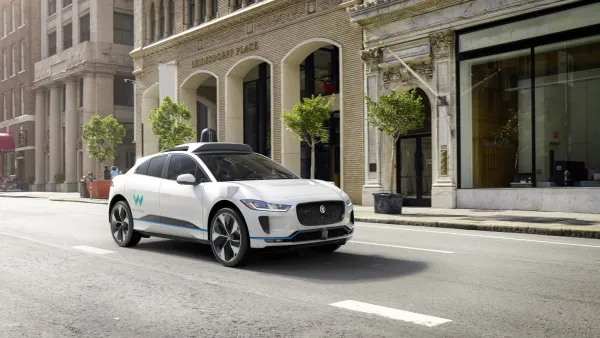
One of the highest-profile, and most legally fraught, efforts to beat the competition into the autonomous vehicles market is now defunct.
Year One of Waymo
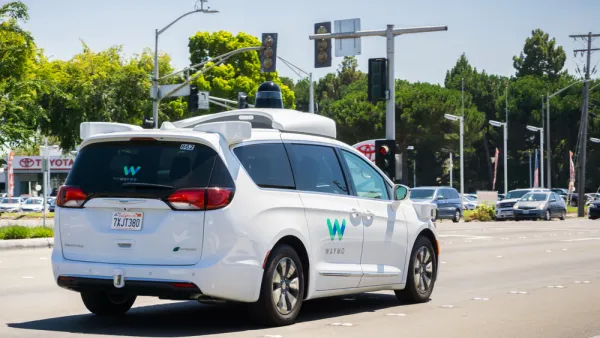
Waymo, like Google a company of Alphabet Inc., has been offering self-driving ride-hailing service to the public for a year, providing 100,000 rides in the Phoenix area in the process.
Handicapping the Self-Driving Horse Race
There are a lot of players in the autonomous vehicle game. It can be hard to keep track of which company is fighting for which share of the market, and which companies are out in front in the race to dominate the emerging industry.

Planetizen Federal Action Tracker
A weekly monitor of how Trump’s orders and actions are impacting planners and planning in America.

Eastern Nebraska is running out of electricity
Data centers and electrification are straining eastern Nebraska’s grid, throttling economic development.

Move over, LA: St. Louis gears up for Olympics, invests millions in downtown redevelopment
The Missouri city will host the 2028 Olympic soccer group stage and knockout matches.

Dallas releases zoning code overhaul to officials
The drafted overhaul is over 400 pages long.

NYC renovations for dangerous, ‘mercilessly crammed’ street delayed until 2027
Construction was supposed to begin this fall.

San Diego’s Midway Rising project gets greenlight from city council
The project looks to become the largest affordable housing development in California's history.

FREE Course: Walkable City 1: Why Walkability?
After describing his path towards focusing on walkability as the essence of good planning, Jeff Speck marches through his five principal reasons for making more walkable places.
Reinventing Malls: Planning Alchemy—Turning Gray Fields Into Gold
The course focuses on the opportunities and imperatives that shape reinvention of mall sites.

City of Rosemead
Rutgers University, Edward J. Bloustein School of Planning and Public Policy
One Hundred Miles
University of Michigan School for Environment and Sustainability (SEAS)
Hunter College, City University of New York (CUNY)
The Architects Foundation
City of Cambridge
The Pocatello Development Authority
The Urban Renewal Agency of the City of Pocatello