One of the highest-profile, and most legally fraught, efforts to beat the competition into the autonomous vehicles market is now defunct.


Cade Metz and Kate Conger report:
Uber, which spent hundreds of millions of dollars on a self-driving car project that executives once believed was a key to becoming profitable, is handing the autonomous vehicle effort over to a Silicon Valley start-up, the companies said on Monday.
Uber will also invest $400 million in the start-up, called Aurora, so it is essentially paying the company to take over the autonomous car operation, which had become a financial and legal headache. Uber is likely to license whatever technology Aurora manages to create.
The announcement means the end for Uber's play for the autonomous vehicle market, according to the article, and indicates that companies still competing in this space face significant obstacles before the industry will be ready to scale.
When autonomous vehicles do finally hit the road, they might be less for private use and ride-hailing services, and more for delivery trucks. Aurora’s chief executive, Chris Urmson is cited in the article saying the company's technology focuses on self-driving trucks, in fact.
The article includes a tight summary of the travails of Uber's autonomous vehicle research: "Among self-driving car projects, Uber’s effort, which led to the death of a pedestrian in Arizona; a lawsuit from Waymo, the self-driving car company owned by the same parent company as Google; and a guilty plea from a former Uber executive accused of stealing intellectual property, was particularly fraught."
Read the full story: Uber, After Years of Trying, Is Handing Off Its Self-Driving Car Project

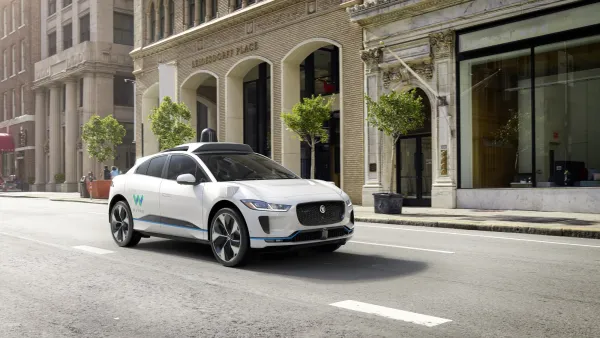
Year One of Waymo
Waymo, like Google a company of Alphabet Inc., has been offering self-driving ride-hailing service to the public for a year, providing 100,000 rides in the Phoenix area in the process.
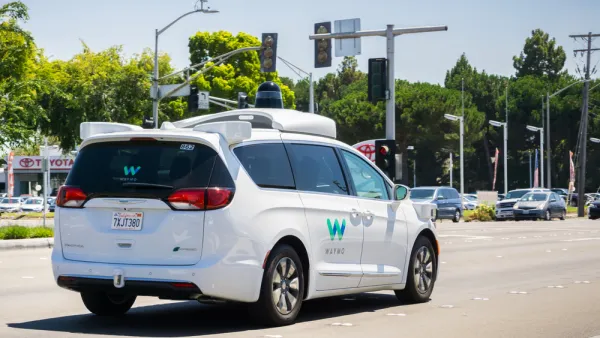
Handicapping the Self-Driving Horse Race
There are a lot of players in the autonomous vehicle game. It can be hard to keep track of which company is fighting for which share of the market, and which companies are out in front in the race to dominate the emerging industry.
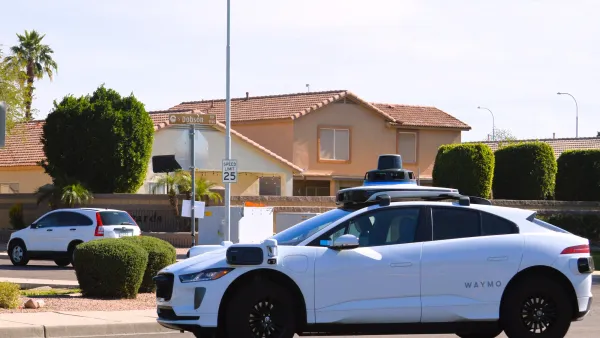
Uber and Waymo part ways in Phoenix
The companies ended a three-year pilot program, with Waymo saying it plans to keep its Phoenix robotaxi fleet available through its own app.

Planetizen Federal Action Tracker
A weekly monitor of how Trump’s orders and actions are impacting planners and planning in America.

Amtrak, CN end decades-long dispute with eight-year agreement
The new operating agreement establishes an updated framework for the companies to work together, including processes to resolve disputes.

Judges permit Denver to divert 77,000 acre feet from the Colorado River for reservoir expansion
Overuse and climate change have caused the Colorado River’s water levels to plummet.

NYC DOT wants faster, more permanent street upgrades
The city is examining ways to build more concrete infrastructure without getting entangled in 'decades-long' projects.

'Something we’ve never seen before:' rising utility rates could strain city finances nationwide
Data centers, climate change and other factors have caused utility rates in the United States to increase by 38% since 2020.

Trump to overrule local leaders, lease millions of acres of America’s Pacific Island territories’ seafloors to mining companies
International law says that the Indigenous people of America’s territories have a right to prior and informed consent regarding projects that impact their countries.

FREE Course: Walkable City 1: Why Walkability?
After describing his path towards focusing on walkability as the essence of good planning, Jeff Speck marches through his five principal reasons for making more walkable places.
Reinventing Malls: Planning Alchemy—Turning Gray Fields Into Gold
The course focuses on the opportunities and imperatives that shape reinvention of mall sites.


Harvard University Graduate School of Design
KFH Group Inc.
Greater Baltimore Committee
The Architects Foundation
University of Cincinnati Online
The Pocatello Development Authority
The Urban Renewal Agency of the City of Pocatello