A CityLab article takes a trip to Levittown, Pennsylvania for a lesson in how places change, even when some places stay the same.


Jake Blumgart returns to the "archetypal post-war suburb" of Levittown (this one's located in Pennsylvania, not New York), to examine the history of the city as well as speculate on its future direction.
After explaining that the Levittown in Bucks County, Pennsylvania was a more fully realized version of the vision of William Levitt than the more famous example in Long Island, Blumgart provides a brief history of the community from its inception in the early 1950s through its quick growth in population and as a location for industry and employment to its initial declines in the 1970s. According to Blumgart: "It is almost too easy to draw parallels between the story of Levittown and the arc of the postwar middle class. Both have fallen from their heyday, when the economy was surpassingly kind regardless of education (if mostly to white men)."
The article includes more anecdotes from the city's history as well as more assessment of its current situation as both an archetype and an outlier among the suburban landscape.
Read the full story: What Will Become of Levittown, Pennsylvania?
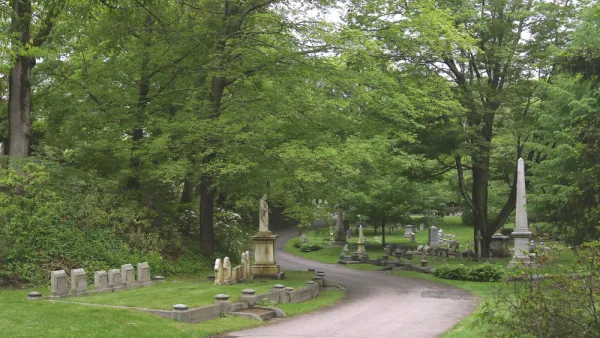
From Garden Cemeteries to Levittown
Tracing the story of the American suburban form.
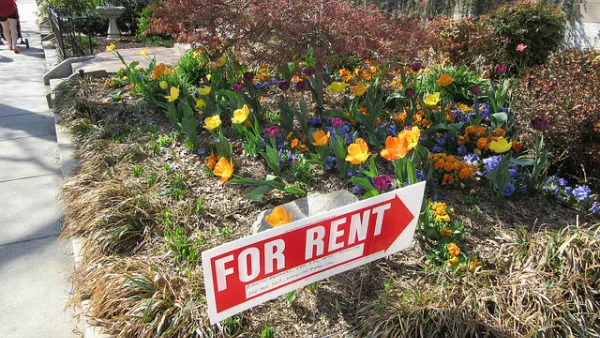
The 2010s: The Decade of the Suburban Rental
Census data reveal a growing number of suburbs are home to a majority of renters. The data challenges the "very definition of suburban living," according to this article.
How to Define the Suburban: HUD Survey Sheds New Light
A new HUD survey could help change the way the federal government defines the "suburban"—a notoriously tricky proposition.

Planetizen Federal Action Tracker
A weekly monitor of how Trump’s orders and actions are impacting planners and planning in America.

California plans to bury El Niño’s downpour
If the state plays its cards right, it may be able to store a billion acre-feet of El Niño’s water in aquifers.

Desperate measures: Advocates weigh draining Lake Powell to fill Colorado River
Draining the reservoir could reduce evaporation losses by a couple hundred thousand acre-feet.

Chicago voters approve permanent festival grounds, penalty for vacant property owners
Currently, major summer and fall festivals take over public parks for weeks at a time, drawing criticism from nearby residents

NYC votes to cut outdoor dining red tape, speed up permitting
New York City also voted to allow the Department of Transportation to begin work on urgent projects before notifying elected officials.

California appears to reject Prop. 45
The proposition would have expanded the projects that qualify for a streamlined environmental review, effectively paring down the California Environmental Quality Act.

FREE Course: Walkable City 1: Why Walkability?
After describing his path towards focusing on walkability as the essence of good planning, Jeff Speck marches through his five principal reasons for making more walkable places.
Reinventing Malls: Planning Alchemy—Turning Gray Fields Into Gold
The course focuses on the opportunities and imperatives that shape reinvention of mall sites.

City of Rosemead
Rutgers University, Edward J. Bloustein School of Planning and Public Policy
One Hundred Miles
Hunter College, City University of New York (CUNY)
The Architects Foundation
University of Cincinnati Online
City of Cambridge
Montrose County
The Pocatello Development Authority