Certain states have had to scramble to restructure their gas taxes as gas prices have dropped—and kept dropping—lest transportation funds hit empty.


Daniel C. Vock reports on the "handful of states that tax gasoline based on its price -- rather than the volume of gas sold," which were making raking in the revenue back when the price of gas was astronomical. "But now that the national average is $2.01 per gallon," writes Vock, "states like Kentucky, North Carolina and Virginia are in a financial bind."
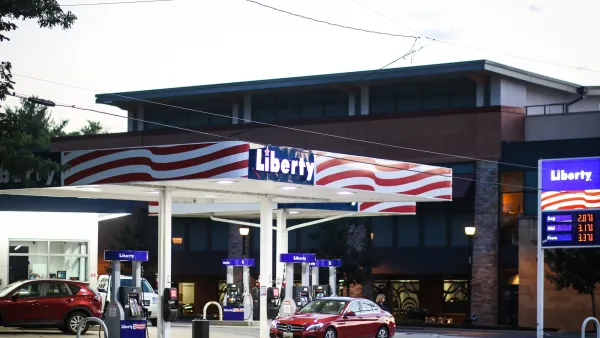
Vock takes Virginia as his first example, which recently estimated that "low gas prices could deplete the state's $5.4 billion transportation funding package by $530 million through 2019." The state reacted by setting a new minimum for how low its gas taxes can go. According to Vock, "No matter how cheap gas gets, it will be taxed as if the price is $3.11 a gallon."
The article includes more detail, including examples from Kentucky and North Carolina, about the impact of volatile gas prices on the fiscal health of states.
Read the full story: To Avoid Losing Millions, States Tweak Gas Tax Laws

Why does Maryland's gas tax change every year?
The state's annual gas tax update may still not be enough to keep up with changes in the transportation sector and rising project costs.
Oregon Transportation Bill Saves 500 ODOT Jobs, but Leaves Future Funding Uncertain
A bill passed in a special legislative session will raise over $4 billion for transportation and public transit in the next 10 years, but fails to establish a long-term funding solution.

Can State Lawmakers Make the Case for Road Charges?
More state legislatures are considering fees based on vehicle miles traveled as a replacement for declining gas tax revenues.

Planetizen Federal Action Tracker
A weekly monitor of how Trump’s orders and actions are impacting planners and planning in America.

Amtrak, CN end decades-long dispute with eight-year agreement
The new operating agreement establishes an updated framework for the companies to work together, including processes to resolve disputes.

Northwest rail fans eager for Sept. 30 debut of Amtrak’s Airo fleet
Get ready for that new train smell and more seats. But they won’t go faster or run more frequently on the Cascades route in Washington and Oregon.

St. Louis Metro to test if single-car trains can reduce operating costs, maintain rider satisfaction
The pilot program will run from October to spring 2027, and begin with one single-car train operating on Metrolink’s Red and Blue lines.

Pennsylvania is building data centers in abandoned mines
Housing data centers in mines provides an alternative to destroying local forests and may spare residents from data centers’ noise and air pollution.

If Corpus Christi can’t revive desalination plant project, it may owe Texas $235 million
Earlier this month, city officials declined to pursue developing the plant for the second time in a year.

FREE Course: Walkable City 1: Why Walkability?
After describing his path towards focusing on walkability as the essence of good planning, Jeff Speck marches through his five principal reasons for making more walkable places.
Reinventing Malls: Planning Alchemy—Turning Gray Fields Into Gold
The course focuses on the opportunities and imperatives that shape reinvention of mall sites.

City of Thousand Oaks
City of Wisconsin Rapids
Harvard University Graduate School of Design
The Architects Foundation
University of Cincinnati Online
The Pocatello Development Authority
The Urban Renewal Agency of the City of Pocatello