Temporary storefronts—for everything from high fashion to big-box retailers to "foodie"-favored restaurants—are all the rage. A new study quantifies the economic clout of pop-up businesses.


If your city hasn't already, it would probably be a good idea to figure out how to allow retail businesses to use underutilized or vacant storefronts for pop-ups. According to an article by Teresa Novelino, "pop-up businesses, whether their locations are a historic hotel or a humble church basement, have over the last decade quietly spread across the United States and evolved into a big business."
"These operations collectively bring in between $45 billion and $50 billion in revenues annually, according to a study conducted by the Chicago-based marketing firm PopUp Republic," adds Novelino.
The article cites specific examples of recent pop-ups in New York (the most surprising of which, perhaps, is a holiday pop-up by the big-box store Target located in Chelsea). Novelino also details the appeal of the pop-up on both sides of the retail equation: for retailers short-term lease and rent arrangements were attractive in the post-recession market, and consumers who are looking for a "touch and feel" shopping experience are also attracted to the temporary nature of the pop-up shops.
Read the full story: How pop-up retail exploded into a $50B business
Building a Temporary Retail Center on Vacant Land
A new project is opening in San Francisco that utilizes a vacant piece of land for a temporary retail installation using shipping containers.
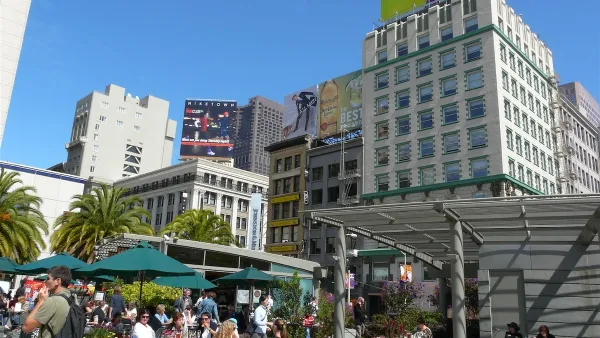
Traditional Retail is Hanging by a Thread. What Now for Cities?
After Kaid Benfield paints a rather grim retail outlook — where even retail bastions like San Diego are going dark — he suggests a series of actions for city leaders and planners.
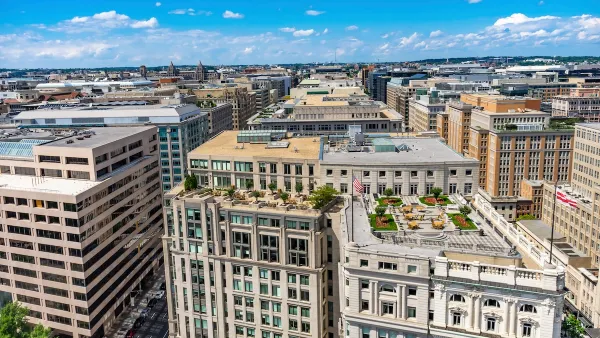
DC Announces ‘Office to Anything’ Adaptive Reuse Program
The program complements an existing residential conversion initiative and could yield up to 2.5 million square feet of new commercial space.

Planetizen Federal Action Tracker
A weekly monitor of how Trump’s orders and actions are impacting planners and planning in America.

Washington state to charge fee to drivers with fuel-efficient cars
Revenue from the fee will go towards supporting the state’s highways.
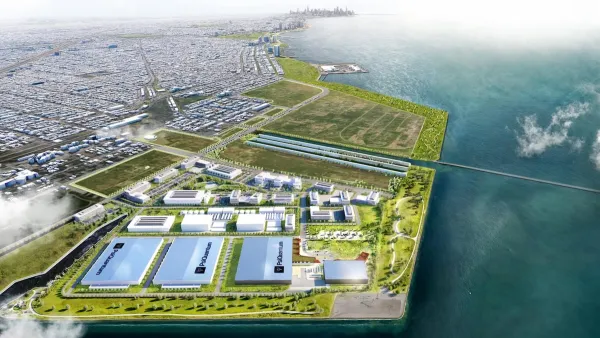
Illinois considers spending $1 billion in taxpayer money on data center
A quantum computing campus and data center are currently under construction in Chicago.

Senate passes bill overhauling permitting
The bill still needs to pass the House.

Did data centers change how voters cast their ballots?
Texas, Ohio, and Georgia all flipped party control. But in rural counties, the effect of local data centers was mixed.

Amtrak invests in eight new Airo trainsets
The new trainsets will begin serving passengers in 2031.

FREE Course: Walkable City 1: Why Walkability?
After describing his path towards focusing on walkability as the essence of good planning, Jeff Speck marches through his five principal reasons for making more walkable places.
Reinventing Malls: Planning Alchemy—Turning Gray Fields Into Gold
The course focuses on the opportunities and imperatives that shape reinvention of mall sites.

City of Charlotte
City of Rosemead
Rutgers University, Edward J. Bloustein School of Planning and Public Policy
University of Michigan School for Environment and Sustainability (SEAS)
Hunter College, City University of New York (CUNY)
The Architects Foundation
University District Partnership