A new project is opening in San Francisco that utilizes a vacant piece of land for a temporary retail installation using shipping containers.


The space is designed by Douglas Burnham of Oakland-based Envelope A+D and includes 26 containers. The first to open is an ice cream shop.
"'It's the idea of a flexible machine that is operating at the pace of the Internet, where you have simple frames but the content is always different,' he said. The architect broached the idea with the city after winning a bid to build market-rate housing further down on Octavia Boulevard. The creative endeavor is financed in part by a client of Burnham's (who prefers to remain anonymous), who is funding some of the infrastructure; each vendor is paying for the build-out of their containers and a percentage of the rent for the lots.
For the city, the project is a chance to tinker with their vision for Octavia Boulevard. The two lots, comprising about 18,000 square feet, are next to the park at the foot of the street, Hayes Green, and segue into the Hayes Valley business district."
Read the full story: San Francisco's Pop-Up Hood

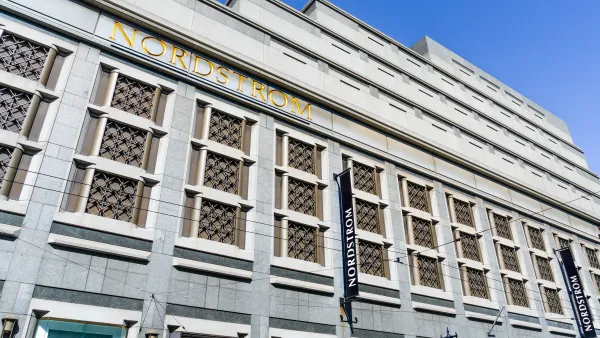
Recent Retail Closures in U.S. Cities Follow Trends Established Before the Pandemic
While some cling to debatable claims about higher crime rates as the cause for recent high-profile store closures in U.S. downtowns, the real reasons are more realistically extensions of the causes of the “retail apocalypse” from the before times.
Report: 'Pop-Up' Businesses Ring Up $50 Billion in Yearly Revenue
Temporary storefronts—for everything from high fashion to big-box retailers to "foodie"-favored restaurants—are all the rage. A new study quantifies the economic clout of pop-up businesses.
San Francisco Fights to Keep Chains Out as It Invites the Wealthy In
The battle over whether to allow a proposed Jack Spade store to open in San Francisco's Mission District points to the incongruities of a city desperate to maintain its retail diversity while it loses its residential diversity.

Planetizen Federal Action Tracker
A weekly monitor of how Trump’s orders and actions are impacting planners and planning in America.

California plans to bury El Niño’s downpour
If the state plays its cards right, it may be able to store a billion acre-feet of El Niño’s water in aquifers.

Chicago breaks ground on $3 billion megadevelopment
The new neighborhood, titled Foundry Park, will one day host 3,700 residences.

California High-Speed Rail Authority CEO resigns after $600,000 scandal
Under Ian Choudri, the authority used taxpayer dollars to fund first class flights and trips to nightclubs.

Want to study the Missouri River? Soon, you may need unanimous approval from 10 states
Legislation would require 10 governors’ permission to study or build projects moving water outside the basin.

Desperate measures: Advocates weigh draining Lake Powell to fill Colorado River
Draining the reservoir could reduce evaporation losses by a couple hundred thousand acre-feet.

FREE Course: Walkable City 1: Why Walkability?
After describing his path towards focusing on walkability as the essence of good planning, Jeff Speck marches through his five principal reasons for making more walkable places.
Reinventing Malls: Planning Alchemy—Turning Gray Fields Into Gold
The course focuses on the opportunities and imperatives that shape reinvention of mall sites.

City of Rosemead
Rutgers University, Edward J. Bloustein School of Planning and Public Policy
One Hundred Miles
Hunter College, City University of New York (CUNY)
The Architects Foundation
University of Cincinnati Online
City of Cambridge
Montrose County
The Pocatello Development Authority