After Kaid Benfield paints a rather grim retail outlook — where even retail bastions like San Diego are going dark — he suggests a series of actions for city leaders and planners.


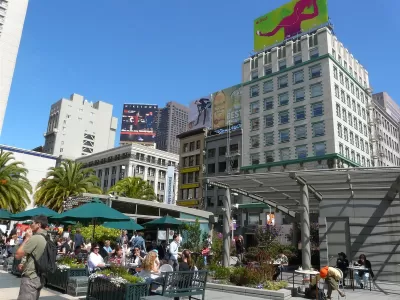
Kaid Benfield provides a literature review of essential 2025 studies of U.S. retail in the post-pandemic age of Amazon and e-commerce, and provides some key recommendations:
- “Add housing density to commercial areas, putting more people – potential customers – within walking and easy driving distance of those establishments that remain viable…”
- “…an enlivened generation of ‘third places’ such as libraries, gyms, and small parks.”
- “… city nature integrated into urban fabric brings multiple benefits to neighborhoods and almost always makes them more attractive to pedestrians.”
“I don’t think we will ever get back fully to the retail environment of previous decades, except perhaps in a few special places.” Benfield writes. “The big counterforces – online shopping and a bigger degree of remote work practices – are here to stay. We’re in a different environment now, and new environments demand new ideas.”
FULL STORY: Traditional retail is hanging by a thread in the US. What now for city leaders and planners?

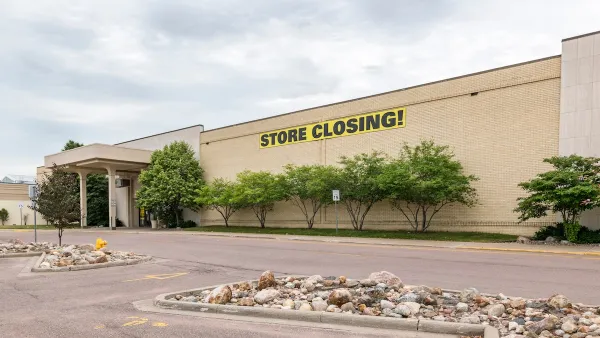
Shifts in Shopping: Transforming Malls Into Parks
Maybe zombie malls still have a second life — one with a little greenery.
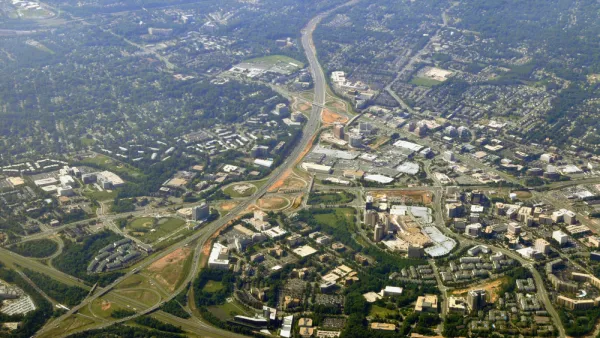
Rethinking Retail Space in the Wake of COVID-19
As e-commerce boomed and people sought outdoor shopping and dining options, the pandemic accelerated the decline of massive, merchandise-oriented retail spaces and indoor malls.
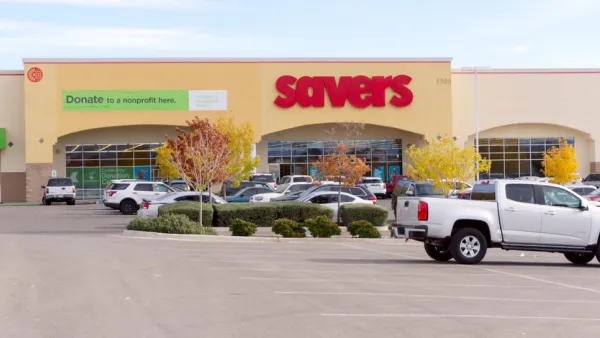
How One Commercial Real Estate Landlord Assesses the Market
The complete upheaval of the commercial real estate market seemingly happened overnight, but the pandemic followed years of structural changes, so the recovery could take much longer.

Planetizen Federal Action Tracker
A weekly monitor of how Trump’s orders and actions are impacting planners and planning in America.

The state-sanctioned urbicide of Austin
People don’t kill cities. Freeways do.

US to reduce Colorado River water deliveries to Mexico
A new Colorado Treaty amendment reduces Mexico’s Colorado River water allocation by 250,000 acre feet.

Baltimore to break ground on $50 million Transit Priority Project
The project will bring faster bus trips, safer streets and better bike connections to Baltimore.

Airbnb launches $250 million 'last-dollar financing' housing accelerator, makes first investment in Austin
The company will put $6.4 million towards affordable housing development in Texas’ capital.

Guerilla urbanists are building DIY bus stop benches in Chicago
A before-and-after of one of the bus stops with a new bench. The new benches are not officially sanctioned or permitted, but the residents who placed them hope they will be the start of a network of DIY benches across the city.

FREE Course: Walkable City 1: Why Walkability?
After describing his path towards focusing on walkability as the essence of good planning, Jeff Speck marches through his five principal reasons for making more walkable places.
Reinventing Malls: Planning Alchemy—Turning Gray Fields Into Gold
The course focuses on the opportunities and imperatives that shape reinvention of mall sites.

Eagle County Government
Harvard University Graduate School of Design
Nashville Planning Department
The Architects Foundation
University of Cincinnati Online
The Pocatello Development Authority
The Urban Renewal Agency of the City of Pocatello
Journal of the American Planning Association