The program complements an existing residential conversion initiative and could yield up to 2.5 million square feet of new commercial space.


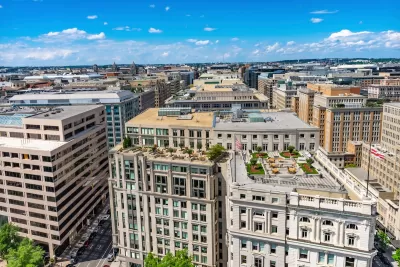
A new program in Washington, D.C. encourages the adaptive reuse of downtown office buildings into almost any other business, with the program itself dubbed “Office to Anything” (but officially known as Central Washington Activation Projects Temporary Tax Abatement), reports Ida Domingo for ABC 7 News.
The program is aimed specifically at non-residential uses such as hotels, retail, entertainment, or other uses, acknowledging that residential conversions, which are supported by the 2024 Housing in Downtown program, are not possible for every building. In announcing the program, Mayor Muriel Bowser said, “Through Office to Anything, we will transform vacant and underutilized offices into new, productive uses that increase foot traffic, generate economic activity and tax revenue, and bring new vibrancy to DC’s commercial core.”
The program offers a 15-year property tax freeze and could impact up to 2.5 million square feet of underused office space. “Officials said the value of the total tax abatements available is subject to a cap of $5 million for 2027, $6 million for 2028, and $8 million for 2029, with 4% growth each year after.”
Read the full story: Office to Anything': DC launches program to turn empty offices into new businesses


Office conversion is picking up steam in San Francisco
The city spent five years streamlining approval processes and reducing fees to encourage more adaptive reuse of vacant office buildings.

With Zero Office Conversions in Four Years, San Francisco Pins Hopes on New Special Financing District
City leaders hope the new incentive will spur the redevelopment of some of the city’s 30,000 square feet of vacant office space into housing.
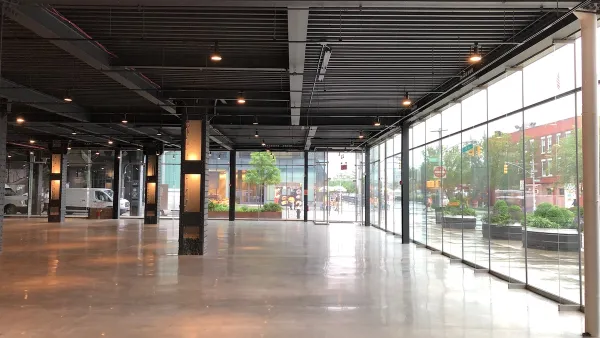
Manhattan Office-to-Apartment Conversions Doubled in 2024
Thanks in part to recent zoning changes, a record number of office space is being converted to housing in the city’s former business districts.

Planetizen Federal Action Tracker
A weekly monitor of how Trump’s orders and actions are impacting planners and planning in America.

California plans to bury El Niño’s downpour
If the state plays its cards right, it may be able to store a billion acre-feet of El Niño’s water in aquifers.

Chicago breaks ground on $3 billion megadevelopment
The new neighborhood, titled Foundry Park, will one day host 3,700 residences.

California High-Speed Rail Authority CEO resigns after $600,000 scandal
Under Ian Choudri, the authority used taxpayer dollars to fund first class flights and trips to nightclubs.

Want to study the Missouri River? Soon, you may need unanimous approval from 10 states
Legislation would require 10 governors’ permission to study or build projects moving water outside the basin.

Desperate measures: Advocates weigh draining Lake Powell to fill Colorado River
Draining the reservoir could reduce evaporation losses by a couple hundred thousand acre-feet.

FREE Course: Walkable City 1: Why Walkability?
After describing his path towards focusing on walkability as the essence of good planning, Jeff Speck marches through his five principal reasons for making more walkable places.
Reinventing Malls: Planning Alchemy—Turning Gray Fields Into Gold
The course focuses on the opportunities and imperatives that shape reinvention of mall sites.

City of Rosemead
Rutgers University, Edward J. Bloustein School of Planning and Public Policy
One Hundred Miles
Hunter College, City University of New York (CUNY)
The Architects Foundation
University of Cincinnati Online
City of Cambridge
Montrose County
The Pocatello Development Authority