Never go to a gas station again. We're not talking about transit—we're talking about an app that sends people to your car to fill it up with gas with no service charge.


Jennifer Van Grove lets a bit of editorializing do the talking in reporting on the latest app to hit the streets in an effort to make driving easier:
"Even in an era when no errand is too small to outsource to a smartphone application, start-up Purple, which dispatches a stranger to fill up your gas tank, might smack as on-demand capitalism gone too far."
Purple works from an iPhone or Android app to request a "courier" to come to your car and add 10 or 15 gallons of gas to your tank via portable gas tanks. Van Grove adds:
"Your credit card is billed the going rate for gas, as advertised in the application, with rates comparable to what you might find at stations in your neighborhood. A service charge for the longer, three-hour delivery window is being waived for the time being. Your only task is to make sure your gas tank is accessible to Purple's people."
It will shock few people, perhaps, that the app is based in Los Angeles, recently expanding operations to San Diego. The article includes more detail on the market for the app, which is also summed up by this sound bite from Los Angeles resident Lania Bettin: "I live across the street from a gas station…but I don't always have time to make the stop."
Read the full story: Start-up app Purple fills up gas tanks for time-crunched customers

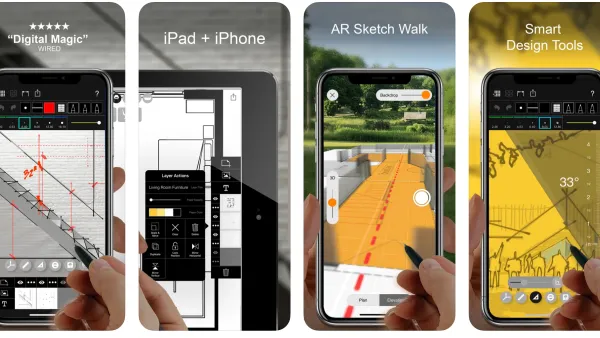
Best Apps for Urban Planning in 2022
Mobile apps continue to redefine the practices of planning—urban planning, regional planning, transportation planning, community planning, and rural planning included.
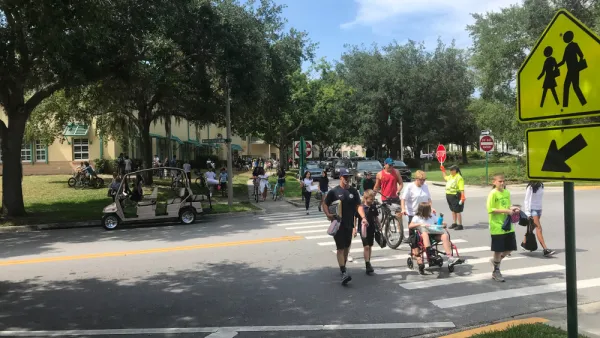
Earn Rewards for Traveling for by Foot, Bike, Bus, or Train
The city of Orlando is partnering with the Miles app.
New Google Map Layer Shows COVID-19 Infection Rates
A new layer showing the seven-day average of confirmed COVID-19 cases started rolling out to Android and iPhones last week.

Planetizen Federal Action Tracker
A weekly monitor of how Trump’s orders and actions are impacting planners and planning in America.

Amtrak, CN end decades-long dispute with eight-year agreement
The new operating agreement establishes an updated framework for the companies to work together, including processes to resolve disputes.

Judges permit Denver to divert 77,000 acre feet from the Colorado River for reservoir expansion
Overuse and climate change have caused the Colorado River’s water levels to plummet.

NYC DOT wants faster, more permanent street upgrades
The city is examining ways to build more concrete infrastructure without getting entangled in 'decades-long' projects.

'Something we’ve never seen before:' rising utility rates could strain city finances nationwide
Data centers, climate change and other factors have caused utility rates in the United States to increase by 38% since 2020.

Trump to overrule local leaders, lease millions of acres of America’s Pacific Island territories’ seafloors to mining companies
International law says that the Indigenous people of America’s territories have a right to prior and informed consent regarding projects that impact their countries.

FREE Course: Walkable City 1: Why Walkability?
After describing his path towards focusing on walkability as the essence of good planning, Jeff Speck marches through his five principal reasons for making more walkable places.
Reinventing Malls: Planning Alchemy—Turning Gray Fields Into Gold
The course focuses on the opportunities and imperatives that shape reinvention of mall sites.

Harvard University Graduate School of Design
KFH Group Inc.
Greater Baltimore Committee
The Architects Foundation
University of Cincinnati Online
The Pocatello Development Authority
The Urban Renewal Agency of the City of Pocatello