AB 744, a bill which requires no more than one parking space be provided for every two units of affordable and senior housing proximate to transit, was signed by Gov. Jerry Brown on Oct. 9.


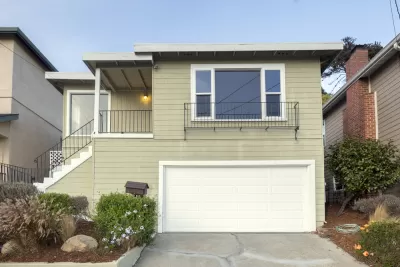
The legislation, Assembly Bill (AB) 744, Planning and Zoning: Density Bonus, authored by Assemblyman Ed Chau, D-Arcadia, "will allow developers to request reduced minimum parking requirements within affordable housing projects," writes Mary Eveleigh of Smart Growth America. However, they must claim a density bonus to receive these minimum parking requirements [see below for description].
It also amends the parking ratio for affordable housing and senior housing to require no more the 0.5 parking spaces per unit, and amends the ratio for special needs housing to require no more than 0.3 parking spaces per unit.
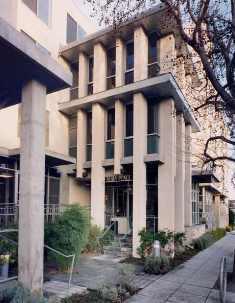
Photo Credit: Palo Alto Housing Corporation: Alma Place. This 107 unit, Single-Room-Occupancy development has a .5 parking ratio, (53 parking spaces). Located two blocks from the Caltrain Station and Palo Alto Transit Center. Rents range from $486 to $657 depending on income.*
The bill, signed by Gov. Brown on Oct. 9, was "supported by a coalition of over 60 organizations and individuals [PDF], including Smart Growth America’s coalition partners Local Government Commission and TransForm, AARP, the American Planning Association, and Professor Donald Shoup of UCLA," writes Eveleigh.
Opposing it was the formidable League of California Cities, which wrote, "Poorly-planned housing projects with inadequate parking will negatively impact the quality of life of the vulnerable populations of identified residents."
Taking an opposing position was the California Apartment Association, the largest statewide rental housing trade association in the country. "While providing adequate parking is important in a housing development, often times, minimum parking standards do not reflect the demand from tenants for parking," they wrote the governor.
When a project is close to a transit station or houses seniors and others who have fewer vehicles, existing parking requirements do not make sense. These parking spaces, which go unused, can significantly increase the cost of construction and hinder badly needed housing projects.
The state's legislative analysis [PDF] supports that position, and goes further:
Existing parking standards are out of synch with the State’s policies to encourage urban infill development and impede construction of affordable housing and transit‐oriented projects. AB 744 is a timely urban planning solution that will encourage construction of affordable housing, promote economic development and job growth, and reinforce California’s competitions for federal transportation dollars.
Furthermore, the analysis puts the bill into context, tying it to the state's landmark legislation that reduces greenhouse gas emissions and sprawl development.
AB 744 aligns local land use decisions more closely with the goals of AB 32 and SB 375 by reducing the parking required for projects that are close to transit or serve individuals who have fewer cars.
A prior Planetizen post on the bill provides this example of the density bonus cited from a post on the California Land Use Blog on AB 2222, "signed into law on September 27, 2014, which amends the State's Density Bonus Law."
Although application of the statute can be complicated, its aim is fairly simple: When a developer agrees to construct a certain percentage of the units in a housing development for low or very low income households, or to construct a senior citizen housing development, the city or county must grant the developer one or more itemized concessions and a 'density bonus,' which allows the developer to increase the density of the development by a certain percentage above the maximum allowable limit under local zoning law.
Correspondent's note: This writer lived at Alma Place for 14 years.
Hat tip to David Barclay, Palo Alto Daily Post.
FULL STORY: California governor signs bill to ease parking requirements and create more affordable housing

Parking, Density, and Affordable Housing in California
A bill to reduce parking minimums for residential or mixed-use developments that include affordable units passed a key Senate committee. AB 744 amends the state's density bonus law, itself controversial, that incentivizes building affordable housing.
BART's Transit-Oriented Development Bill Sets Disturbing Precedent, Says APA
AB 2923, which would allow the Bay Area Rapid Transit District to rezone their properties near stations for transit-oriented development, passed its first committee. The California chapter of APA objects to the preemption of local land use authority.

Calif. Governor Signs Game-Changing Budget for HSR, Transit, and Affordable Housing
Jerry Brown signed a $156.3-billion budget on June 20 that marks a new day for greenhouse gas-reducing transportation and sustainable communities projects due to new revenues from the state's cap and trade market now and, particularly, in the future.

The state-sanctioned urbicide of Austin
People don’t kill cities. Freeways do.

US to reduce Colorado River water deliveries to Mexico
A new Colorado Treaty amendment reduces Mexico’s Colorado River water allocation by 250,000 acre feet.

New Jersey’s second-largest city bans standalone data centers
Jersey City will continue to allow co-location facilities, such as those meant for research institutions that store their own data.

Amtrak not solely to blame for New Jersey commuter rail's unreliability, report finds
A new study from the Garden State Initiative found that NJ Transit’s budget grew 20% across a 4 year period, but reliability declined significantly over the same period.

EPA erases limits on planet-warming pollution from power plants
Under Monday’s plan, power plants would still have some limits on how much mercury, arsenic and other contaminants they can emit.

Phoenix announces new on-demand transit service, more frequent RAPID buses
Both new services will launch in October, and are part of Phoenix's Project Effective Access Solutions for Easing Congestion.

FREE Course: Walkable City 1: Why Walkability?
After describing his path towards focusing on walkability as the essence of good planning, Jeff Speck marches through his five principal reasons for making more walkable places.
Reinventing Malls: Planning Alchemy—Turning Gray Fields Into Gold
The course focuses on the opportunities and imperatives that shape reinvention of mall sites.

Eagle County Government
Harvard University Graduate School of Design
Nashville Planning Department
The Architects Foundation
University of Cincinnati Online
The Pocatello Development Authority
The Urban Renewal Agency of the City of Pocatello
Journal of the American Planning Association