Late last month, the final phase of Seattle's Prop. 1 went into effect, bringing across-the-board improvements to bus and train frequency.


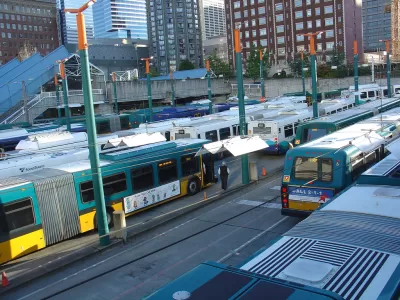
To accommodate demand for more buses and trains, Seattle's Proposition 1 has gone into full effect. The ordinance provides for a range of improvements to transit frequency, serving an ongoing downtown development boom.
Local observers rate the level of added transit options as very substantial. "If you care about spontaneous mobility through frequent transit it's truly a red-letter day [...] Seattle will be the closest it's ever been to being a place where you can count on frequent transit service, 7 days per week."
Specific improvements include the following:
- 25 percent more peak-hour trains, arriving every 6 minutes instead of every 7.5 minutes
- Cancellation of reduced weekday bus service on various lines
- Frequent weekend service on core routes
Check out the article as well as King County Metro's website for more information.
Read the full story: More Trains, More Buses: September 26th is a Historic Day for Seattle’s Transit

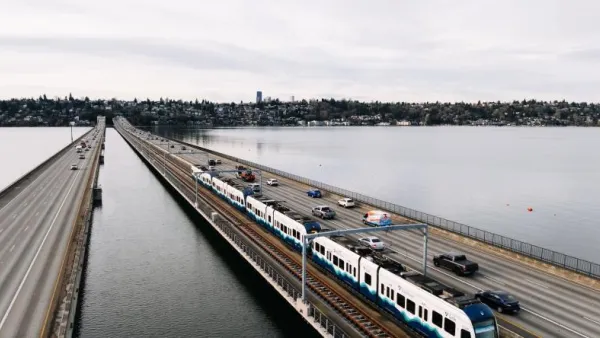
Seattle’s Floating Light Rail Bridge to Open March 28
The new East Link segment of King County’s light rail system crosses Lake Washington on a first-of-its-kind floating bridge.
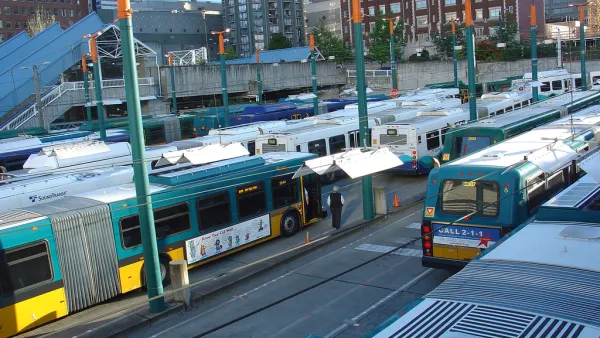
Bus System Changes Planned in Seattle
King County Metro and Sound Transit have proposed major changes to bus service on the eastside of Seattle, stretching into suburban communities outside of the city as well.
Seattle Voters To Be Put To Transit Test in November
Will a large city do what its county voters refused to do—fund the county bus system, though largely within city limits? Seattle voters will be put to the test in November when asked to pay an annual $60 vehicle fee and 0.1% sales tax.

Planetizen Federal Action Tracker
A weekly monitor of how Trump’s orders and actions are impacting planners and planning in America.

Amtrak, CN end decades-long dispute with eight-year agreement
The new operating agreement establishes an updated framework for the companies to work together, including processes to resolve disputes.

Judges permit Denver to divert 77,000 acre feet from the Colorado River for reservoir expansion
Overuse and climate change have caused the Colorado River’s water levels to plummet.

NYC DOT wants faster, more permanent street upgrades
The city is examining ways to build more concrete infrastructure without getting entangled in 'decades-long' projects.

'Something we’ve never seen before:' rising utility rates could strain city finances nationwide
Data centers, climate change and other factors have caused utility rates in the United States to increase by 38% since 2020.

Trump to overrule local leaders, lease millions of acres of America’s Pacific Island territories’ seafloors to mining companies
International law says that the Indigenous people of America’s territories have a right to prior and informed consent regarding projects that impact their countries.

FREE Course: Walkable City 1: Why Walkability?
After describing his path towards focusing on walkability as the essence of good planning, Jeff Speck marches through his five principal reasons for making more walkable places.
Reinventing Malls: Planning Alchemy—Turning Gray Fields Into Gold
The course focuses on the opportunities and imperatives that shape reinvention of mall sites.

Harvard University Graduate School of Design
KFH Group Inc.
Greater Baltimore Committee
The Architects Foundation
University of Cincinnati Online
The Pocatello Development Authority
The Urban Renewal Agency of the City of Pocatello