With an historic drought pressuring agencies to source more water locally, the Metropolitan Water District is looking to expand an idea pioneered by its neighbors in Orange County.


"The Metropolitan Water District of Southern California is in talks with Los Angeles County sanitation districts about developing what could be one of the largest recycled water programs in the world," reports Matt Stevens.
MWD staff has already presented a "draft framework of a plan to purify and reuse as much as 168,000 acre-feet of water a year – enough to serve about twice that number of households for a year." Such a plan would require a new treatment plant and delivery facilities likely to cost in the realm of $1 billion.
The article goes into a lot of detail about how recycled potable water systems work, including examples available just to the south of Los Angeles County in Orange County. There, an indirect potable reuse system purifies water in an underground aquifer. The Orange County Groundwater Replenishment System can purify up to 100 million gallons of water per day. In their draft report, MWD officials targeted 150 million gallons per day, which would make the system the largest in the world.
As for next steps, Stevens reports that following a still-needed board approval "the agencies could launch on a 'demonstration project' at the sanitation districts’ Joint Water Pollution Control Plant in Carson in about 20 months. There, the treatment processes would be perfected on 1 million gallons of water per day while officials conduct additional studies and develop a financing plan, according to an MWD memo."
Read the full story: California seeks to build one of world's largest recycled water programs
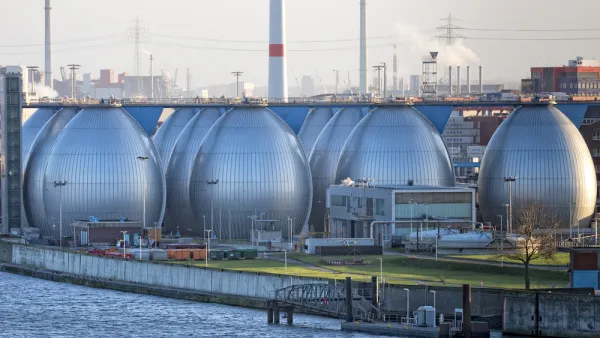
What Happened to all those Desalination Plants Proposed for California?
Less than a decade ago, "desal" proposals in California numbered over 22, but only one major one was built—in Carlsbad, serving the San Diego region. A newly released study by the Pacific Institute explains why.
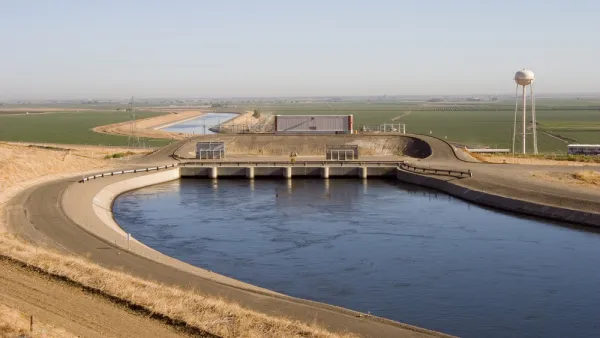
California Studies Standards for Recycled Drinking Water
California is considering piping recycled potable water directly into people's homes.
The Supply Side of California's Historic Drought
As General Manager of the Metropolitan Water District of Southern California, Jeff Kightlinger is a veteran of the states' wet and dry cycles.

Planetizen Federal Action Tracker
A weekly monitor of how Trump’s orders and actions are impacting planners and planning in America.

Eastern Nebraska is running out of electricity
Data centers and electrification are straining eastern Nebraska’s grid, throttling economic development.

Study reveals best places in the U.S. for cycling, walking
New research from Streetlight Data examines bicycle and pedestrian miles per capita in the 100 largest U.S. cities by population.

DSA members accuse Mamdani of 'abandoning values' over housing redevelopment
New York City's mayor plans to replace about 2,000 units of public housing with private, mixed-income housing.

All sides of BRT debate unhappy with CDOT’s most recent move
The Colorado Department of Transportation is no longer considering center-running bus lanes for Colorado Boulevard.

Massachusetts bogs generate both power, and cranberries
Putting solar panels above farmland is one way Massachusetts is advancing toward its goal of net-zero carbon emissions by 2050.

FREE Course: Walkable City 1: Why Walkability?
After describing his path towards focusing on walkability as the essence of good planning, Jeff Speck marches through his five principal reasons for making more walkable places.
Reinventing Malls: Planning Alchemy—Turning Gray Fields Into Gold
The course focuses on the opportunities and imperatives that shape reinvention of mall sites.

City of Rosemead
Rutgers University, Edward J. Bloustein School of Planning and Public Policy
One Hundred Miles
University of Michigan School for Environment and Sustainability (SEAS)
Hunter College, City University of New York (CUNY)
The Architects Foundation
City of Cambridge
The Pocatello Development Authority
The Urban Renewal Agency of the City of Pocatello