The Northeast Ohio Areawide Coordinating Agency (NOACA) has committed to a drastic shift in its transportation planning paradigms.


"NOACA, the regional agency which shepherds in plans for transportation, air and water quality, started updating its policies and shifting priorities—from an enabler of a car-centric transportation system to one that reflects a fiscal austerity of a state still feeling the effects of the recession," reports Marc Lefkowtiz.
Lefkowtiz credits the change in direction to "new leadership at its board, executive and staff" focusing on fixing broken streets in Northeast Ohio before continuing its old pattern of building new highways for a "flatlined" population.
According to Lefkowitz, "[t]he reform efforts were outlined in a strategic plan in 2014 and are now translating into policy that will bring the agency in compliance with its own bylaws, societal expectations of acting to forestall climate change, and demographic changes like a recent uptick in urban population and transit and bike use."
NOACA took several substantial steps, including funding changes, redefining which communities are considered "urban core," and more, at a recent board hearing—the details of which make up the bulk of Lefkowitz's coverage.
FULL STORY: Northeast Ohio's transportation agency moves toward fix-it-first with policy updates

Equitable Transportation Planning Initiative Advances in Northeast Ohio
The Northeast Ohio Areawide Coordinating Agency (NOACA) is moving forward with a groundbreaking policy to consider regional economic inequities when evaluating potential highway projects.
Local Opposition to Ohio DOT's I-77 Widening Plans Near Akron
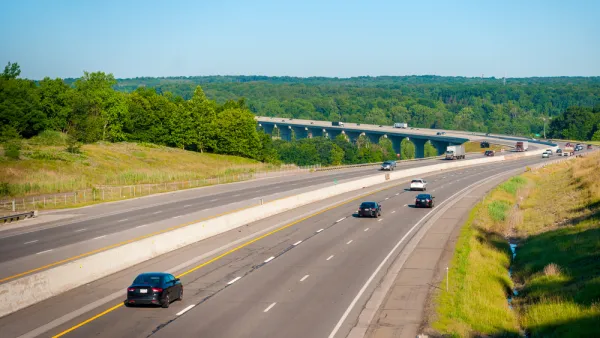
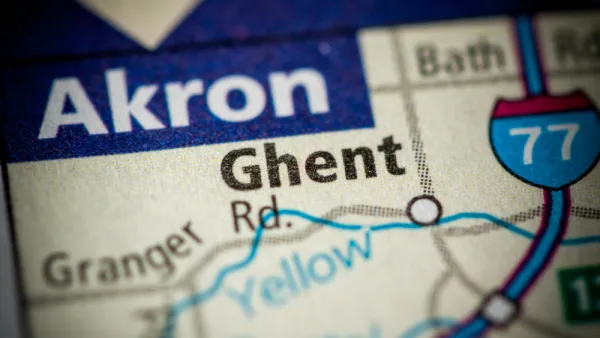
The Ohio Department of Transportation wants to add lanes to Interstate 77 outside Akron to reduce congestion. Some local officials think the project will connect the region to the East Coast; others think the money would be better spent locally.
New Layer of Equity Analysis Considered for Regional Planning in Northeast Ohio
The Northeast Ohio Areawide Coordinating Agency (NOACA) is considering a new policy that will add considerations about regional economic inequities when evaluating potential highway projects.

Planetizen Federal Action Tracker
A weekly monitor of how Trump’s orders and actions are impacting planners and planning in America.

The state-sanctioned urbicide of Austin
People don’t kill cities. Freeways do.

US to reduce Colorado River water deliveries to Mexico
A new Colorado Treaty amendment reduces Mexico’s Colorado River water allocation by 250,000 acre feet.

5 New England states march closer to 800 megawatt wind energy project
Securing federal approval for the project may be complicated under the Trump administration, which has historically been hostile towards domestic wind power.

Baltimore to break ground on $50 million Transit Priority Project
The project will bring faster bus trips, safer streets and better bike connections to Baltimore.

Airbnb launches $250 million 'last-dollar financing' housing accelerator, makes first investment in Austin
The company will put $6.4 million towards affordable housing development in Texas’ capital.

FREE Course: Walkable City 1: Why Walkability?
After describing his path towards focusing on walkability as the essence of good planning, Jeff Speck marches through his five principal reasons for making more walkable places.
Reinventing Malls: Planning Alchemy—Turning Gray Fields Into Gold
The course focuses on the opportunities and imperatives that shape reinvention of mall sites.

Eagle County Government
Harvard University Graduate School of Design
Nashville Planning Department
The Architects Foundation
University of Cincinnati Online
The Pocatello Development Authority
The Urban Renewal Agency of the City of Pocatello
Journal of the American Planning Association