Is a gentrified Venice Beach still Venice Beach? With median home prices topping $1.4 million, the area's eclectic characters can't afford to stay. Investors and the tech industry say the change is only natural.


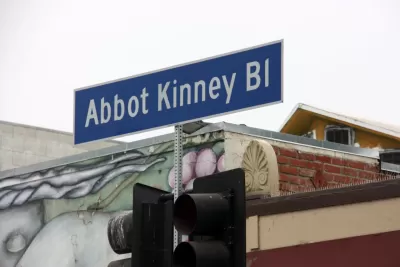
Venice Beach is on the path to becoming something very different. Some are now calling the area Silicon Beach. "As skyrocketing real estate prices push longtime residents out of this oceanside district of Los Angeles, corporate chains are replacing funky shops, and tech geeks are emerging as a dominant part of the scene."
Google and Snapchat stand out among a throng of start-ups and plentiful investment by moneyed interests. Median home prices are up from $832,000 to $1.4 million in the past five years alone. Abbot Kinney Boulevard, formerly a space for bohemian shops and eateries, has gone full yuppie. "In a stunner last month, a piece of commercial property on the boulevard sold for $44 million to a New York partnership [...] Jaws had also dropped when the same property sold for $20 million two years ago."
Venice's breakneck gentrification is pushing out the artists and musicians who defined the area for so many years. Some commentators call it natural, prime beachfront property finally coming into the value it should have had all along. Venice is now the top Airbnb spot in L.A.
If that's the case, the area's hippies and avant-garde artists will need to find somewhere else to call home. Or as one resident put it, "A lot of other people, they just disappear, dude."
Read the full story: How Snapchat tech titans are harshing the mellow in Venice Beach
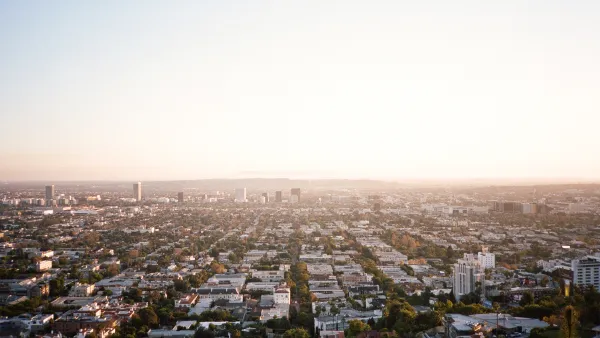
Million-Dollar Homes Becoming Standard Fare Across Los Angeles
As households with means seek to escape crowded apartment buildings and take advantage of historically low mortgage rates, average home prices of over $1 million are proliferating across the LA region.

High Housing Costs Driving Down Transit Ridership in LA
When neighborhoods gentrify and displace lower-income residents, transit ridership suffers, new research shows.
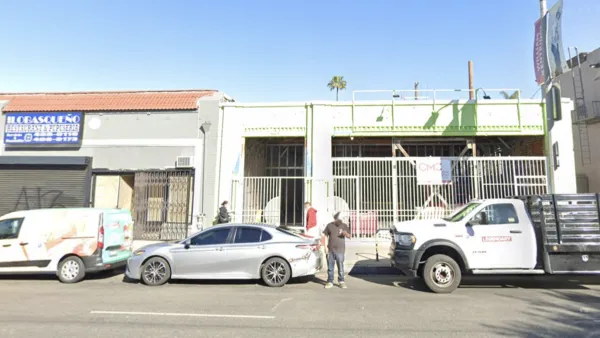
Another L.A. Gentrification Story
New art galleries are moving into a neighborhood recently dubbed ‘Melrose Hill,’ prompting both derision and concern on the part of local residents.

Planetizen Federal Action Tracker
A weekly monitor of how Trump’s orders and actions are impacting planners and planning in America.

California plans to bury El Niño’s downpour
If the state plays its cards right, it may be able to store a billion acre-feet of El Niño’s water in aquifers.

Desperate measures: Advocates weigh draining Lake Powell to fill Colorado River
Draining the reservoir could reduce evaporation losses by a couple hundred thousand acre-feet.

Mamdani’s pied-à-terre tax survives legal challenge
A panel of judges found that the plaintiffs failed to demonstrate injury as a result of New York City's implementation of the tax.

Eastern Nebraska is running out of electricity
Data centers and electrification are straining eastern Nebraska’s grid, throttling economic development.

Seattle passes record-breaking transit services expansion
Proposition 1 will double the city’s transit tax to add 95,000 more bus trips and preserve 180,000 bus trips annually.

FREE Course: Walkable City 1: Why Walkability?
After describing his path towards focusing on walkability as the essence of good planning, Jeff Speck marches through his five principal reasons for making more walkable places.
Reinventing Malls: Planning Alchemy—Turning Gray Fields Into Gold
The course focuses on the opportunities and imperatives that shape reinvention of mall sites.

City of Rosemead
Rutgers University, Edward J. Bloustein School of Planning and Public Policy
One Hundred Miles
University of Michigan School for Environment and Sustainability (SEAS)
Hunter College, City University of New York (CUNY)
The Architects Foundation
City of Cambridge
Montrose County
The Pocatello Development Authority