New art galleries are moving into a neighborhood recently dubbed ‘Melrose Hill,’ prompting both derision and concern on the part of local residents.


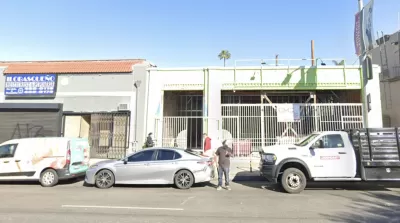
Writing in Hyperallergic, Matt Stromberg calls out the new art galleries popping up in a Los Angeles neighborhood being billed as ‘Melrose Hill’ for claiming to ‘revitalize’ an area that never lost its vitality to begin with. “In fact, ‘desolate’ was precisely the word used to describe the area in a Vanity Fair article last month on the recent influx of galleries to the block, which drew immediate and sharp criticism from Angelenos who know better.”
As Stromberg explains, “The phenomenon of a neighborhood being re-branded by developers, often aided by Google Maps, to present an area as a kind of ahistorical blank slate is nothing new.” Stromberg adds, “There is, in fact, a neighborhood called Melrose Hill, just not where these new art spaces are located.” The real Melrose Hill includes a Historic Preservation Overlay Zone (HPOZ) that protects 45 historic California bungalows.
As for the ‘desolate’ neighborhood in question, “Residents are overwhelmingly renters, with low to average median incomes for the city. Once you move off the main commercial and transit arteries of Western and Melrose, the streets are filled with low apartment buildings, single-family homes, and courtyard housing, originally built by Hollywood studios to house their workers.”
Longtime community members express concern that the galleries have not conducted public outreach or attempted to integrate themselves into the existing community while bringing hundreds of cars crawling the neighborhood for parking to gallery events. The pattern is familiar for L.A. neighborhoods, which regularly undergo ‘rediscovery’ and gentrification. “Large sections of LA have been transformed by development and gentrification over the past 20 years, but the speed at which it is taking place here seems exceptional.”
FULL STORY: Art Galleries Are Not Reviving a “Desolate” LA Neighborhood

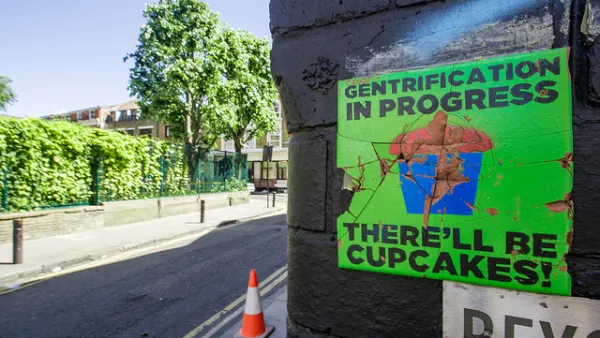
Lessons for YIMBYs From Boyle Heights
In the wake of a very pro-development March election, Los Angeles seems ready to embrace change. But not everywhere. In low-income Boyle Heights, residents have been more militant than most against encroaching gentrification.

High Housing Costs Driving Down Transit Ridership in LA
When neighborhoods gentrify and displace lower-income residents, transit ridership suffers, new research shows.
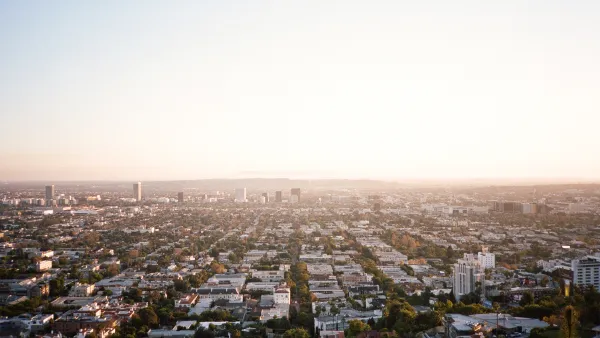
Million-Dollar Homes Becoming Standard Fare Across Los Angeles
As households with means seek to escape crowded apartment buildings and take advantage of historically low mortgage rates, average home prices of over $1 million are proliferating across the LA region.

The state-sanctioned urbicide of Austin
People don’t kill cities. Freeways do.

US to reduce Colorado River water deliveries to Mexico
A new Colorado Treaty amendment reduces Mexico’s Colorado River water allocation by 250,000 acre feet.

New Jersey’s second-largest city bans standalone data centers
Jersey City will continue to allow co-location facilities, such as those meant for research institutions that store their own data.

Amtrak not solely to blame for New Jersey commuter rail's unreliability, report finds
A new study from the Garden State Initiative found that NJ Transit’s budget grew 20% across a 4 year period, but reliability declined significantly over the same period.

EPA erases limits on planet-warming pollution from power plants
Under Monday’s plan, power plants would still have some limits on how much mercury, arsenic and other contaminants they can emit.

Phoenix announces new on-demand transit service, more frequent RAPID buses
Both new services will launch in October, and are part of Phoenix's Project Effective Access Solutions for Easing Congestion.

FREE Course: Walkable City 1: Why Walkability?
After describing his path towards focusing on walkability as the essence of good planning, Jeff Speck marches through his five principal reasons for making more walkable places.
Reinventing Malls: Planning Alchemy—Turning Gray Fields Into Gold
The course focuses on the opportunities and imperatives that shape reinvention of mall sites.

Eagle County Government
Harvard University Graduate School of Design
Nashville Planning Department
The Architects Foundation
University of Cincinnati Online
The Pocatello Development Authority
The Urban Renewal Agency of the City of Pocatello
Journal of the American Planning Association