Joe Cortright criticizes reports linking high median new home sizes to a renewed demand for McMansions. The market for single-family homes, he argues, locks out buyers of modest means. Only the well-off are buying.


A piece for City Observatory takes issue with those who claim "that the 'death of the McMansion' has been highly exaggerated." [...] "A closer reading shows that the apparent surge in McMansions is actually a bit of a statistical mirage. These analysts have overlooked a key limitation of the reported data."
From the article: "It's actually the case that American homes are only getting bigger if one believes that people living in multi-family housing either aren't Americans or don't have homes. [...] The only reason these big houses have increased as a share of total new housing is because the market for affordable, smaller single family homes has done even worse."
After the recession, the single-family market never recovered. Instead, "multi-family housing now makes up 40 percent of new home starts, up from 20 percent a decade ago. If we recalculated the median new home size including both multi- and single-family homes, the increase in the McMansion share would look much smaller." Additional data demonstrates that even among the rich, ownership of large homes is trending downward.
Read the full story: Misleading Medians & the McMansion Mirage
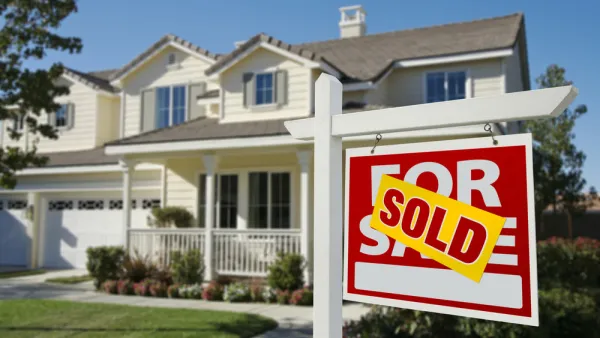
No More Hidden Gems Thanks to Investor-Centric Real Estate
Although large investors made only 4.3 percent of single-family home purchases in 2014, they may be reducing the competitiveness of traditional buyers. With ready cash and sophisticated algorithms, investors get there first and make better bids.
After the Crash: How Will People Live and Spend in the New Economy?
Kathleen Madigan takes a look at new research that considers the shift in America's living situations, and what it means for consumer behavior.
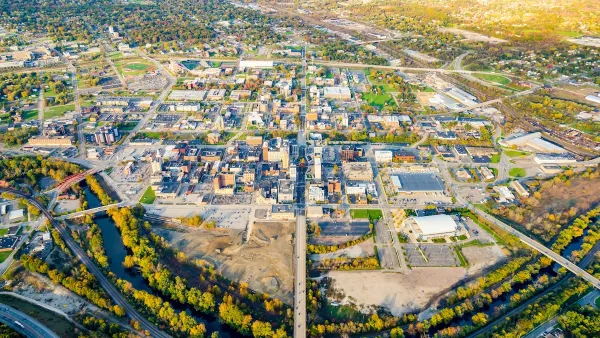
Only Two US Metro Areas Are Affordable for Homebuyers
Northeast Ohio is the last remaining bastion of housing affordability, according to an analysis from the National Association of Realtors.

Washington state to charge fee to drivers with fuel-efficient cars
Revenue from the fee will go towards supporting the state’s highways.

Illinois considers spending $1 billion in taxpayer money on data center
A quantum computing campus and data center are currently under construction in Chicago.

Trump to blast ‘hydrocarbon highway’ through ‘world’s longest art gallery’
Environmental and historic preservation groups are suing to stop the project.

NYC, state sue feds over mixed-immigration-status housing assistance rule
The state’s lawsuit argues that the rule change violates the Administrative Procedure Act.

Michigan to turn neighborhood into virtual power plant
Residents will soon be able to divert their excess energy to the grid in exchange for compensation.

Data center, mining project swarm to long-awaited Alaska railroad line
The state-owned railroad approved final plans for the spur line this week; the project is expected to cost $311 million, mostly funded by the federal government

FREE Course: Walkable City 1: Why Walkability?
After describing his path towards focusing on walkability as the essence of good planning, Jeff Speck marches through his five principal reasons for making more walkable places.
Reinventing Malls: Planning Alchemy—Turning Gray Fields Into Gold
The course focuses on the opportunities and imperatives that shape reinvention of mall sites.

City of Charlotte
City of Rosemead
Rutgers University, Edward J. Bloustein School of Planning and Public Policy
University of Michigan School for Environment and Sustainability (SEAS)
Hunter College, City University of New York (CUNY)
The Architects Foundation
University District Partnership