A city famous for reinventing by any means necessary is looking to preserve some of its history.


"The city [of Las Vegas] is considering which of six neighborhoods built during the 1940s should be nominated for designation on the National Register of Historic Places," reports Conor Shine.
"Although the aging, single-story houses likely won’t grace the cover of Architectural Digest, they document the city’s transition during the middle of the last century from a small desert outpost to a fledgling burg. Most of the homes were built during World War II using federal housing funds funneled to cities of military importance. In Las Vegas, the money was used to build housing for non-commissioned officers and civilian employees working at Las Vegas Army Air Corps Gunnery School, now known as Nellis Air Force Base, and at the Basic Magnesium Plant in what is now Henderson."
The article goes to provide more detail about the National Register of Historic Places, as well as insight into each of the six neighborhoods under consideration: Biltmore, Charleston Square, Eastland Heights, Huntridge, Mayfair, and Sebec Acres.
Hat tip to Marielle Mondon for sharing the article.
Read the full story: City decides parts of the past are worth preserving

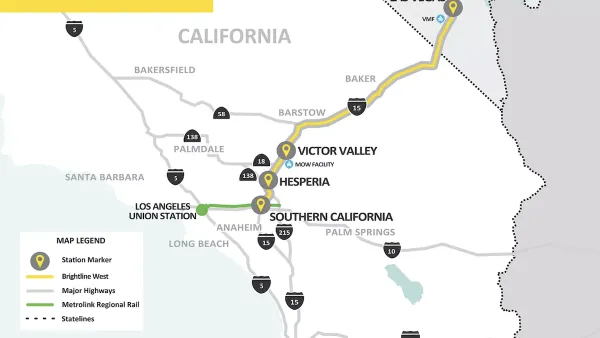
Brightline West’s future may rely on $6 billion federal loan
The company has until Nov. 2 to make a $400 million equity investment into its proposed high-speed rail line.
Nevada sues feds to block Colorado River cuts
The federal government’s newly released plan for managing the Colorado River’s dwindling water supply could cause Nevada to lose over 70% of its allocated water.

Las Vegas debuts new bus rapid transit
The project also brings widened sidewalks and more trees to the Maryland Parkway corridor.

Planetizen Federal Action Tracker
A weekly monitor of how Trump’s orders and actions are impacting planners and planning in America.

The state-sanctioned urbicide of Austin
People don’t kill cities. Freeways do.
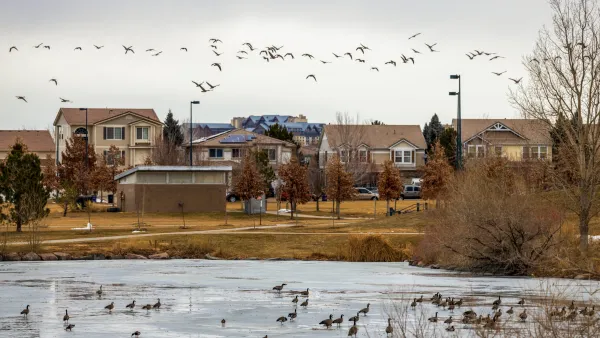
Colorado’s Largest Data Center Could Rise Next to Homes — Without a Public Hearing
The proposed campus would consume 11 times the power of Denver International Airport; as it has across the country, opposition mounts.

Nation's most wind-powered state turns to coal as data centers increase energy demand
For the first time in decades, Iowa has increased its generation of coal power.

NYC cools commuters with city's first rain garden above a bus stop
New York City officials say the plants in the rain garden can absorb 16 gallons of rainwater during heavy storms.

Brightline West’s future may rely on $6 billion federal loan
The company has until Nov. 2 to make a $400 million equity investment into its proposed high-speed rail line.

FREE Course: Walkable City 1: Why Walkability?
After describing his path towards focusing on walkability as the essence of good planning, Jeff Speck marches through his five principal reasons for making more walkable places.
Reinventing Malls: Planning Alchemy—Turning Gray Fields Into Gold
The course focuses on the opportunities and imperatives that shape reinvention of mall sites.

Greater Baltimore Committee
Eagle County Government
Harvard University Graduate School of Design
The Architects Foundation
University of Cincinnati Online
The Pocatello Development Authority
The Urban Renewal Agency of the City of Pocatello
Journal of the American Planning Association