An article in Governing argues that increased housing supply in Bricknell has helped keep down the costs of housing in adjacent neighborhoods like Overtown and Little Havana.


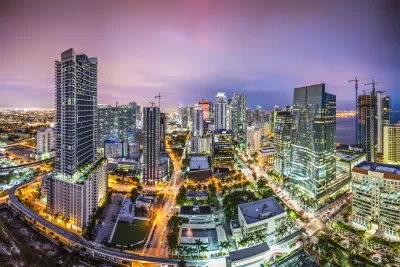
An article by Scott Beyer examines Downtown Miami as a case study in support of Edward Glaeser's theories about relaxing building limits to spur the growth of needed housing supply.
"Glaeser’s theory has mostly gone untested as the nation’s most gentrifying cities -- such as New York, San Francisco and Washington, D.C. -- still heavily control building heights," weites Beyer. "But an area around downtown Miami might finally offer some support to Glaeser’s premise."
That is:
"Instead of controlling density by regulating building heights, Miami has let developers build up: 53 of the city’s 64 buildings over 400 feet tall have been completed since 2000. Many of these skyscrapers are in Brickell, built to accommodate a well-heeled residential population that has doubled to 28,000 over the past 15 years."
According to Beyer, the evidence of the success of the effort is visible in the surrounding working-class neighborhoods like Little Havana and Overtown, where statistics from the real estate site Zillow show median home values hovering around half that of the figures achieved by the rest of the city.
Read the full story: How Miami Fought Gentrification and Won (for Now)
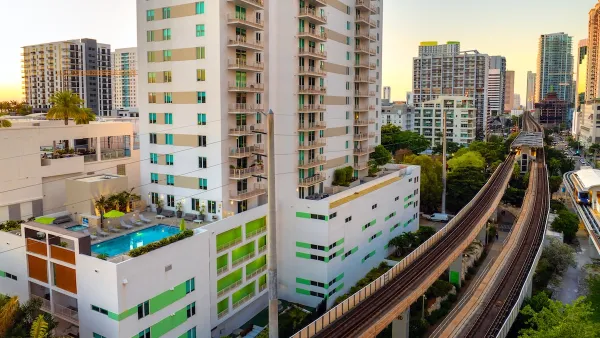
Miami Adds New TOD Incentive
Developers can apply for a land use variance for housing projects within half a mile to one mile of rail stations, but the complex process means few are likely to take advantage of the program.
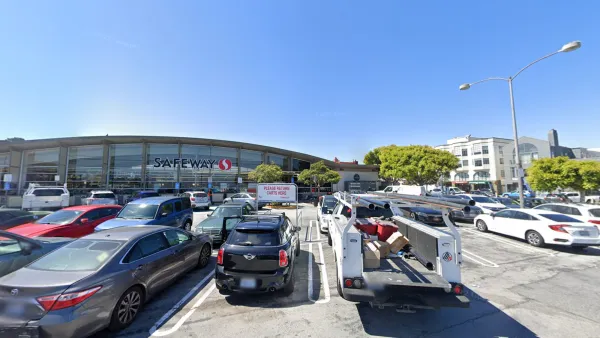
Debate over proposed 800-unit tower in San Francisco reveals generational divide in the housing crisis
Residents of the Marina District are up in arms over a proposed housing development above a Safeway store.
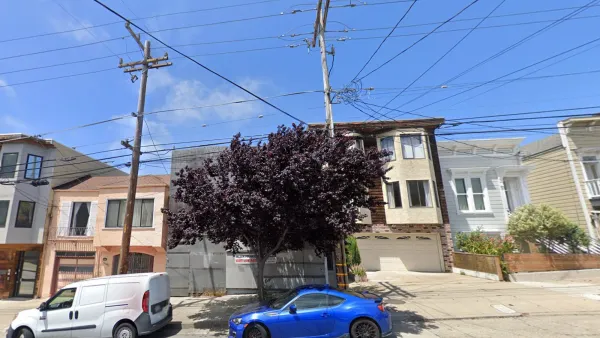
8-story tower is San Francisco's first project approved under new upzoning rules
Some neighbors call the project out of scale for the area, which has not grown beyond two- and three-story buildings in decades.

Planetizen Federal Action Tracker
A weekly monitor of how Trump’s orders and actions are impacting planners and planning in America.

California plans to bury El Niño’s downpour
If the state plays its cards right, it may be able to store a billion acre-feet of El Niño’s water in aquifers.

Desperate measures: Advocates weigh draining Lake Powell to fill Colorado River
Draining the reservoir could reduce evaporation losses by a couple hundred thousand acre-feet.

In Texas, data centers are swallowing promised parkland
Residents who moved to Taylor, Texas for a rural community now have to contend with three data centers in their backyard.

How a Chicago-sized wind farm beat the odds and powered on
The project spanned five presidential administrations and a standoff with a U.S. military base.

MTA gives itself 30 days to transform pit into basketball court
The site has been under construction since 2022; the city originally estimated it would finish the court in 2024.

FREE Course: Walkable City 1: Why Walkability?
After describing his path towards focusing on walkability as the essence of good planning, Jeff Speck marches through his five principal reasons for making more walkable places.
Reinventing Malls: Planning Alchemy—Turning Gray Fields Into Gold
The course focuses on the opportunities and imperatives that shape reinvention of mall sites.

City of Rosemead
Rutgers University, Edward J. Bloustein School of Planning and Public Policy
One Hundred Miles
Hunter College, City University of New York (CUNY)
The Architects Foundation
University of Cincinnati Online
City of Cambridge
Montrose County
The Pocatello Development Authority