An already difficult project received bad news at the end of April in the form of long delays and huge cost overruns. Now Phase 2 of the Silver Line extension is expected to arrive in Loudon County, Virginia in 2020.


"The second phase of the Silver Line Metro extension is 13 months behind schedule and might not open for passenger service until 2020," reports Lori Aratani.
"In addition, the rail line’s first phase, which opened in July, could be as much as $226 million over budget, according to current estimates. Officials said design modifications, along with work to finalize Phase 1, will add as much as $76 million to the project’s cost, putting its price tag at $2.98 billion. The first phase was $150 million over budget and six months late when passenger service began last summer."
So far officials at the Metropolitan Washington Airports Authority, which is responsible for the $5.6 billion rail project (D.C. Metro will operate the line when it is complete), has blamed the cost overruns and delays on design changes. Aratani reports that the second phase has already racked up more than 150 design changes. The article includes more detail and context about the challenges facing the line.
Read the full story: Silver Line is over budget and behind schedule


D.C. Metro Plans Ambitious Expansion Despite Financial Woes
Facing a $750 million ‘fiscal cliff,’ the agency says it’s important to continue looking forward to ‘visionary’ future plans.
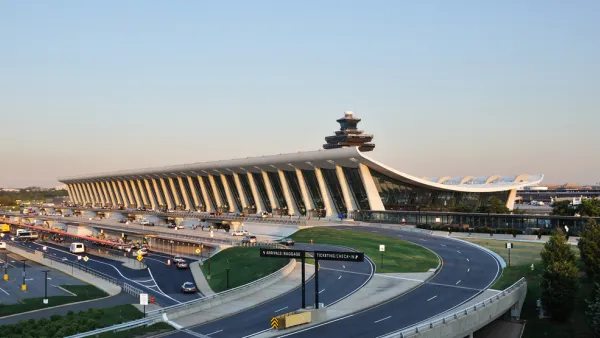
New Rail Line Connects D.C. Area to Dulles Airport
The Silver Line extends passenger train service into Loudon County and adds new connections to the region’s airports.
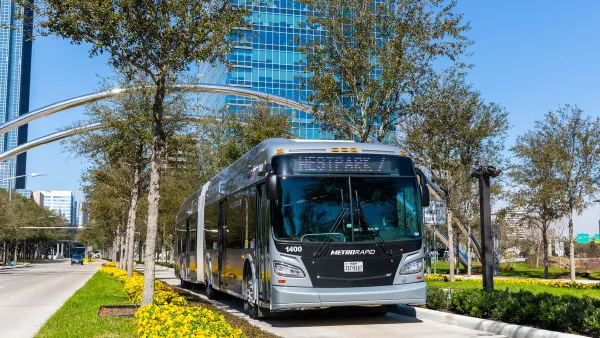
Houston Metro to Reduce BRT Service
The city’s Silver Line rapid transit has not been attracting as many riders as originally projected.

Planetizen Federal Action Tracker
A weekly monitor of how Trump’s orders and actions are impacting planners and planning in America.

California plans to bury El Niño’s downpour
If the state plays its cards right, it may be able to store a billion acre-feet of El Niño’s water in aquifers.

Chicago breaks ground on $3 billion megadevelopment
The new neighborhood, titled Foundry Park, will one day host 3,700 residences.

California High-Speed Rail Authority CEO resigns after $600,000 scandal
Under Ian Choudri, the authority used taxpayer dollars to fund first class flights and trips to nightclubs.

Want to study the Missouri River? Soon, you may need unanimous approval from 10 states
Legislation would require 10 governors’ permission to study or build projects moving water outside the basin.

Desperate measures: Advocates weigh draining Lake Powell to fill Colorado River
Draining the reservoir could reduce evaporation losses by a couple hundred thousand acre-feet.

FREE Course: Walkable City 1: Why Walkability?
After describing his path towards focusing on walkability as the essence of good planning, Jeff Speck marches through his five principal reasons for making more walkable places.
Reinventing Malls: Planning Alchemy—Turning Gray Fields Into Gold
The course focuses on the opportunities and imperatives that shape reinvention of mall sites.

City of Rosemead
Rutgers University, Edward J. Bloustein School of Planning and Public Policy
One Hundred Miles
Hunter College, City University of New York (CUNY)
The Architects Foundation
University of Cincinnati Online
City of Cambridge
Montrose County
The Pocatello Development Authority