Animals are more than just guests or co-habitants in our cities, according to an article in New Scientist—they're a critical component of the infrastructure that keeps cities running.


"When we think of cities, traditionally this brings to mind roads, homes and vehicles," writes Geoff Manaugh. "But animals are as much a functional part of the modern city as subways and skyscrapers."
In fact, declares Manaugh, "[t]his is the age of animals as infrastructure."
Manuagh goes on to provide a few examples of the concept, ranging from the O'Hare Grazing Herd of sheep, llamas, goats, and donkeys, which keep grass and shrubs at bay in difficult to maintain areas, to the insects of New York and the pigs of Cairo, which act as the "unacknowledged garbage disposal" of those cites, to a final, more futuristic take on what the future of animals as infrastructure might become.
Read the full story: New Urbanist: Our infrastructure is expanding to include animals

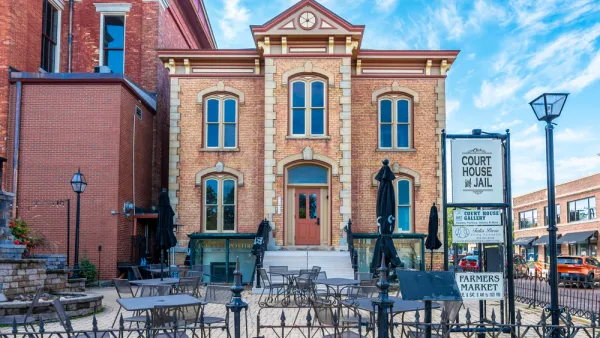
Map of Pandemic Real Estate Risk Focuses on New Jersey, Illinois, California
A new study evaluates county-level foreclosure risk, underwater home values, and more real estate market data after two years of the Covid-19 pandemic in the United States.
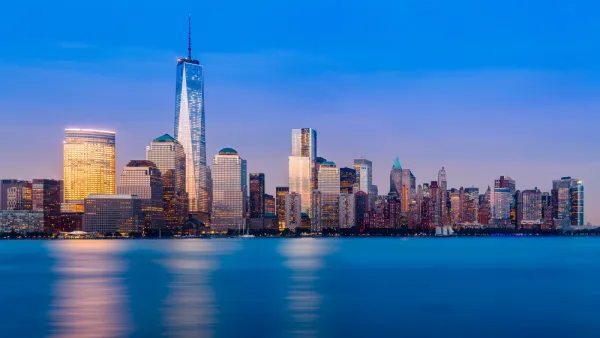
20 Years After 9/11: The 'Age of Skyscrapers' Is Nowhere Near Over
Despite predictions that the events of September 11, 2001 would be the end of skyscrapers, U.S. cities are building more tall buildings than ever.
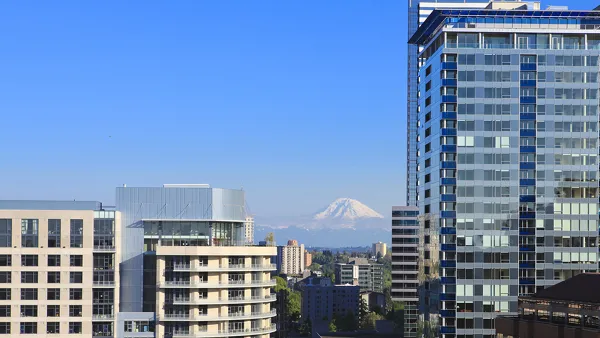
2020 Population Growth Rates for the 50 Biggest U.S. Cities
The Census Bureau released new data on May 27 that includes the first four months of the pandemic. Seattle tops the growth rate at 2.2% from July 1, 2019, to July 1, 2020, while Baltimore and San Francisco land at the bottom with -1.4%.

Planetizen Federal Action Tracker
A weekly monitor of how Trump’s orders and actions are impacting planners and planning in America.

Amtrak, CN end decades-long dispute with eight-year agreement
The new operating agreement establishes an updated framework for the companies to work together, including processes to resolve disputes.

Northwest rail fans eager for Sept. 30 debut of Amtrak’s Airo fleet
Get ready for that new train smell and more seats. But they won’t go faster or run more frequently on the Cascades route in Washington and Oregon.

St. Louis Metro to test if single-car trains can reduce operating costs, maintain rider satisfaction
The pilot program will run from October to spring 2027, and begin with one single-car train operating on Metrolink’s Red and Blue lines.

Pennsylvania is building data centers in abandoned mines
Housing data centers in mines provides an alternative to destroying local forests and may spare residents from data centers’ noise and air pollution.

If Corpus Christi can’t revive desalination plant project, it may owe Texas $235 million
Earlier this month, city officials declined to pursue developing the plant for the second time in a year.

FREE Course: Walkable City 1: Why Walkability?
After describing his path towards focusing on walkability as the essence of good planning, Jeff Speck marches through his five principal reasons for making more walkable places.
Reinventing Malls: Planning Alchemy—Turning Gray Fields Into Gold
The course focuses on the opportunities and imperatives that shape reinvention of mall sites.

City of Thousand Oaks
City of Wisconsin Rapids
Harvard University Graduate School of Design
The Architects Foundation
University of Cincinnati Online
The Pocatello Development Authority
The Urban Renewal Agency of the City of Pocatello