It's too late to save the lives of thousands in Nepal, but can other cities in South Asia and around the world learn from the mistakes of unplanned growth before another catastrophic event?


Tanvi Misra introduces an article about the devastation in Kathmandu, Nepal, by sharing images and eyewitness reports that describe the rubble that has become of the city that existed prior to the April 25, 2015 earthquake.
The earthquake was inevitable, writes Misra, but "haphazard urbanization around the Kathmandu Valley amplified the fatal force of the disaster." A 2013 World Bank report proved prescient on the risk facing Kathmandu, notes Misra, predicting that uplanned development had led to "uncontrolled sprawl; irregular, substandard, and inaccessible housing development; loss of open space, and decreased livability" that left the city of Kathmandu one of the "most earthquake-vulnerable cities in the world."
Misra goes on to note the lesson for other cities, including New Delhi in India, could face an even greater loss of life for similar reasons in the likely event of an earthquake of similar size.
Read the full story: How Urban Planning Failed Kathmandu


San Andreas fault at highest stress level in a millennium
A new study shows that the West Coast's major fault system is in 'a critically loaded state.'
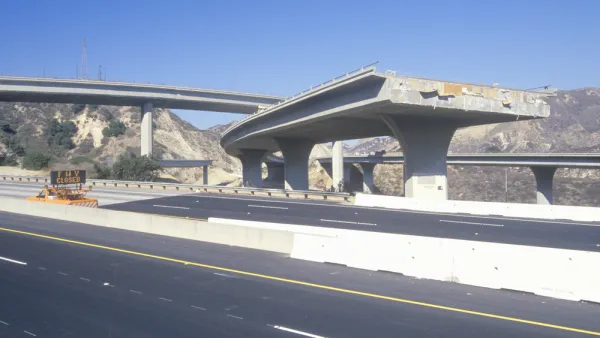
Los Angeles County the Riskiest Place in the U.S., FEMA Says
The new National Risk Index calculates the brutal equations of natural disasters.

Five Years of 100 Resilient Cities
It's been five years since the Rockefeller Foundation launched the 100 Resilient Cities initiative. A new analysis by the Urban Institute evaluates the accomplishments of 100 Resilient Cities so far.

Planetizen Federal Action Tracker
A weekly monitor of how Trump’s orders and actions are impacting planners and planning in America.

Amtrak, CN end decades-long dispute with eight-year agreement
The new operating agreement establishes an updated framework for the companies to work together, including processes to resolve disputes.

Northwest rail fans eager for Sept. 30 debut of Amtrak’s Airo fleet
Get ready for that new train smell and more seats. But they won’t go faster or run more frequently on the Cascades route in Washington and Oregon.

Brightline Florida files for bankruptcy
The transit company is over $5 billion in debt.

St. Louis Metro to test if single-car trains can reduce operating costs, maintain rider satisfaction
The pilot program will run from October to spring 2027, and begin with one single-car train operating on Metrolink’s Red and Blue lines.

Pennsylvania is building data centers in abandoned mines
Housing data centers in mines provides an alternative to destroying local forests and may spare residents from data centers’ noise and air pollution.

FREE Course: Walkable City 1: Why Walkability?
After describing his path towards focusing on walkability as the essence of good planning, Jeff Speck marches through his five principal reasons for making more walkable places.
Reinventing Malls: Planning Alchemy—Turning Gray Fields Into Gold
The course focuses on the opportunities and imperatives that shape reinvention of mall sites.

City of Thousand Oaks
City of Wisconsin Rapids
Harvard University Graduate School of Design
The Architects Foundation
University of Cincinnati Online
The Pocatello Development Authority
The Urban Renewal Agency of the City of Pocatello